6 Best Sewing Needles For Kitchener Stitch To Try
Master the Kitchener stitch with our top 6 needle picks. We compare materials and eye sizes to help you achieve seamless, professional-looking graft finishes.
The Kitchener stitch is the final hurdle between a finished sock and a lifetime of comfort, yet many knitters dread this grafting process. Achieving that seamless, invisible finish requires more than just patience; it demands the right tool for the job. Using a needle that is too thick or blunt can distort your delicate stitches, while the wrong tip shape can make navigating tight loops a chore. Selecting the perfect tapestry needle will transform your grafting from a tedious task into a satisfying, rhythmic conclusion to your project.
Clover Chibi Bent-Tip Tapestry Needles: The Best


These needles are a staple in my notions bag for a reason. The signature bent tip acts like a tiny hook, making it incredibly easy to scoop under the front and back loops of your live stitches without snagging the yarn.
If you are grafting fine sock yarn, the slight curve allows you to maintain a consistent tension without fighting the bulk of a straight needle. They feel like an extension of your fingers, especially when you reach the final few stitches where space is limited.
The set comes in a convenient, portable case that prevents the needles from disappearing into the depths of your project bag. The bent tip is the gold standard for Kitchener stitch, as it minimizes the risk of splitting your yarn plies.
Bohin France Nickel-Plated Tapestry Needles

Bohin needles are renowned for their exceptional finish and durability. The nickel plating provides a slick, glass-like surface that allows the needle to glide through even the stickiest wool fibers with zero resistance.
Because they are made of high-quality steel, they have a satisfying weight that helps you maintain a steady rhythm. They don’t bend or warp, even when you are working with heavier, multi-ply worsted weight yarns.

If you prefer a classic, straight-tip needle, these are arguably the best on the market. They are sharp enough to find your stitch path but blunt enough to avoid piercing the yarn itself.
Dritz Finishing Needles with Large Eyes

Every knitter knows the frustration of trying to thread a tapestry needle when your eyes are tired after a long night of knitting. Dritz finishing needles solve this with an oversized eye that accommodates even the fluffiest mohair or hand-spun yarns.
These are an excellent budget-friendly option for beginners who are still learning to manage their yarn tails. They are reliable, widely available, and get the job done without any unnecessary frills.
While the finish isn’t as slick as a nickel-plated needle, they provide a secure grip that helps prevent the needle from slipping out of your hand. They are the workhorses of the knitting world, perfect for everyday projects where you need a quick finish.
Tulip Tapestry Needles with Cushion Grip
Tulip needles are a luxury, but they are a luxury that pays off in comfort. The unique cushion grip provides an ergonomic surface that reduces hand fatigue during long grafting sessions.
If you suffer from arthritis or simply find thin metal needles difficult to hold, these are a game-changer. The needles themselves are polished to perfection, ensuring they slide through your fabric without catching.
The tip design is a perfect balance between sharp and blunt, making it versatile for various fiber types. Investing in a set of these is a small price to pay for the comfort they provide during the final, most crucial step of your project.
Cocoknits Colored Steel Stitching Needles
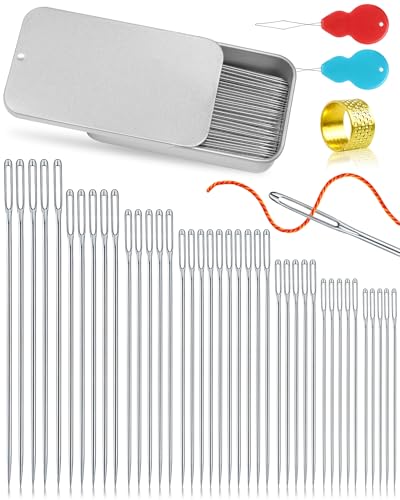
These needles are as beautiful as they are functional, featuring a vibrant coating that makes them easy to spot if you drop one on your carpet. The steel core gives them a nice, sturdy feel that doesn’t sacrifice flexibility.
The colored finish isn’t just for aesthetics; it helps you distinguish between different sizes at a glance. For a knitter working on multiple projects with varying gauges, this is a massive time-saver.
They are designed to be slightly flexible, which is helpful when you are working in tight spaces. Their sleek, nylon-coated finish prevents snagging, making them a top choice for delicate lace or silk-blend projects.
Susan Bates Finishing Needles for Beginners

Susan Bates has been a trusted name in the industry for generations, and their finishing needles are perfect for those just starting out. They are straightforward, affordable, and durable enough to last for years.
These needles are often sold in multipacks, which is ideal for the beginner who hasn’t yet discovered their preferred needle size. Having a variety of gauges on hand allows you to experiment with different yarn weights without needing to buy new tools constantly.
While they may lack the ergonomic grips of higher-end brands, they are the perfect training wheels for learning the Kitchener stitch. Once you master the technique, you can decide if you want to upgrade to a more specialized needle.
Why Needle Eye Size Matters for Kitchener Stitch
The eye of your needle must be large enough to accommodate your yarn without causing it to fray or pill. If you force a thick yarn through a tiny eye, you risk damaging the fiber structure before it even touches your knitting.
Conversely, an eye that is too large can create a bulky knot at the start of your grafting. This can leave an unsightly lump in your finished work, which is the exact opposite of the seamless look we aim for with Kitchener stitch.
- Rule of thumb: The yarn should move freely through the eye without bunching up.
- If your yarn is thick, look for needles with a flattened or elongated eye.
- Always test your yarn in the eye before you begin the Kitchener process.
Choosing Between Bent and Straight Needle Tips
Bent-tip needles are designed specifically for grafting and weaving in ends. The curve helps you navigate the "V" of the stitch more naturally, mimicking the movement of your knitting needles.
Straight needles, however, offer more precision for those who have developed a specific technique that requires a direct, linear motion. They are also generally more versatile for other tasks, like sewing seams or attaching buttons.
- Bent tips: Best for beginners or those working with tight, fine-gauge socks.
- Straight tips: Better for general sewing and those who prefer a traditional tool feel.
- Tradeoff: Bent tips can be harder to use for general seaming, while straight needles require more manual dexterity for grafting.
Proper Yarn Weight and Needle Gauge Selection
Matching your needle gauge to your yarn weight is vital for a smooth Kitchener stitch. If your needle is too thick, it will stretch out your stitches and create holes; if it’s too thin, you won’t have enough control over the tension.
For sock knitting, which is the most common application for Kitchener, you generally want a needle that is slightly smaller than the knitting needles you used for the project. This ensures the grafted stitches match the tension of the rest of the fabric.
- Fingering weight: Use a size 20 or 22 tapestry needle.
- Worsted weight: Use a size 16 or 18 tapestry needle.
- Bulky weight: Use a size 13 or 14 tapestry needle.
Troubleshooting Common Kitchener Stitch Errors
The most common error is pulling your yarn too tight, which creates a "puckered" seam. Always remember to treat the grafted stitches as if they were live stitches on your needle, maintaining an even, relaxed tension.
Another issue is accidentally skipping a stitch, which leads to a dropped stitch at the very end of your work. Always count your stitches on both needles before you begin, and check your work every few inches.
If you find that your seam looks "different" from the rest of the fabric, you may be twisting your stitches. Take a moment to ensure that the legs of your stitches are properly aligned before pulling the yarn through. Patience is your best tool; if it looks wrong, don’t be afraid to pull it out and try again.
Mastering the Kitchener stitch is a rite of passage that elevates your knitting from handmade to heirloom quality. By selecting a needle that suits your specific yarn weight and personal comfort, you remove the physical barriers that often lead to frustration. Remember that every knitter’s hands are unique, so take the time to experiment with these different styles to find your perfect match. With the right tool in hand, you will find that the final seam is not a chore, but the most rewarding part of the entire project.