7 Best Blocking Boards For Achieving Perfect Garment Dimensions
Master garment finishing with our top 7 blocking boards. Discover durable, precise tools designed to help you achieve professional, perfectly sized projects.
Achieving the perfect dimensions for your hand-knit garments is the final, critical step that transforms a pile of stitches into a professional-looking piece. Many knitters spend hours perfecting their gauge, only to let their hard work sag or curl due to improper blocking. Choosing the right blocking board is not just about convenience; it is about providing the stable foundation your fiber needs to settle into its final shape. This guide explores the best tools on the market to ensure your finished projects look exactly as you envisioned.
Knitter’s Pride Knit Blockers: The Best Overall Pick


These are not traditional boards, but rather a revolutionary system that changes how you secure your fabric. By using a bar with multiple pins, you can cover more ground in a single motion than you could with dozens of individual T-pins.
They are particularly effective for straight edges, such as the hem of a sweater or the side of a scarf. Because the pins are anchored in a solid plastic block, they stay upright and prevent the "scalloping" effect that often happens when you use individual pins spaced too far apart.
If you are working with a delicate lace or a heavy wool, these blockers provide the consistent tension needed for a symmetrical finish. The bottom line: They are an investment that pays for itself by cutting your blocking time in half.
Boye Interlocking Foam Mats: Best Budget Solution

When you are just starting out, you don’t necessarily need the most expensive equipment to get great results. These interlocking mats offer a functional, no-frills surface that gets the job done without breaking the bank.
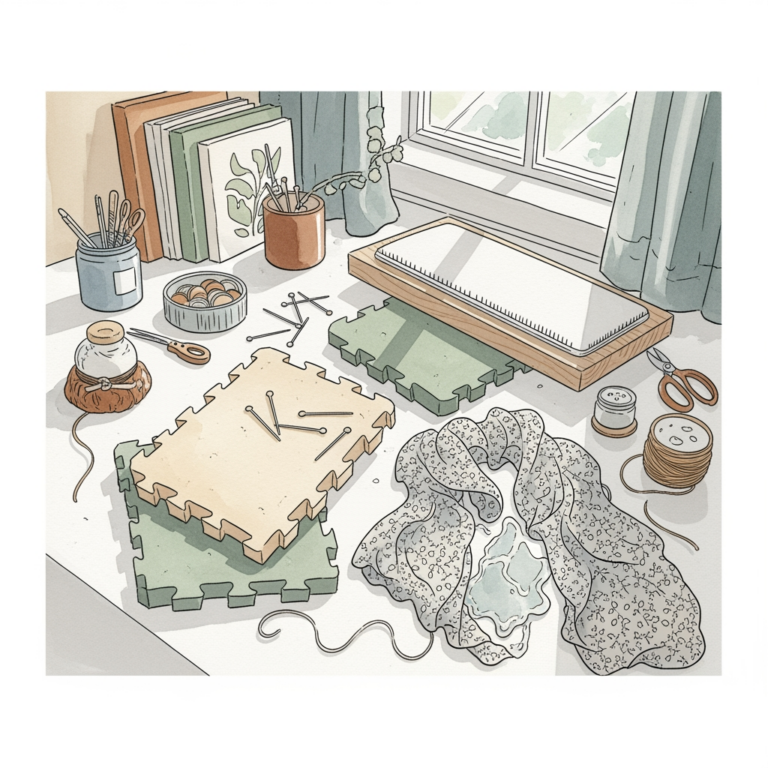
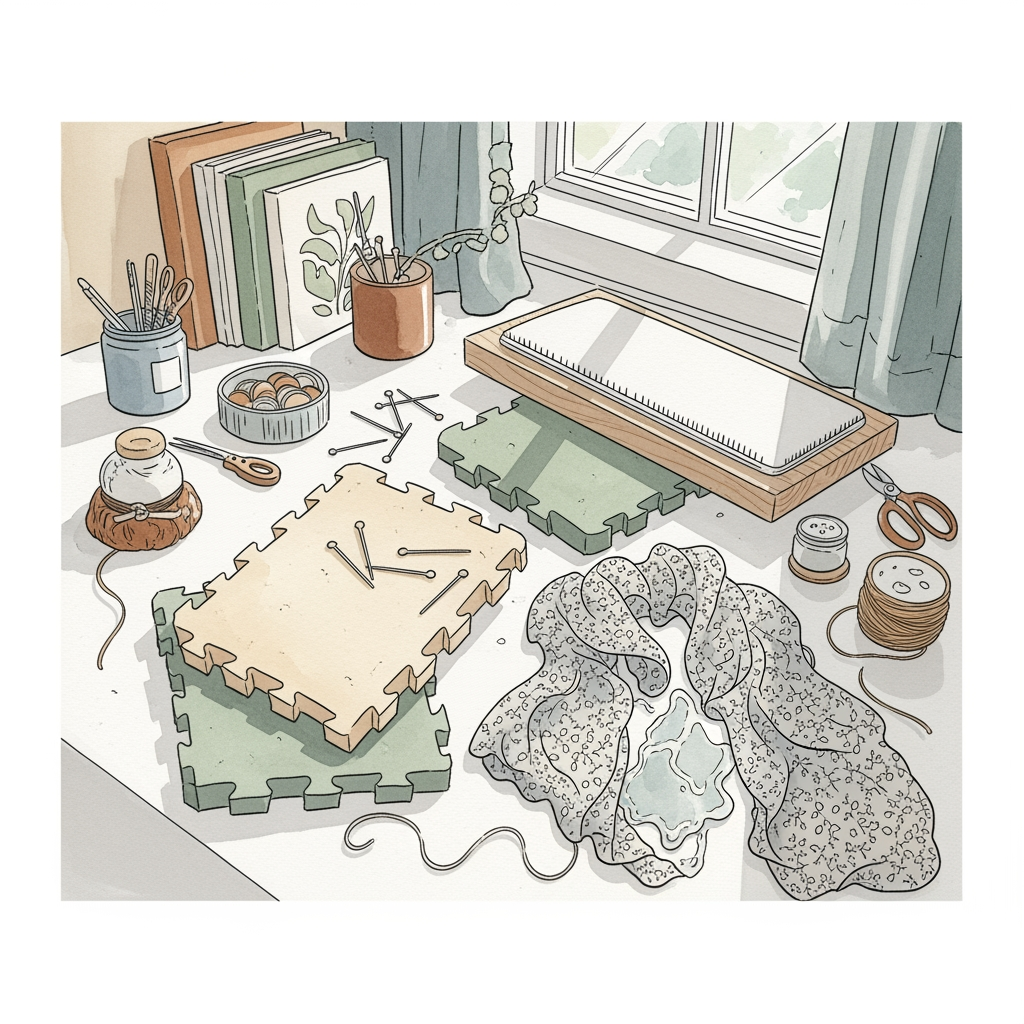
They are lightweight and easy to store, which is a major plus if you live in a smaller apartment or share your craft space. Because they are modular, you can configure them into a long, narrow rectangle for shawls or a wide square for sweaters.
Just be aware that the foam is softer than premium options, meaning it may wear down over years of heavy use. For the casual knitter or the budget-conscious maker, these mats provide the essential surface needed for basic blocking.
Cocoknits Blocking Tiles: Best Modular Grid Design
These tiles are a favorite among experienced makers because of the printed grid lines on the surface. Having a visual reference allows you to measure your garment’s dimensions without constantly reaching for a tape measure.
The tiles are made from a heat-resistant material, which is a significant advantage if you prefer to steam-block your projects. Steam-blocking is often necessary for acrylics or to help stubborn wool fibers "bloom" and relax into their final shape.
They also feature a clever magnetic edge that keeps the tiles from shifting while you work. If you value precision and want to eliminate guesswork, these tiles are the gold standard for structural accuracy.
Clover Blocking Mats: Best For Precision Projects

Clover is known for manufacturing tools with incredible consistency, and these mats are no exception. They provide a firm, dense surface that holds pins securely, ensuring that your fabric doesn’t shift once you have set your measurements.
They are especially useful for intricate colorwork or complex cables where every stitch needs to be perfectly aligned. If you are blocking a sweater that requires precise seaming, having a mat that won’t give under tension is a game-changer.
The surface texture is designed to be gentle on delicate fibers, preventing snagging or unwanted fuzzing. Choose these if you are a perfectionist who needs a reliable, stable surface for high-stakes projects.
Lacis Blocking Board: Best Choice For Lace Lovers
If you specialize in lace knitting, you know that the "openness" of the pattern is only revealed through aggressive blocking. This board is designed specifically for those who need to stretch their work to the limit to reveal the lace motifs.
It is often constructed from materials that can withstand the tension of hundreds of pins. Unlike foam, which can compress, a specialized board like this maintains its integrity even when you are pulling a delicate wool-silk blend taut.
Many versions of this board also come with a grid, which is essential for ensuring your lace shawl is perfectly symmetrical. If you live for intricate lace shawls, this is the specialized tool you’ve been waiting for.
HiyaHiya Blocking Mats: Best For Large Garments

Blocking a full-sized adult sweater can be a logistical nightmare if you don’t have enough surface area. These mats are designed to be expanded indefinitely, making them the ideal choice for large-scale garments.
They are thick enough to hold long T-pins firmly, which is vital when you are blocking a heavy, wool-rich sweater that might otherwise pull your pins out of the mat. The density of the foam provides excellent support for the weight of the garment.
Because they are easy to break down, you can tuck them away in a closet once the sweater is dry. For the sweater knitter who needs a large, reliable workspace, these mats are an essential addition to your toolkit.
KnitIQ Blocking Mats: Best For Heavy Duty Blocking
These mats are built for the maker who blocks frequently and demands durability. They are thicker and denser than your average foam mat, meaning they won’t warp or degrade after dozens of uses.
They also feature a non-slip backing, which is a subtle but important feature when you are working on a slick dining room table. You won’t have to worry about your blocking surface sliding away while you are trying to pin down a complex edge.
The inclusion of a storage bag is a nice touch, keeping your mats clean and organized between projects. If you want a "buy it once" solution that will last for years of heavy-duty blocking, invest in KnitIQ.
How To Choose The Right Blocking Board For Your Needs
When selecting a board, start by looking at the types of projects you knit most often. If you exclusively knit socks, you don’t need a massive array of tiles; a smaller, dedicated blocking surface will suffice.
Consider your storage space as well, as some boards are rigid while others are modular. If you have limited room, modular mats that can be taken apart are superior to large, permanent boards.
Think about your preferred blocking method, whether it is wet blocking (soaking the garment) or steam blocking. Not all materials can handle direct heat, so check the specifications before you commit to a purchase.
Foam Mats Versus Cork Boards: A Technical Comparison

Foam mats are the industry standard for most knitters because they are lightweight, inexpensive, and easy to pin into. They are generally porous enough to allow for airflow, which helps your garment dry faster.
Cork boards, while aesthetically pleasing and sturdy, can be difficult to pin into if you are using standard T-pins. They also tend to be heavier and less portable than their foam counterparts.
However, cork is a natural material that can be more environmentally friendly than synthetic foams. Ultimately, foam wins on convenience and versatility, while cork remains a niche choice for those who prefer natural materials.
Expert Tips For Achieving Perfect Garment Dimensions
Always measure your garment before you pin it down to ensure it matches your pattern’s schematic. It is much easier to adjust your dimensions while the garment is still damp and malleable than it is to fix it later.
Use a rust-proof pin to avoid staining your yarn, especially if you are working with light-colored fibers. Nothing ruins a beautiful project faster than a permanent rust mark from a cheap pin.
Finally, give your garment plenty of time to dry completely. If you remove the pins while the fibers are still damp, the weight of the yarn can cause the garment to stretch or lose its shape prematurely.
Investing in a quality blocking board is the final act of care you can provide for your hand-knit garments. Whether you choose the modular flexibility of foam mats or the precision of a grid-lined surface, your choice will directly impact the longevity and appearance of your work. Take the time to consider your specific needs, and you will find that a proper blocking setup makes the process as enjoyable as the knitting itself. Happy blocking, and may your edges always be straight and your stitches perfectly relaxed.