
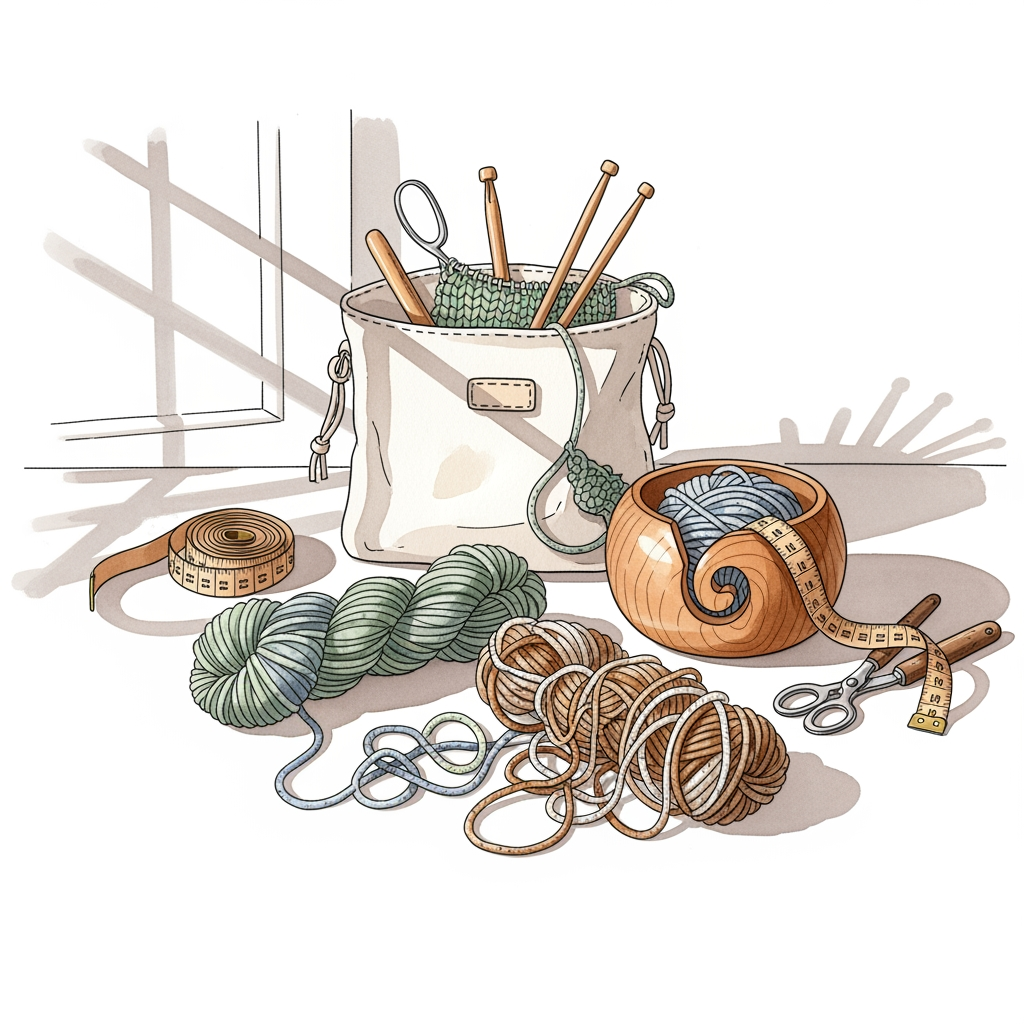
6 Best Needle Cushions For Temporary Storage Reviewed
Need a better way to store your pins? We review the 6 best needle cushions to keep your tools organized, safe, and accessible during any sewing project.
Every knitter knows the frustration of losing a needle mid-row or finding a bent tip at the bottom of a project bag. Proper storage is the unsung hero of a successful knitting practice, acting as a safeguard for your most valuable tools. Whether you are working on a complex lace shawl or a simple stockinette scarf, keeping your needles organized prevents damage and saves precious time. This guide explores the best storage solutions to keep your needles safe, sharp, and ready for your next cast-on.
Cocoknits Maker’s Keep: Best Magnetic Wrist Cuff
The Maker’s Keep is a game-changer for those of us who constantly misplace our tapestry needles or stitch markers while working. By wearing your storage directly on your wrist, you eliminate the need to hunt through your project bag every time you need to weave in an end.
The silicone slap-bracelet design is surprisingly comfortable, even during marathon knitting sessions. Its powerful magnet holds metal needles securely, ensuring they don’t slide off while you are moving around.
However, keep in mind that this is strictly for metal tools; wood or bamboo needles won’t stick to the surface. It is a fantastic tool for the "on-the-go" knitter who values accessibility above all else.


Della Q Circular Needle Case: Best for Storage
If you have built up a massive collection of interchangeable needles, you know the struggle of keeping track of every individual tip and cable. The Della Q case is designed specifically to house these collections in a way that makes sense for a working knitter.
The interior pockets are clearly labeled, which is vital for maintaining your sanity when switching between projects. I find the sturdy, zip-around construction provides the best protection against bending or scratching, especially if you store your case in a crowded craft closet.
The primary tradeoff here is size; it is not the most portable option for a quick trip to the coffee shop. If you need a permanent home for your needles that keeps them pristine, this is the gold standard.
Namaste Circular Needle File: Best Organization

The Namaste needle file functions like a high-end filing cabinet for your knitting needles. It uses a binder-style system that allows you to add or remove pages as your collection of needles grows.
This modular approach is perfect for the knitter who is slowly building their stash of tools. You can organize by material—keeping your slick nickel-plated needles separate from your grippier bamboo ones—which makes choosing the right tool for a specific yarn much faster.

Because it lies flat, it is incredibly easy to tuck into a larger tote bag. Just be careful not to overstuff the pages, as the plastic sleeves can become brittle over time if stretched too thin.
Clover Needle Point Protectors: Best for Travel
We have all been there: you pull your knitting out of a bag, only to find that your stitches have slipped off the needles and created a ladder of dropped loops. Clover point protectors are the simple, inexpensive solution to this common heartbreak.
These soft, rubberized caps slide snugly over your needle tips, locking your work in place during transit. They are particularly essential when you are traveling with delicate lace projects that are prone to unraveling.
The only downside is that they can be easily lost in the depths of a bag. I recommend keeping them in a small, dedicated pouch so you always know where they are when it’s time to pack up.
Knitter’s Pride Needle Gauge: Best Dual Function

A needle gauge is not just for measuring; it is a vital tool for verifying the size of needles that have had their labels rubbed off over years of use. The Knitter’s Pride gauge often doubles as a ruler, which is helpful for checking your gauge swatch.
If you are a knitter who enjoys vintage finds or inherited tools, this is an essential piece of equipment. You cannot rely on visual estimation, as the difference between a 3.5mm and a 3.75mm needle is enough to ruin the fit of a sweater.
This tool is small, flat, and virtually indestructible. It is the one item that should live in every single one of your project bags.
Wooly Needle Felted Pincushion: Best for DPNs

Double-pointed needles (DPNs) are notorious for escaping project bags and rolling under furniture. A dense, needle-felted pincushion provides a safe, soft landing spot that won’t dull your needle points.

Unlike synthetic foam, wool felt provides a natural grip that holds the needles in place without forcing them. It is an excellent choice for keeping your DPNs organized while you are in the middle of a sock or mitten project.
Because it is handmade and soft, it won’t scratch your needles, even if they are made of delicate rosewood or ebony. It is a tactile, beautiful addition to any knitting station.
Why Proper Needle Storage Protects Your Tools
Needles are precision instruments, and their surface finish directly dictates how your yarn moves. A scratched needle tip will snag on delicate fibers like silk or mohair, causing uneven tension and broken threads.
Proper storage prevents the oxidation that can occur when needles are left in humid environments. By keeping them in a case, you create a controlled environment that protects both the material and the integrity of the tip.
Think of your needles as an investment; taking care of them is a form of respect for your craft. A well-maintained set of needles will last for decades, whereas neglected tools will eventually need to be replaced.
How to Prevent Needle Tips from Getting Dull
Needle tips are the most vulnerable part of your tool, especially when working with high-twist yarns. If you store your needles loosely in a bin, the tips will inevitably bang against each other, leading to micro-nicks that can ruin your knitting.
Always use point protectors when the needles are not in use, and avoid dropping them on hard surfaces like tile or hardwood floors. If you use wooden needles, keep them away from direct heat sources, which can cause them to warp or splinter.
If you notice a burr on a metal needle, you can sometimes buff it out with a very fine-grit emery board. However, prevention is always superior to repair.
Organizing Your Needles by Size and Material
I recommend organizing your collection by material first, then by size. You will quickly learn which needles you reach for most often—perhaps your smooth metal needles for fast-paced stockinette or your wooden needles for slippery alpaca blends.
Keep your most-used sizes in an accessible, central location. Less common sizes, like the very tiny or very large needles, can be stored in a secondary container to keep your workspace uncluttered.
- Group by material: Keep wood, metal, and plastic separate to manage the "drag" factor.
- Group by size: Use clear labels so you never have to guess.
- Keep a log: If you have a large collection, a simple spreadsheet helps you track what you own.
Essential Features for Needle Storage Systems
When shopping for storage, look for durability and accessibility. A system that is too difficult to open or organize will eventually be abandoned, leading back to the clutter you are trying to avoid.
- Visibility: Can you see the size labels clearly without removing the needles?
- Security: Do the needles stay put if the case is turned upside down?
- Portability: Is the system designed for your specific lifestyle, whether you knit at home or on the bus?
Ultimately, the best storage system is the one you actually use. Don’t be afraid to mix and match solutions until you find the workflow that keeps your needles safe and your mind focused on the stitches.
Investing in the right needle storage is a commitment to the longevity of your knitting practice. By protecting your tools, you ensure that every project begins with the same smooth, reliable performance you expect from your favorite needles. Take the time to organize your stash, and you will find that your knitting time becomes much more productive and enjoyable. May your needles stay sharp and your yarn always stay tangle-free.
