
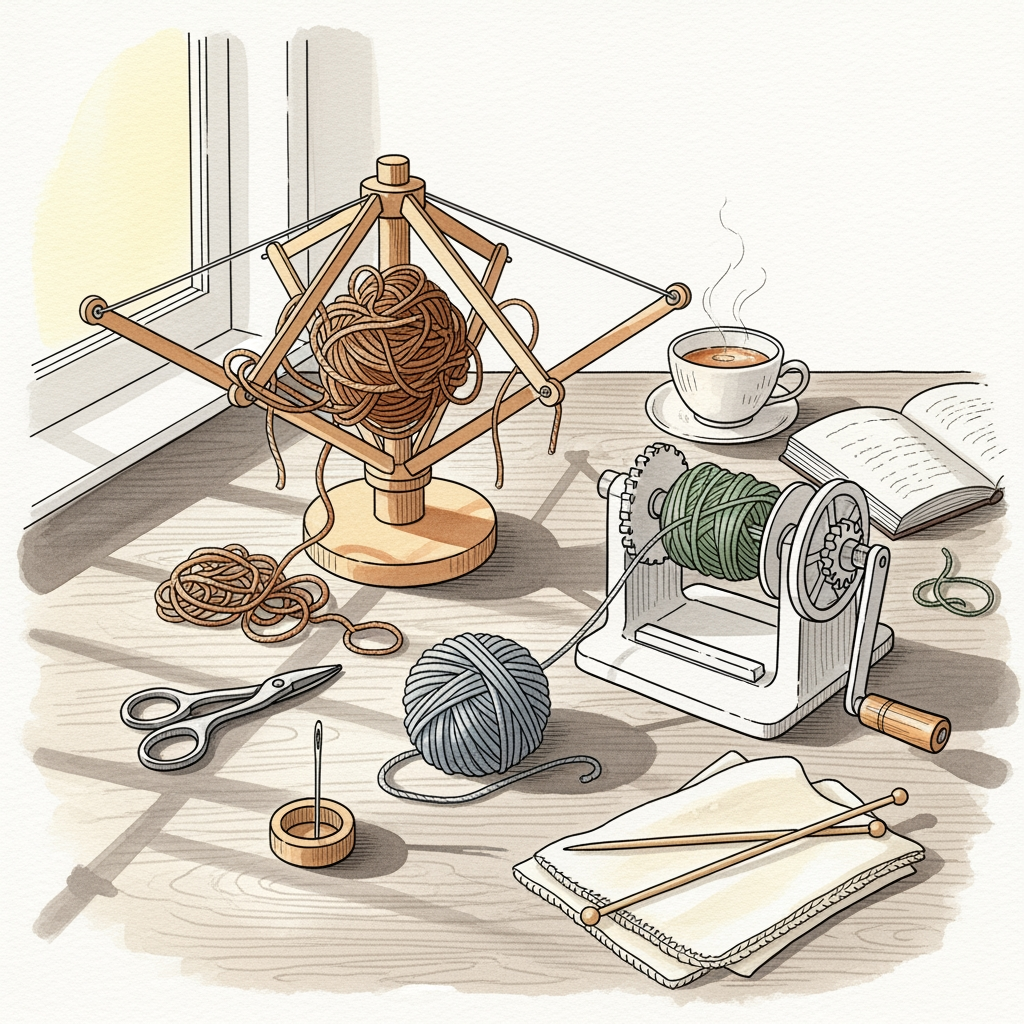
6 Best Swift Yarn Holders For Managing Hanks
Tired of tangled yarn? We evaluate the 6 best swift yarn holders to help you wind hanks efficiently, ensuring a smooth, stress-free knitting experience.
Transitioning from store-bought balls to luxurious hanks is a rite of passage for every knitter, yet the prospect of tangles can be daunting. A quality swift is the difference between a meditative winding session and a frustrating afternoon spent untying knots. Whether you are prepping a delicate lace-weight mohair or a sturdy wool blend, the right tool ensures your yarn stays pristine. Here are the top swift options to streamline your fiber prep and protect your precious stash.
Stanwood Needlecraft Tabletop Yarn Swift


The Stanwood tabletop swift is a staple in many serious stashes for good reason. Its heavy-duty construction and smooth rotation make it a workhorse for those who wind yarn frequently.

It features a metal clamp that secures firmly to most tables, providing the stability needed when dealing with heavy, multi-ply worsted weight hanks. The umbrella-style mechanism opens easily, allowing you to adjust the diameter to fit everything from small skeins to large, loose hanks.
While the metal components are durable, they can occasionally be a bit loud if not lubricated properly. If you find the rotation getting sluggish, a tiny drop of sewing machine oil on the central spindle usually does the trick. For the frequent knitter, this is a reliable, "set it and forget it" investment.
Amish Style Wooden Yarn Swift by Lacis

If you prefer a minimalist aesthetic, the Amish style swift is a beautiful, functional choice. Unlike umbrella swifts, this design uses stationary wooden pegs that hold the hank in a circular shape.
This style is particularly gentle on delicate fibers like silk or hand-dyed singles that might snag on the metal parts of other swifts. Because it sits on the floor or a table without a clamp, it is incredibly portable and easy to store in a small project bag.
The trade-off is that it lacks the adjustable diameter of an umbrella swift, meaning you have to be careful when placing your hank to ensure it doesn’t sag. Choose this if you value simplicity and want a tool that looks as lovely as your yarn collection.
KnitPicks Wooden Umbrella Yarn Swift

The KnitPicks wooden swift is often the first "real" upgrade for a knitter moving away from winding yarn over the back of a chair. It strikes a balance between price and performance that is hard to beat.
The wooden construction provides a nice "grip" for the yarn, preventing it from sliding off the arms during high-speed winding. It is lightweight, which makes it easy to move around your craft room, though it does require a sturdy table edge for its clamp.
Be aware that the wood is unfinished; some knitters choose to lightly sand it to ensure there are no tiny splinters that could catch on loose-ply yarns. This is the ideal entry-level choice for someone who wants a classic, functional tool without a professional-grade price tag.
ChiaoGoo Natural Wood Umbrella Swift

ChiaoGoo is a brand synonymous with quality knitting needles, and their swift follows that same design philosophy. It is crafted from smooth, polished wood that feels substantial and well-balanced.
The rotation is remarkably fluid, which is essential when you are winding a large, expensive hank of hand-dyed merino. If your swift jerks or sticks, you risk creating uneven tension in your yarn cake, which can lead to wonky gauge later.
This model is built to last, with tight joints that don’t wobble even after years of heavy use. If you have already invested in ChiaoGoo needles, this swift offers a matching level of precision and reliability for your winding process.
Strauch Wooden Ball Winder and Swift
The Strauch system is the gold standard for knitters who treat their yarn stash like a professional inventory. This is a heavy-duty, high-capacity setup designed for those who wind dozens of hanks a week.
The swift is designed to work in perfect tandem with their ball winder, creating perfectly uniform cakes that sit flat and feed evenly from the center. It is an expensive investment, but it eliminates the "yarn-winding fatigue" that can set in during large sweater projects.
Because of its size, this unit is not for the occasional hobbyist with limited space. If you are a prolific knitter or a small-batch dyer, this is the professional-grade solution to keep your workflow efficient.
Nancy’s Knit Knacks Heavy Duty Swift
Nancy’s Knit Knacks is known for engineering solutions to common knitting frustrations. Their heavy-duty swift is built to withstand rigorous use, featuring reinforced arms and a high-quality clamping mechanism.
What sets this model apart is the attention to detail in the rotation hardware, which is designed to be virtually silent and frictionless. This is a major benefit if you wind yarn late at night while the rest of the household is sleeping.
It handles a wide range of hank sizes with ease, from tiny lace-weight hanks to massive, 500-yard skeins of bulky wool. This is a top-tier choice for the knitter who wants a "buy it once" tool that will never need replacing.
How to Properly Set Up Your Yarn Swift
Setting up your swift is a step many knitters rush, but doing it correctly prevents tangles before they start. Always ensure your swift is clamped securely to a stable, level surface before you begin.
When placing your hank on the swift, shake it out gently to ensure the strands are not crossed. If you start with a twisted hank, you will inevitably end up with a knotted mess, regardless of how high-quality your swift is.
- Align the swift: Ensure the diameter is set slightly smaller than the hank so the yarn is taut but not stretched.
- Check the path: Make sure the yarn feeds directly from the swift to your ball winder without catching on any furniture.
- Start slow: Always wind the first few rotations by hand to ensure the yarn is feeding smoothly before using a mechanical winder.
Umbrella vs. Amish Style: Which to Choose
The choice between an umbrella and an Amish style swift usually comes down to your storage space and the types of yarn you use. Umbrella swifts are versatile and adjustable, making them better for a wide variety of hank sizes.
Amish style swifts are inherently more stable because they don’t rely on a clamp, but they can be slower to adjust for different hank lengths. If you mostly wind small, delicate hanks, the Amish style is often the gentler option.
If you are a "stash-buster" who works with everything from lace to super-bulky, the umbrella style is the more practical, all-in-one choice. Consider your space: if you have a dedicated craft table, the umbrella style is superior; if you wind yarn on the living room floor, the Amish style wins.
Best Practices for Winding Your Own Cakes
Winding your own yarn cakes is an art form that directly impacts your knitting tension. If you wind too tightly, you will stretch the fibers, which can cause your finished garment to "grow" or lose its shape after the first wash.
Always aim for a "firm but squishy" cake. You should be able to press your thumb into the side of the cake; if it feels like a rock, it is too tight.
- Avoid over-winding: Stop just before the cake becomes too large to feed properly.
- Mind the fiber: For delicate fibers like cashmere or alpaca, wind as slowly as possible to preserve the loft.
- Remove the label: Keep the yarn label tucked inside the center pull of the cake so you always have the dye lot and fiber information handy.
Essential Tips for Maintaining Your Swift
A swift is a mechanical tool, and like any tool, it requires occasional maintenance to perform at its best. Keep the moving parts clean and free of dust, which can accumulate over time and cause friction.
If your wooden swift feels "dry," a light application of wood wax or mineral oil will keep the wood supple and prevent it from splintering. Never force the arms of an umbrella swift if they feel stuck; check for trapped yarn fibers in the joints first.

Store your swift in a dry environment to prevent the wood from warping or the metal from oxidizing. A little bit of care every few months will ensure your swift lasts for decades, serving as a reliable companion for every new project you start.
Investing in a quality yarn swift is one of the best decisions you can make for your knitting practice. By removing the stress of tangles and ensuring your yarn is wound with consistent tension, you free yourself to focus on the joy of the stitches. Choose the tool that fits your space and your fiber habits, and you will find that your preparation process becomes just as satisfying as the knitting itself. Happy winding, and may your yarn always flow smoothly from the swift.
