
7 Best Needle Bed Lubricants For Machine Maintenance
Keep your knitting machine running smoothly with our top 7 needle bed lubricants. Discover essential maintenance tips to extend gear life and ensure precision.
Every knitting machine owner eventually learns that a smooth, quiet carriage stroke is the difference between a meditative afternoon and a frustrating tangle of dropped stitches. Metal-on-metal friction is the silent enemy of your needle bed, leading to uneven tension and premature wear on your machine’s delicate components. Choosing the right lubricant transforms your machine from a clunky, noisy relic into a precision instrument that glides effortlessly. This guide explores the best maintenance products to keep your gear running as smoothly as a fresh skein of silk-mohair.
Singer All-Purpose Machine Oil: Best Overall Choice
If you have ever inherited a vintage machine, you have likely seen a small bottle of this tucked into the accessory box. It is the gold standard for a reason: it is a light, refined mineral oil that doesn’t gum up over time.


Because it is thin, it flows easily into the tight channels of your needle bed without attracting excessive dust or lint. This is crucial if you frequently work with "hairy" fibers like mohair or unspun wool, which tend to shed and create debris that can clog your needle tracks.
However, keep in mind that this oil is not a heavy-duty lubricant for high-friction gears. Use it primarily for the needle bed and the carriage tracks where metal movement is constant but friction is relatively low.
Brother Knitting Machine Oil: The Industry Standard
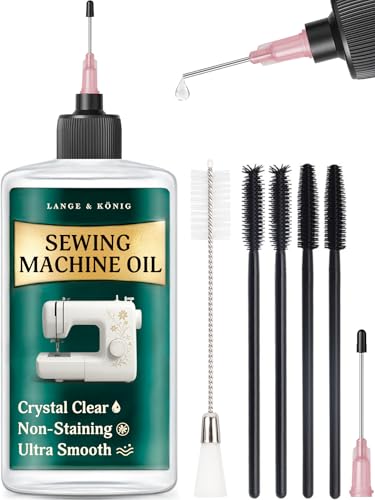
Brother machines are famous for their engineering, and this specific oil is formulated to match the exact tolerances of their needle beds. It provides a consistent, reliable barrier that prevents the oxidation of steel needles.
When you are working on a complex project—like a multi-color fair isle sweater—you need the carriage to move with zero resistance. This oil ensures that the sinkers and needles act in perfect unison, preventing the "jerky" motion that causes dropped stitches.
The only downside is the price point, which is often higher than generic alternatives. If you are a casual knitter, you might be tempted to skip it, but for those of us who run our machines daily, the peace of mind is worth the investment.
Passap Needle Bed Lubricant: Best Specialized Oil

Passap machines are built like tanks, but they have a unique mechanical design that requires a specific viscosity. This lubricant is designed to stay exactly where you put it, even when the machine is tilted or under heavy use.
If you are knitting dense, heavy fabrics like double-bed jacquard, the pressure on your needles is immense. This lubricant handles that high-pressure environment without breaking down or thinning out.
Be careful not to over-apply, as the specialized formula can be slightly stickier than standard oils. A little goes a long way, and you only need a thin, uniform film to maintain that signature smooth Passap action.
Super Lube Synthetic Grease: Best Long-Lasting Pick

Sometimes you need a lubricant that stays put for months rather than days. Super Lube is a synthetic grease that excels in high-wear areas, such as the carriage drive belt or the internal gear mechanisms of your machine.
Unlike oils, which tend to migrate or evaporate, this grease stays in place to provide a lasting cushion. It is particularly effective if you live in a dry climate where oils might dry out quickly, or if your machine sits idle for long periods between projects.
Use this sparingly on metal-on-metal contact points where you hear a metallic "click" during operation. Avoid getting this on the needle hooks themselves, as the thicker consistency can trap yarn fibers and lead to build-up.
Tri-Flow Superior Lubricant: Best Precision Option
Tri-Flow is a favorite among professional technicians because it contains Teflon, which creates a slick, microscopic barrier on the metal surface. It is incredibly effective at reducing friction in the needle slots.
The real benefit here is the cleaning agent included in the formula. It helps lift old, dried-on gunk while simultaneously lubricating the surface, making it an excellent choice for machines that haven’t been serviced in a while.
Because it is a penetrant, it can reach deep into the needle bed channels that are hard to access with a cloth. Just be sure to wipe away the excess, as the carrier fluid can leave a slight residue if left to pool.
Zoom Spout Oiler: Best for Hard-to-Reach Areas

The genius of the Zoom Spout is the extendable, flexible nozzle. It allows you to reach deep into the carriage or the rear of the needle bed without having to disassemble the entire machine.
For those of us with arthritis or limited mobility, this tool is a game-changer. It puts the oil exactly where it needs to go without the mess and wasted product that usually accompanies trying to tip a bottle into a narrow slot.
It’s not just about the oil inside; it’s about the precision of the delivery system. If you struggle with maintaining your machine because the access points are awkward, this is the tool that will finally make maintenance a regular habit.
Liquid Wrench Silicone Spray: Best Light Coating

Silicone spray is a fantastic "final touch" for the surface of your needle bed. It creates a dry, slippery finish that helps your yarn flow over the metal without snagging.
This is particularly useful when you are working with sticky, plant-based fibers like cotton or linen. These fibers have very little elasticity and can "grab" onto a dry or slightly oxidized needle bed, causing uneven tension.
Always spray this onto a clean cloth first, then wipe the bed down. Never spray directly onto the machine, as you risk getting the lubricant into the needle butts or the carriage electronics, which can cause long-term issues.
How to Apply Lubricant Without Damaging Your Needles
The biggest mistake new machine knitters make is "drowning" the bed in oil. You only need a microscopic amount; if you can see it pooling, you have used too much.
- Clean first: Always remove old lint and dust with a brush or vacuum before applying new oil.
- Use a lint-free cloth: Apply the oil to the cloth, not the machine, to ensure even distribution.
- Test on scrap: After oiling, knit a few rows of waste yarn to pick up any excess lubricant before starting your actual project.
If you notice your yarn coming off the needles with dark, oily spots, you have definitely over-oiled. Take a clean, dry cloth and run it through the needle channels to soak up the excess before you ruin a project.
Signs Your Knitting Machine Needs Immediate Oiling
Your machine will tell you when it is thirsty. Listen for a high-pitched "whine" or a grinding sound when you pass the carriage across the bed.
If you feel sudden resistance or "bumps" in the carriage stroke, that is a clear signal that a needle is sticking or the track is dry. Increased tension on your main yarn mast is another subtle indicator that the machine is working harder than it should.
Finally, if you see small bits of grey or black dust in the needle slots, that is metal-on-metal wear. Stop immediately, clean the area, and re-lubricate before you cause permanent damage to the needle butts or the carriage cams.
Best Practices for Seasonal Machine Bed Maintenance
Maintenance should be treated like a seasonal ritual. Every few months, perform a "deep clean" where you remove the needles, clean the channels with a stiff brush, and apply a fresh, light coat of oil.
If you are storing your machine for the winter, apply a slightly thicker coat of oil to prevent rust, especially if you live in a humid environment. Cover the machine with a dust-proof cover to prevent the oil from attracting airborne particles while it sits.
Consistency is the secret to a machine that lasts for decades. If you treat your machine like a precision tool rather than a piece of furniture, it will continue to produce beautiful, even fabric for as long as you have the patience to knit.
Maintaining your knitting machine is not just a chore, but an essential part of the craft that keeps your tools performing at their peak. By selecting the right lubricant for your specific machine and environmental conditions, you ensure that your carriage glides and your needles stay sharp. Remember that a little bit of preventative care goes a long way toward avoiding costly repairs down the road. Happy knitting, and may your carriage strokes always be smooth and silent.