7 Best Blocking Board Pins For Lace Projects
Achieve perfect lace edges with our top 7 blocking pins. Discover durable, rust-proof options that ensure precision and professional results for your projects.
Blocking is the final, transformative step that turns a crumpled piece of lace into a masterpiece of openwork and drape. Choosing the right pins is just as important as selecting the perfect yarn, as the wrong tool can leave permanent rust marks or distort delicate stitches. Whether you are working with fine silk or airy mohair, the right hardware ensures your hard work is displayed to its fullest potential. Here are the seven best blocking pins to help you achieve professional results every time.
Knitter’s Pride Knit Blockers: Best Overall Pick


These aren’t your typical pins; they are plastic-encased rows of needles that allow you to secure a long edge in one swift motion. If you have ever spent an hour painstakingly spacing individual T-pins along a straight border, you know how tedious that process can be.
The Knit Blockers significantly reduce the time spent on the blocking board, especially for large, rectangular shawls. Because the pins are anchored in a solid bar, they hold tension much more evenly than a series of individual points.
However, they are not a one-size-fits-all solution for every curve. If you are blocking a highly intricate, circular doily or a complex scalloped edge, these rigid bars will struggle to follow the contours. Keep them as your primary tool for straight edges, but keep a set of individual pins on hand for the tight corners.
Clover T-Pins: Best The Classic Stainless Choice

Clover T-Pins are the industry standard for a reason: they are sturdy, reliable, and widely available. When you are working on a project that requires a high density of pins, you need a tool that won’t bend under the pressure of damp, heavy wool.
The T-shaped head is incredibly easy to grip and manipulate, even if your hands get tired after a long session. Because they are made of stainless steel, they provide a smooth surface that slides through delicate lace fibers without snagging or splitting the plies.
The only real downside is the potential for rust if you leave them in a project that stays damp for too long. Always ensure your project is thoroughly dry before removing them, and never store them while they are still wet.
Cocoknits Rust-Resistant Pins: Best for Lace

When you are working with high-end fibers like cashmere, alpaca, or hand-dyed silk, the last thing you want is a metallic stain ruining your work. Cocoknits has addressed this head-on with their specialized, rust-resistant steel pins.
These pins are thinner than the standard T-pin, making them ideal for delicate lace where you need to pierce through a specific, tiny loop. Their slim profile ensures that you don’t distort the stitch pattern while anchoring it to your blocking board.
While they are more expensive than bulk options, the investment is worth it for heirloom-quality projects. Treat these as your "special occasion" pins to ensure they remain sharp and pristine for years to come.
Boye Plastic Head T-Pins: Best for Visibility

If you have ever lost a metal pin in a dark-colored knitting project, you know the frustration of searching for a needle in a haystack. Boye’s plastic-headed T-pins are designed to be easily seen, making cleanup much faster.
The large, colored plastic heads are easy to spot against almost any yarn color, from deep charcoal to jet black. They are also much gentler on your fingertips if you have arthritis or struggle with the sharp, thin ends of traditional metal pins.
Be aware that these are typically thicker than professional-grade lace pins. Use them for heavier lace weights or worsted-weight projects where you need to move a significant amount of fabric.
Beadsmith Extra Long Pins: Best for Deep Edges

Sometimes, a standard pin simply isn’t long enough to secure a thick, folded edge or a complex bind-off. Beadsmith’s extra-long pins provide the reach necessary to penetrate deep into your blocking board while still holding your fabric securely.
These are particularly useful if you use thick foam blocking mats, as they provide enough length to anchor deep into the foam for maximum stability. They offer a firm hold that prevents your lace from "creeping" or pulling back as it dries.
Because they are longer, they are also more prone to bending if you aren’t careful during insertion. Always push them in straight and pull them out in the same direction to maintain their integrity.
HiyaHiya Stainless Steel Pins: Best Durability
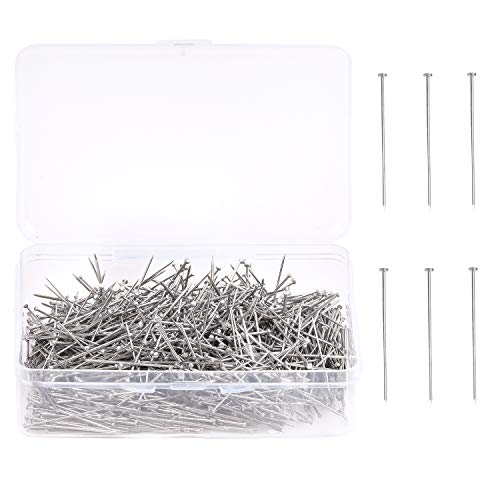
HiyaHiya is known for precision, and their stainless steel pins are no exception. These pins are incredibly smooth, featuring a polished finish that glides through even the most "sticky" or fuzzy mohair blends without a hitch.
Durability is the standout feature here; they resist bending even when subjected to the high tension required for aggressive lace blocking. If you are the type of knitter who blocks projects regularly, these will survive heavy use without losing their shape.
They are a bit pricier than your average hardware store find, but they are a professional-grade tool. They are an excellent choice for knitters who want a "buy it once" solution for their blocking kit.
Dritz Quilting T-Pins: Best Value Bulk Option
If you are a prolific knitter who often has two or three shawls blocking at once, you need a high volume of pins. Dritz quilting pins offer the best value for money, allowing you to stock up without breaking the bank.
These pins are reliable and functional, though they lack the specialized rust-resistant coatings of more expensive boutique brands. They are perfect for everyday projects or for use on synthetic fibers that don’t react to moisture in the same way natural proteins do.
For the best experience, keep these separate from your delicate lace pins. Use them for your sturdier, wool-blend projects, and save your high-end pins for the most precious, moisture-sensitive lace.
Why Rust-Resistant Pins Matter for Lace Fiber
Lace blocking requires the yarn to be thoroughly dampened, which creates a perfect environment for oxidation. If you use cheap, nickel-plated pins, the moisture can cause the plating to break down, leaving unsightly orange rust spots on your beautiful lace.
- Protein Fibers: Wool, silk, and alpaca are highly absorbent and will soak up any rust particles immediately.
- Light Colors: White, cream, and pastel yarns are the most susceptible to permanent discoloration from standard pins.
- Long Dry Times: Lace often takes 24-48 hours to dry completely, which is plenty of time for a chemical reaction to occur.
Always prioritize stainless steel or coated pins when working with luxury fibers. A rust stain on a 100-hour project is a heartbreak that is easily avoided with the right choice of hardware.
Choosing Between T-Pins and Blocking Combs
T-pins are the ultimate tool for precision and flexibility. They allow you to manipulate every single point of a scalloped edge or a complex picot bind-off individually, giving you total control over the final shape.
Blocking combs, like the Knit Blockers mentioned earlier, are all about efficiency and straight lines. They are fantastic for blocking large, rectangular shawls or the straight borders of a garment, but they lack the finesse required for intricate lace shaping.
The Pro Strategy: Most experienced lace knitters keep both in their kit. Use the combs to establish your main perimeter and straight edges, and use individual T-pins to pin out the delicate points and curves.
Essential Tips for Perfect Lace Blocking
The most important rule of blocking is to never force your lace into a shape it doesn’t want to take. If you find yourself pulling the fabric until the stitches look distorted, you have likely over-stretched it; ease off the tension.
- Check Your Gauge: Always pin your project to the dimensions specified in your pattern, but trust your eyes. If the lace looks "gaping" or thin, pull the pins in slightly.
- Use Enough Pins: Don’t be afraid to use a high density of pins. More pins mean less tension on each individual stitch, which leads to a more uniform finish.
- The Steam Method: If you are using a delicate fiber that shouldn’t be fully submerged, use a steamer to set the shape rather than full immersion.
Finally, always let your project dry completely before removing the pins. If you unpin while the fiber is even slightly damp, the weight of the fabric can cause it to sag or lose the shape you worked so hard to create.
Blocking is the bridge between a finished piece of knitting and a professional-looking garment. By selecting the right pins for your specific project and fiber, you ensure that your lace retains its intended beauty for years to come. Don’t settle for tools that might damage your hard work; invest in quality hardware that respects your craft. Happy blocking, and may your lace always lay perfectly flat.