
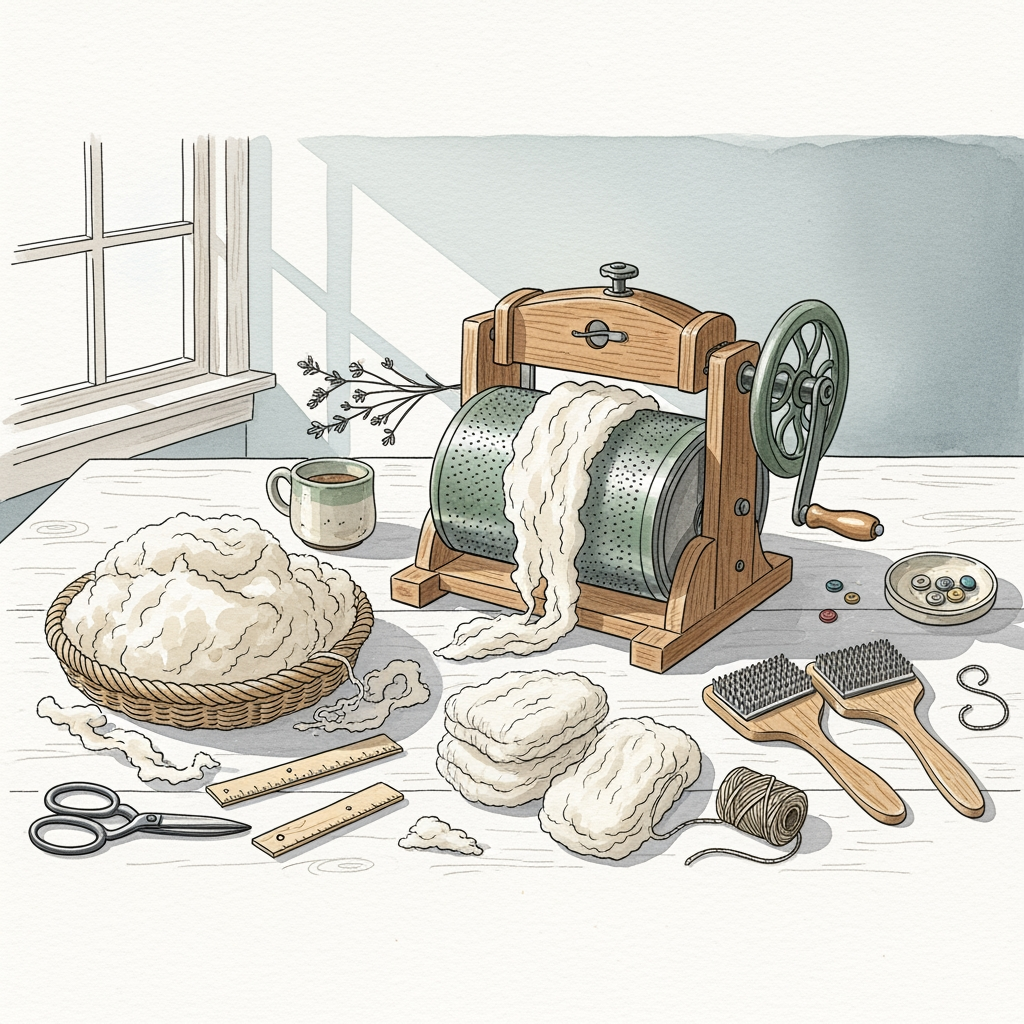
6 Best Hackles For Combing Longwools For Spinners
Master longwool preparation with our top 6 hackles. Discover how these essential tools align fibers, remove debris, and ensure smooth spinning for every yarn.
Combing longwool fibers is the secret to achieving that coveted, silky-smooth worsted yarn that holds up beautifully in heirloom lace projects. While carding creates a lofty, woolen-spun texture, a hackle aligns individual fibers to ensure your finished knit has incredible drape and stitch definition. Choosing the right tool for this process can feel overwhelming, but it is the most significant investment you will make for your spinning studio. Here is how to navigate the market to find the best hackle for your specific fiber goals.
Strauch Triple Row Hackle: Best Overall Choice
The Strauch Triple Row Hackle is a powerhouse for spinners who work with a variety of staple lengths. Its staggered tine arrangement provides a progressive combing action, which is essential if you want to avoid snapping delicate fibers while still achieving a perfectly aligned top.
When you are preparing a Cotswold or Leicester Longwool, you need a tool that can handle the volume without becoming a tangled mess. This hackle excels because it allows you to work through the fiber in stages, moving from the tips to the base with minimal waste.
The main tradeoff here is the physical footprint and the weight of the board. It is a substantial piece of equipment, but for those who spin large quantities of fiber for sweaters or blankets, the efficiency gain is undeniable.
Woolery Professional Single Row Hackle
If you prefer a more tactile, controlled experience, the Woolery Professional Single Row Hackle is an excellent choice. A single row of tines offers a different type of feedback, allowing you to "feel" the knots and neps as you pull the fiber through.
This model is particularly favored by spinners who prioritize precision over speed. Because you have a clear line of sight to the fiber being combed, you can easily identify and remove debris or vegetable matter that might otherwise end up in your finished yarn.
However, be aware that a single row requires more passes to achieve the same level of alignment as a triple-row board. It is a slower process, but for high-end projects like a fine-gauge shawl, the extra time spent at the hackle pays off in the final yarn’s smoothness.
Ashford Wool Hackle for Long Staple Fibers


Ashford tools are staples in the fiber arts community for a reason: they are functional, accessible, and built to last. Their wool hackle is specifically designed to handle the long, lustrous locks of rare-breed sheep that can be notoriously difficult to manage.
The spacing on this hackle is optimized for long-staple fibers, preventing the "clumping" that often happens with finer, more densely packed tools. If you are working with Lincoln or Wensleydale, this tool will help you maintain the fiber’s natural luster rather than breaking it during the preparation phase.
The downside is that it may be too coarse for fine, short-staple wools like Merino. If your fiber stash is mostly fine, crimpy wool, you might find that this tool lets too much "trash" pass through the tines.
Patrick Green Single Row Blending Hackle
Patrick Green is a name synonymous with high-quality fiber preparation, and his blending hackle is a favorite for those who love to create custom colorways. This tool is designed not just for alignment, but for mixing different fiber types or colors into a cohesive roving.
The tines are set with a specific geometry that encourages the fibers to intermingle without becoming matted. This is perfect for when you want to blend a bit of silk or mohair into your longwool for added strength and sheen in your handspun yarn.
It is a specialized tool, so it might feel like overkill if you only spin natural, unblended wool. But if you are a fan of custom spinning projects—like blending fibers for a color-blocked sweater—it is an invaluable asset.
Majacraft Fine Tine Hackle for Fine Wools
Majacraft understands that not all longwools are thick and coarse; some, like Bluefaced Leicester, are quite fine and require a gentler touch. Their fine-tine hackle is the gold standard for spinners who want to maintain the softness of their wool while still gaining the benefits of combing.
The density of the tines is the standout feature here, as it catches even the smallest tangles that would otherwise create a slub in your yarn. If you are spinning for a project where evenness is paramount, such as a delicate lace scarf, this hackle is your best friend.
The tradeoff is that fine tines are more prone to bending if you try to force through a massive, matted lock. You must be disciplined about working in small, thin sections to keep the tines in perfect condition.
Valkyrie Handcrafted Long-Tine Hackle
Valkyrie tools are often considered the "heirlooms" of the fiber world, featuring beautiful, handcrafted wooden bases and exceptionally sharp, high-quality steel tines. These hackles are designed for the serious spinner who wants a tool that is as beautiful as it is functional.
The extra-long tines allow you to load more fiber at once, which can significantly speed up your preparation time for large projects. It is a robust tool that feels incredibly stable on your workspace, giving you the confidence to pull through even the toughest locks.
Because these are handcrafted, they often come at a premium price point compared to mass-produced options. If you are just starting out, you might want to wait until you are sure that fiber preparation is a permanent part of your spinning practice.
Understanding Hackle Tine Density and Spacing
The density of the tines—how many pins per square inch—determines the "aggressiveness" of your combing. A high density is better for finer fibers that need careful separation, while lower density is perfect for coarse, long-staple wools that would simply clog up a finer tool.
- Low Density: Best for coarse, long-staple wools (e.g., Lincoln, Border Leicester).
- Medium Density: A versatile middle ground for most medium-staple breeds.
- High Density: Essential for fine wools or when you need to remove significant amounts of neps.
Don’t fall for the trap of thinking "more tines is always better." A hackle that is too dense for your fiber will cause breakage, leading to a weaker yarn that is prone to pilling once knitted.
Essential Safety Tips for Using Sharp Hackles
Treat your hackle with the same respect you would a set of sharp sewing shears or a heavy-duty rotary cutter. The tines are incredibly sharp, and it is all too easy to snag a finger or palm if you are rushing the process.
Always keep your hackle covered when not in use, preferably with a wooden cover or a heavy-duty leather sheath. When working, ensure the board is securely clamped to your table so it cannot slide forward when you pull the fiber through.
Finally, never work with a hackle while tired or distracted. A momentary lapse in focus while pulling a lock of wool can lead to a nasty puncture wound, which is the quickest way to ruin a perfectly good spinning session.
How to Properly Mount Your Hackle for Spinning
A hackle that wiggles while you work is not only frustrating; it is dangerous. The most effective way to mount a hackle is to use heavy-duty C-clamps to secure it to a sturdy, waist-height table.
Position the hackle so that you are pulling the fiber away from your body, rather than toward it. This ergonomic setup protects your wrists and shoulders from strain, allowing you to spin for longer periods without the fatigue that often comes with repetitive motion.
If you are short on space, consider mounting your hackle to a portable board that can be clamped to any surface. This allows you to tuck the tool away in a closet or drawer when you aren’t using it, keeping your studio space clean.
Maintaining Your Hackle Tines for Longevity
Rust is the enemy of your hackle, especially if you live in a humid climate. After every session, wipe the tines down with a light coating of mineral oil and store the board in a dry place to prevent corrosion.

If a tine does happen to bend, do not try to hammer it back into place with a metal tool, as this can weaken the steel. Use a pair of smooth-jawed pliers to gently nudge it back into alignment, and always check for burrs that could snag your fiber.
Treat your hackle as a lifelong investment in your craft. With proper maintenance, a good hackle will stay sharp and effective for decades, ensuring your handspun yarn remains consistent and beautiful for years to come.
Investing in a quality hackle is a transformative step for any spinner looking to elevate their yarn from "rustic" to "professional." By matching the tine density to your fiber type and maintaining your tool with care, you will find that the spinning process becomes significantly more enjoyable. Remember that the best hackle is the one that fits your specific fiber preferences and workspace constraints. Happy spinning, and may your longwools always be smooth and perfectly aligned.
