6 Best Weighted Clips For Keeping Fringe Strands Taut
Tired of unruly bangs? Discover the 6 best weighted clips designed to keep fringe strands perfectly taut, ensuring a polished, stay-put look all day long.
Achieving perfectly straight fringe on a handmade shawl or wall hanging is often the most frustrating part of the finishing process. Without proper tension, strands tend to curl, twist, or hang at uneven lengths, ruining the clean look of your hard work. Weighted clips act as the "third hand" every fiber artist needs to keep fibers taut while you trim or steam them into submission. Mastering this simple tool will elevate your projects from homemade to professional-grade in a single afternoon.
Clover Clip-On Weights for Precision Macrame


Clover is a household name for a reason: their precision tools are designed for those who obsess over the details. These clip-on weights are particularly useful when you are working with fine-gauge cotton cord or delicate silk fringe.
The design is sleek and unobtrusive, meaning they won’t snag your fibers as you move them around the workspace. Because they are relatively lightweight, they are best suited for shorter fringes where you need just enough pull to prevent curling without stretching the yarn out of shape.
If you are working on a piece with intricate knotting, these clips provide the stability needed to keep the pattern consistent. Just be aware that they lack the heavy-duty grip of industrial clips, so they are not ideal for thick, heavy wool roving.
Dritz Heavy Duty Drapery Weights for Fringe
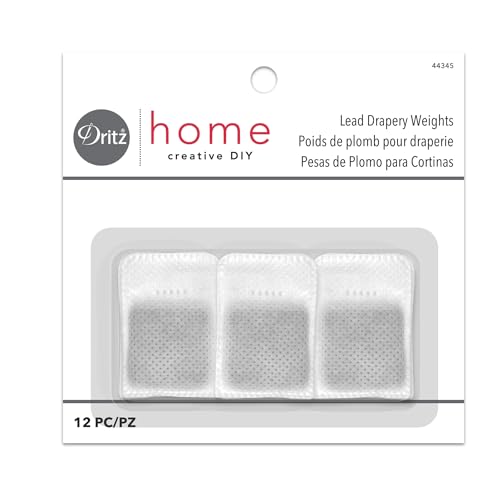
When you are working with heavier fibers like chunky wool or thick linen, standard craft clips often fail to provide enough gravity. Dritz drapery weights are a clever "knitter’s hack" that offers a much higher gram-weight than typical hobby store clips.
Because these were originally designed for curtains, they are built to handle significant tension. You can easily sew them onto a scrap piece of fabric or attach them via a small jump ring to your fringe strands.
They are essentially indestructible, making them a one-time investment for your studio. Use these when you need to "train" a particularly stubborn, twisty yarn to hang vertically during the blocking process.
Beadsmith Weighted Clips for Fiber Tension

Beadsmith clips are a staple for those who dabble in both jewelry making and fiber arts. They feature a unique clamping mechanism that is much gentler on delicate fibers than a metal spring clamp.
They offer a balanced, centered weight that prevents the fringe from swinging or tilting while you work. This is vital when you are measuring and cutting your fringe to a precise length, as any tilt will result in a crooked hemline.
I recommend these for medium-weight yarns, such as worsted weight merino or alpaca blends. They provide enough tension to pull out the "memory" of the yarn from being in a skein, ensuring your fringe stays straight after the clips are removed.
Pony Weighted Tension Clips for Weaving

Pony tools are known for their accessibility and straightforward functionality. Their tension clips are designed with a wide jaw, which distributes pressure across a larger surface area of the yarn.
This is a critical feature if you are working with fragile singles or loosely spun yarns that might snap under concentrated pressure. The wide grip prevents the "pinching" effect that can leave permanent marks or indentations on your fiber.
These are excellent for beginners who are still learning how much tension is "too much." They provide consistent, predictable results across a wide variety of fiber types.
Hemline Weighted Hem Clips for Yarn Control

Hemline clips are designed to slide along a hem, making them perfect for adjusting your fringe length on the fly. If you are working on a large project like a floor-length tapestry, these allow you to quickly reposition your weights as you work your way across the piece.
They are compact, which means you can pack them tightly together to create a uniform weight distribution. This is essential for achieving a perfectly flat, "weighted" look on wide-scale projects.
The trade-off here is the size; they are quite small, so they don’t provide a massive amount of downward pull. Use these for fine-tuning the drape rather than stretching out heavy, unruly fibers.
Prym Ergonomic Weighted Clips for Textiles

Prym’s focus on ergonomics makes these clips a favorite for knitters who suffer from hand fatigue or joint pain. The clips are easy to open and close, requiring very little manual dexterity, which is a massive relief during long finishing sessions.
The coating on these clips is particularly smooth, ensuring that they won’t snag on mohair or other fuzzy fibers. This is a significant advantage over cheaper, raw metal clips that can catch and pull at your yarn.
If you have a large shawl with hundreds of fringe strands, the ease of use provided by these clips is worth the slightly higher price point. They make the tedious task of fringe management feel much less like a chore.
Why Weighted Clips Improve Your Fiber Projects
Fringe is often the final element of a project, and it is the first thing people notice. Without weights, yarn has a natural tendency to retain the "kink" from the ball or skein, leading to a wavy, uneven finish.
By applying consistent, downward tension, you allow the fibers to relax into their natural state. This is especially important for natural fibers like wool, which respond beautifully to the combination of light tension and steam blocking.
Using weights ensures that every strand of your fringe is identical in length. It turns a manual, eye-balled process into a structured, mechanical one, which is the secret to professional-looking results.
How to Choose the Right Weight for Your Fringe
Choosing the right clip comes down to the WPI (Wraps Per Inch) of your yarn. A heavy, bulky yarn requires more gram-weight to overcome its natural bounce, while a lace-weight yarn needs very little weight to avoid being overstretched.
- Lace/Fingering weight: Use light, plastic-coated clips to prevent indentation.
- Worsted/DK weight: Standard medium-weight clips are usually sufficient.
- Bulky/Super Bulky weight: Use heavy-duty drapery weights or metal clamps to provide enough pull.
Always test your weight on a scrap piece of the same yarn first. If you see the fibers thinning out where the clip is attached, your weight is too heavy or the clip’s grip is too aggressive.
Tips for Preventing Damage to Delicate Yarns
Delicate fibers like silk, angora, or high-twist merino are prone to damage if handled too roughly. When using weighted clips, always place a small piece of scrap felt or tissue paper between the clip and the yarn.
This creates a buffer that distributes the pressure and prevents the metal or plastic teeth from biting into the yarn. This simple step can save you from having to re-do an entire fringe because of a snagged or broken strand.
Avoid leaving weights on your project for extended periods, such as overnight. Once the yarn has been steamed or set, remove the weights to allow the fibers to fully recover their natural loft and bounce.
Maintenance and Care for Your Tension Tools
Like any tool in your knitting kit, your weighted clips need a little love to stay effective. Keep them clean of dust and lint, especially if you work with fuzzy fibers like mohair, which can clog the spring mechanisms.
If you use metal clips, keep them in a dry environment to prevent oxidation. A rusty clip can leave permanent stains on light-colored yarns, which is a disaster after you’ve spent weeks on a project.
Store your clips in a dedicated container so they don’t get tangled with your stitch markers or needles. A well-organized set of tools will not only last longer but will also make your finishing process feel much more streamlined.
Investing in quality weighted clips is a small step that yields massive improvements in the professional appearance of your knitwear. By understanding the relationship between fiber weight and tension, you can ensure your fringe looks intentional and perfectly balanced every time. Don’t let a sloppy hemline detract from your hard work; grab a set of weights and give your projects the polished finish they deserve.