7 Best Claw Weights For Fabric Stability To Use
Discover the 7 best claw weights to enhance fabric stability. Learn how these essential tools ensure precision and prevent shifting during your sewing projects.
Machine knitting is a delicate dance between mechanical precision and the physical weight of your fabric. Without the proper tension provided by claw weights, your stitches can easily drop, snag, or suffer from uneven tension. Choosing the right tool ensures your machine hums along smoothly while your fabric grows evenly. Here are seven essential claw weights that provide the stability every knitter needs for professional-quality results.
Silver Reed KA-8210 Claw Weight: Best Overall
The Silver Reed KA-8210 is the workhorse of the machine knitting world for a reason. It offers a perfect balance of heft and grip, making it the go-to for standard-gauge projects ranging from cotton blends to wool.
Its design is intuitive, allowing it to hang securely without damaging delicate fibers. Whether you are knitting a simple stockinette sweater or complex tuck stitches, this weight provides the consistent downward pull required for clean loops.
If you are building your collection, start here. It is the most versatile weight for everyday knitting and handles a wide variety of yarn weights with ease.
Brother KA-160 Claw Weight for Fine Gauge
When you move into fine-gauge knitting, such as lace or thin silk blends, standard weights often prove too heavy. The Brother KA-160 is specifically engineered to provide the lighter, more precise tension needed for these delicate tasks.
Using a heavy weight on fine yarn risks stretching the stitches or even snapping the strand. These weights allow the fabric to move through the machine without the distortion that heavier tools often cause.
Think of these as the "surgical tools" of your knitting kit. They are essential if you frequently work with cobweb-weight wool or fine synthetic fibers that require a gentle touch.
Passap Automatic Claw Weight for Heavy Fabrics
Passap machines are known for their robust, dual-bed nature, and they require a different approach to weighting. The Passap automatic claw weights are designed to handle the increased resistance of thick, heavy fabrics.
Because these machines often knit double-bed patterns, the fabric can become quite bulky. These weights are built to stay in place even when the needle bed is fully loaded with dense cables or ribbing.
If you find your fabric is "climbing" or bunching up toward the needle bed, you likely need the extra gravitational pull these provide. They are indispensable for winter-weight garments and heavy-duty wool projects.
KnitKing Standard Claw Weights for Stability


KnitKing weights are prized for their consistent, reliable grip on the fabric edge. They are particularly effective when you are working on long, straight panels where edge stability is paramount.
Many knitters struggle with "curling" edges, especially in stockinette stitch. These weights help keep the edge flat and consistent, which makes seaming your finished pieces much easier later on.
Don’t underestimate the importance of edge weight. A stabilized edge prevents the dreaded "laddering" that can occur when a stitch loses its tension at the boundary of your work.
Artisan Universal Claw Weights for Machines
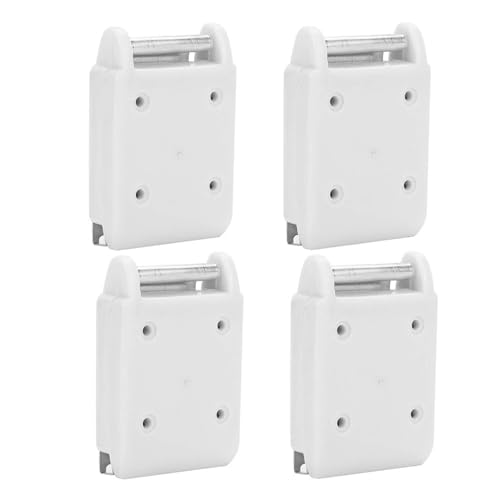
Artisan weights offer a great middle-ground for those using various machine brands. Their universal design means they can be adapted to fit different needle beds without needing a specific brand-matched set.
These are excellent for the knitter who owns a fleet of vintage machines. They provide a predictable, standard tension that works well across most common yarn types, from acrylics to natural wools.
If you are a hobbyist who experiments with different machines, these weights simplify your workflow. You won’t need a drawer full of proprietary tools when one universal set can handle the bulk of your projects.
Singer 10-Hook Heavy Duty Claw Weight Set
Sometimes a project requires serious tension, particularly when knitting thick, high-twist yarns or heavy-duty cottons. The Singer 10-hook set provides the extra surface area needed to distribute weight evenly across a wider width of fabric.

More hooks mean the weight is distributed across more stitches, which reduces the risk of creating "holes" or uneven tension marks in your fabric. This is a crucial consideration when working with expensive or delicate fibers.
Use these when you are knitting wide panels, like the back of a cardigan. They prevent the center of the fabric from sagging while the edges remain taut, ensuring a uniform gauge throughout.
Studio by Silver Reed Claw Weight Assembly
The Studio assembly weights are designed for knitters who need a modular approach. They allow you to add or subtract weight as your fabric grows, which is a key technique for maintaining consistent stitch size.
As your fabric gets longer, its own weight begins to pull on the needles. The Studio system makes it easy to shift the weights upward, ensuring the tension at the needle bed remains constant from start to finish.
This is the secret to avoiding that "tapered" look in long garments. Always adjust your weights as your work progresses to keep the stitch density consistent from the hem to the shoulder.
Understanding Tension and Fabric Weight Balance
Tension is not just about the dial on your machine; it is the relationship between the yarn, the needle, and the weight. If your fabric is too light, the machine will struggle to form a loop; if it is too heavy, you risk dropping stitches.
The goal is to maintain a "happy medium" where the yarn feeds smoothly into the needles. Always test your tension with a swatch, and observe how the fabric hangs from the machine.
If the fabric is bowing or pulling away from the needles, add more weight. If the yarn is snapping or the needles are bending, you have too much weight.
How to Properly Attach Weights to Your Knitting
Always attach your weights to the cast-on edge as soon as you have enough length. Never let the machine run for more than a few rows without the appropriate weight, or your stitches will likely jump out of the needles.
When moving weights up, do it incrementally. Move one side at a time to ensure the tension remains balanced across the entire width of the needle bed.
Be careful not to snag your yarn with the claws. A gentle, upward motion when engaging the hooks will save your fiber from unnecessary wear and tear.
Troubleshooting Common Machine Knitting Issues
The most common issue is "dropped stitches," which almost always points to a lack of weight. If your machine is skipping, check your weights first before adjusting your tension dial.
Another issue is "uneven edges," which often happens when weights are placed too far apart. Use more, smaller weights across the width of the fabric to achieve a uniform pull.
Finally, remember that different fibers have different "memory." Superwash wools, for example, tend to grow more than non-superwash, so they may require slightly less weight to prevent over-stretching.
Investing in quality claw weights is one of the most practical upgrades you can make for your machine knitting practice. By matching the weight to your specific yarn and project, you eliminate the mechanical frustrations that often lead to abandoned projects. With the right tension, you can focus on the creative joy of watching your fabric grow stitch by perfect stitch. Happy knitting!