7 Best Mesh Laundry Bags For Rinsing Dyed Yarn
Keep dyed yarn safe with these 7 top-rated mesh bags. Learn how to prevent tangling and felting during rinsing with our expert guide to the best laundry tools.
Rinsing hand-dyed yarn is a delicate process where one wrong move can lead to a felted disaster or a tangled, unusable mess. Using a high-quality mesh bag provides a vital layer of protection, keeping your precious fibers contained while allowing water to flow freely through the skeins. After two decades at the dye pot, I have learned that the right equipment saves hours of tedious detangling. These seven bags represent the best options to ensure your colorwork stays vibrant and your yarn remains in pristine condition.
Bagail Mesh Laundry Bags: Best Overall Set
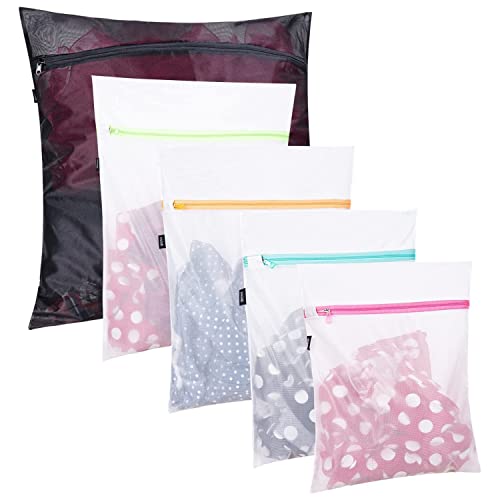

When you are dyeing a full sweater’s worth of yarn, you need a variety of sizes to accommodate different skein lengths. The Bagail set is a staple in many studios because it offers a versatile range of dimensions that fit everything from tiny 50-gram mini-skeins to large, bulky-weight hanks.
The mesh on these bags is fine enough to prevent the yarn from snagging on the zipper, which is a common nightmare when rinsing loosely twisted wool. Because they come in a multi-pack, you can dedicate one bag to each colorway to prevent accidental bleeding between batches.
The zippers are sturdy, but they do require a quick tuck into the provided elastic flap to ensure they stay closed during the rinse. If you are looking for a reliable, all-purpose solution for your dye room, this set is hard to beat.
Honey-Can-Do Mesh Bags: Best for Durable Choice

If you tend to be a bit rough with your equipment, you need bags that can withstand heavy, water-logged wool. The Honey-Can-Do bags are constructed with a heavier-duty mesh that holds its shape well, even when you are gently squeezing out excess water.
These bags excel when you are rinsing heavier fibers like worsted-weight superwash wool or cotton, which gain significant weight when saturated. The structural integrity of the fabric ensures that the yarn doesn’t bunch up in the corners, promoting an even rinse.
While the mesh is slightly thicker, it still allows for excellent water circulation. If you value longevity and need a bag that won’t tear after a few dozen dye sessions, these are your best bet.
Whitmor Zippered Bags: Best for Small Skeins

We have all been there: you have a handful of leftover yarn scraps that you want to over-dye for a scrappy project. The Whitmor bags are perfectly sized for these smaller, lighter loads where a large bag would just cause the yarn to tumble and tangle unnecessarily.
Their compact size makes them ideal for rinsing individual skeins without them shifting around too much. When yarn moves excessively in water, it creates friction, which is the primary enemy of delicate fibers prone to felting.
These bags keep your smaller batches organized and secure, preventing the dreaded "yarn barf" that happens when a skein loses its twist. They are a must-have for the experimental dyer who works in smaller quantities.
Brabantia Laundry Bag: Best Premium Option

Sometimes, you want a tool that feels as luxurious as the hand-dyed silk or cashmere you are rinsing. The Brabantia bag features a high-quality, soft-touch mesh that is exceptionally gentle on delicate fibers.
The zipper is remarkably smooth and hidden, which is a massive plus when handling luxury fibers that snag on even the smallest plastic or metal edges. It feels secure and premium, giving you peace of mind that your most expensive yarn is protected.
While the price point is higher, the quality of the materials justifies the investment for high-end projects. If you are rinsing hand-spun or luxury blends, this is the bag that will treat your fibers with the respect they deserve.
Songmics Mesh Set: Best for Large Batches

When you are dyeing for a large-scale project, such as a full-length coat or a heavy blanket, you are dealing with a significant amount of weight. The Songmics set is designed with larger dimensions, making it the perfect choice for rinsing multiple skeins at once without overcrowding.
Overcrowding is a common mistake that leads to uneven rinsing and potential color transfer. By using these larger bags, you allow each skein the space it needs to breathe and release excess dye effectively.
The construction is robust, ensuring the bag maintains its shape even when fully loaded. For the production dyer or the ambitious knitter working on a massive project, this set provides the necessary capacity to work efficiently.
Simple Houseware Bags: Best Value for Money

You don’t always need bells and whistles to get the job done, especially when you are just starting out with dyeing. The Simple Houseware bags offer a straightforward, no-nonsense design that performs exactly as expected for a very reasonable price.
These bags are lightweight and easy to store, which is helpful if your dye space is also your living room. They handle the basic rinsing process with ease, keeping your yarn contained and organized throughout the cycle.
While they may not have the heavy-duty longevity of more expensive options, they are perfect for the hobbyist on a budget. They provide the fundamental protection your yarn needs without breaking the bank.
Zoppen Mesh Bags: Best for Delicate Fibers
When working with fine lace-weight yarns or single-ply fibers, the mesh itself can sometimes be too abrasive. The Zoppen bags are designed with a finer, softer weave that minimizes friction against the yarn’s surface.
This is critical for fibers that are highly susceptible to pilling or breaking during the wet-finishing process. By reducing the texture of the bag, you ensure that the delicate structure of the yarn remains intact from the dye pot to the drying rack.
If your stash includes a lot of mohair, angora, or high-twist lace, these bags are an essential tool for your kit. They offer a level of protection that prevents the "fuzzing" that often occurs when yarn is agitated in a harsher mesh.
Why Mesh Bags Are Essential for Dyed Yarn
Rinsing dyed yarn is a high-stakes moment where your hard work can be undone by improper handling. Using a mesh bag is the most effective way to keep your skeins from tangling, which is nearly impossible to fix once the yarn is wet and heavy.
Beyond preventing tangles, these bags are crucial for managing the "bleed" that often happens during the first rinse. By containing the yarn, you can easily lift it out of the basin, inspect the water, and repeat the process without ever needing to touch the wet, dye-heavy strands directly.
- Prevents entanglement: Keeps the yarn twist intact.
- Facilitates easy handling: Makes moving yarn between rinse basins safer.
- Protects fiber integrity: Reduces friction and potential felting.
How to Prevent Bleeding During Rinsing
Bleeding occurs when the dye molecules have not fully bonded to the fiber or when the water temperature changes too drastically. Start your rinse with water that is the same temperature as your final dye bath to avoid shocking the fibers and causing them to release excess color.
Gradually introduce cooler water, but never use extreme temperature shifts, as this can cause certain fibers to felt. Using a splash of white vinegar in your final rinse can also help set the dye and neutralize any residual alkalinity.
Always rinse until the water runs completely clear, even if it takes multiple soak-and-squeeze cycles. Patience is your best tool here; rushing the rinse is the most common cause of color transfer in finished garments.
Key Features for Yarn Rinsing Mesh Bags
When selecting a bag, prioritize the zipper quality and the mesh density. A snag-prone zipper will ruin a skein of hand-dyed yarn faster than almost anything else, so look for models with protective flaps.
The mesh should be tight enough to keep the yarn inside but porous enough to allow water and dye to flow freely. If the mesh is too dense, the water will pool inside, making it difficult to rinse out all the soap and excess dye.
- Zipper Flap: Essential for preventing snags on delicate plies.
- Mesh Size: Fine enough to contain yarn, porous enough for flow.
- Durability: Must handle the weight of water-saturated wool.
Investing in the right mesh bags is a small step that pays off in the long run by protecting your time, effort, and expensive materials. By choosing the right bag for your specific project scale and fiber type, you eliminate the stress of tangling and felting during the rinse. Remember that the goal is to move the water through the yarn, not the yarn through the water. With these tools in your kit, your hand-dyed projects will remain as vibrant and beautiful as the day they left the pot.