6 Best Notebook Sets For Pattern Annotation To Try
Discover the 6 best notebook sets for pattern annotation. This guide highlights top picks to help you organize designs, track adjustments, and boost accuracy.
Keeping a dedicated knitting journal is the secret bridge between being a casual hobbyist and a master craftsperson. When you document your modifications, needle changes, and fiber reactions, you stop guessing and start designing. These six notebook systems offer the structure needed to turn your scattered pattern notes into a reliable archive of your creative journey. Whether you are tracking complex lace repeats or simple stockinette, the right notebook makes all the difference.
Moleskine Classic Notebook: Best for Durability
If you are the type of knitter who drags your project bag through airports, coffee shops, and fiber festivals, you need a notebook that can take a beating. The Moleskine Classic is legendary for its hard cover and sturdy binding, which protects your precious notes from getting crushed or torn.
When you are mid-project, your notes often become a roadmap for your modifications. A flimsy notebook will lose its integrity after a few weeks of being stuffed into a bag with metal needles and scissors. The Moleskine’s elastic closure ensures your notes stay tucked away, keeping your written gauge swatches and row counts safe from the elements.


However, be aware that the paper is relatively thin. If you use heavy-handed felt-tip pens to mark your charts, you might deal with ghosting on the reverse side. For the knitter who values physical longevity over paper thickness, the Moleskine Classic remains the gold standard for long-term project storage.
Leuchtturm1917 Medium: Best for Organization
The Leuchtturm1917 is a favorite among knitters who thrive on structure and indexing. Its standout feature is the pre-numbered pages and the dedicated blank table of contents at the front.
For a knitter working on multiple projects at once, this is a lifesaver. You can easily flip to page 42 to check the heel turn instructions for your socks, then jump to page 88 for the cable repeat on your sweater. It turns your notebook into a searchable database rather than a chronological mess.
The paper quality is slightly better than other mass-market brands, handling most ink pens without significant bleed. If you find yourself losing track of which project is which, this notebook’s organizational layout is your best investment.
Field Notes Kraft Memo: Best for Project Bags
Sometimes, the best notebook is the one you actually have with you when inspiration strikes. The Field Notes Kraft Memo is small, flexible, and virtually weightless.
These notebooks are perfect for keeping inside a small project bag alongside your circular needles and stitch markers. They are ideal for jotting down quick adjustments, like when you decide to add an extra inch to a sleeve length or realize you need to decrease one stitch every ten rows.
Because they are so affordable and slim, you can dedicate one notebook to a single complex project. When the project is finished, you can tuck the notebook directly into the finished garment’s storage bin. They are the ultimate disposable tool for the knitter who values portability above all else.
Hobonichi Techo Planner: Best for Daily Tracking
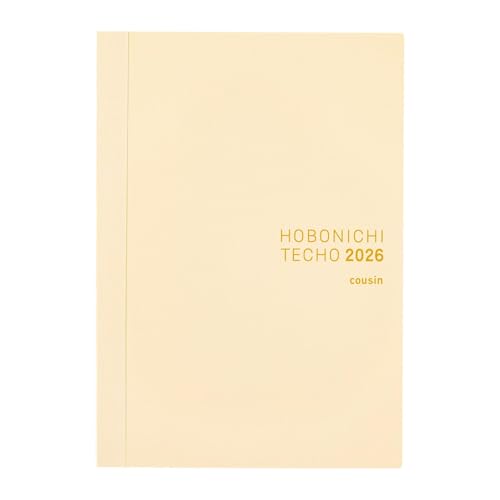
If your knitting life is as much about the schedule as it is about the stitches, the Hobonichi Techo is a brilliant choice. Its grid paper layout is perfect for drawing out custom colorwork charts or mapping out stitch patterns.
The daily page format allows you to track your progress on a granular level. You can note how many rows you completed each day, which is particularly helpful when you are working on a massive project like a king-sized afghan and need to stay motivated.
The Tomoe River paper used in these planners is incredibly thin yet remarkably resistant to ink bleed. It allows you to fit a massive amount of information into a compact space. Use this if you want to combine your knitting log with your daily life, creating a beautiful historical record of your year in yarn.
Rhodia DotPad Notebook: Best for Charting Stitches
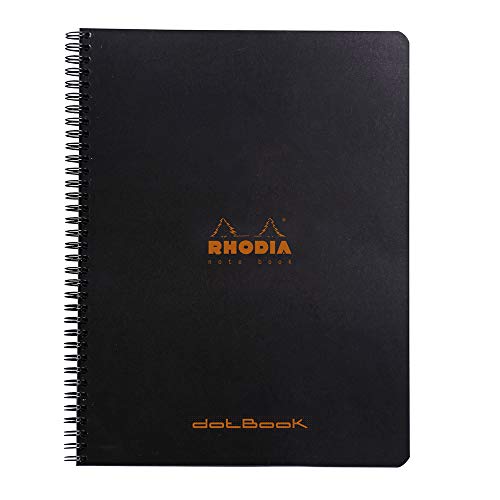
The dot grid is arguably the most versatile layout for any knitter. The Rhodia DotPad uses a subtle grid that provides guidance for drawing charts without the visual clutter of solid lines.
When you are designing your own lace or stranded motifs, the dots act as a coordinate system. You can easily plot out increases, decreases, and yarn-overs with precision. It is also excellent for sketching out schematic shapes before you start calculating your stitch counts.
The paper is exceptionally smooth, which makes writing feel effortless. For the knitter who spends more time drafting patterns than following them, the Rhodia DotPad is an essential creative tool.
Midori MD Notebook: Best for Fountain Pen Users
If you enjoy the tactile experience of using a fountain pen to record your knitting notes, the Midori MD is in a league of its own. The paper is specifically designed to handle fountain pen ink without feathering or bleeding.
Fiber arts is a sensory hobby, and using high-quality paper makes the act of logging your progress feel like a ritual. The minimalist design of the Midori MD ensures that the focus remains entirely on your notes and sketches.
Because the paper is so absorbent and high-quality, it handles heavy ink application beautifully. If you find that standard notebook paper ruins your pens or smears your ink, switch to the Midori MD for a superior writing experience.
Essential Features for Knitting Pattern Journals
When choosing a notebook, look for features that specifically serve the knitting process. A grid or dot-grid paper is non-negotiable for mapping out charts and stitch repeats.
- Lay-flat binding: Essential for keeping the book open while your hands are busy with needles.
- Archival quality paper: Ensures your notes don’t yellow or degrade over years of storage.
- Bookmark ribbons: Helpful for marking your current row in a pattern.
- Back pocket: A secure place to store loose yarn scraps or printed pattern inserts.
Don’t prioritize aesthetic covers over functional paper quality. Your journal is a technical manual for your craft, not just a decorative accessory.
Paper Quality: Why Weight Matters for Ink Bleed
Paper weight is measured in grams per square meter (GSM). For most knitting annotations, anything under 80gsm is likely to show bleed-through if you use fountain pens or felt-tip markers.
If you are using high-contrast inks to mark your charts, you need a higher GSM paper, ideally 90gsm or above. This prevents the ink from soaking through to the other side of the page, which would ruin your notes on the back.
Remember that thinner paper is not always worse, but it requires a more disciplined choice of writing instruments. Always test your favorite pens on the back page of a new notebook before committing your important pattern notes to it.
How to Annotate Patterns for Complex Colorwork
When dealing with complex colorwork, your annotations should focus on the "why" as much as the "what." Always note the specific yarn brands, colorways, and dye lots used, as these factors drastically affect the final look.
Use different colored pens to represent different yarn colors in your charts. This visual cue helps you spot errors in your stranded knitting before they become permanent mistakes. If you are working with multiple strands, note your tension-management techniques—such as holding one color in each hand—directly on the pattern page.
Never rely on your memory for stitch repeats. Write down the exact row where you started your color changes and any modifications you made to the chart to account for your personal gauge. A well-annotated chart is a map that saves you from having to "frog" or rip back your work later.
Maintaining a Consistent Knitting Project Log
Consistency is the hardest part of keeping a journal, but it is the key to improvement. Start every entry with the project name, the date cast on, and the needle size you are using.
Include a small snippet of the yarn label or a sample of the yarn itself taped into the page. This helps you remember the fiber content, which is vital if you ever want to replicate the project or need to know how to wash it. If you change needle sizes mid-project to fix your gauge, note exactly where the change happened.
Treat your notebook as a living document. It doesn’t need to be pretty, but it must be accurate. The goal is to create a resource that allows you to look back at a project two years later and understand exactly how you achieved your results.
Investing in a quality notebook is a commitment to your growth as a knitter. By documenting your process, you transform every project into a lesson that builds your expertise for the next cast-on. Choose the system that fits your current workflow, and start recording the details that make your knitting unique. Your future self will thank you when you reach for your notes to recreate that perfect sweater.