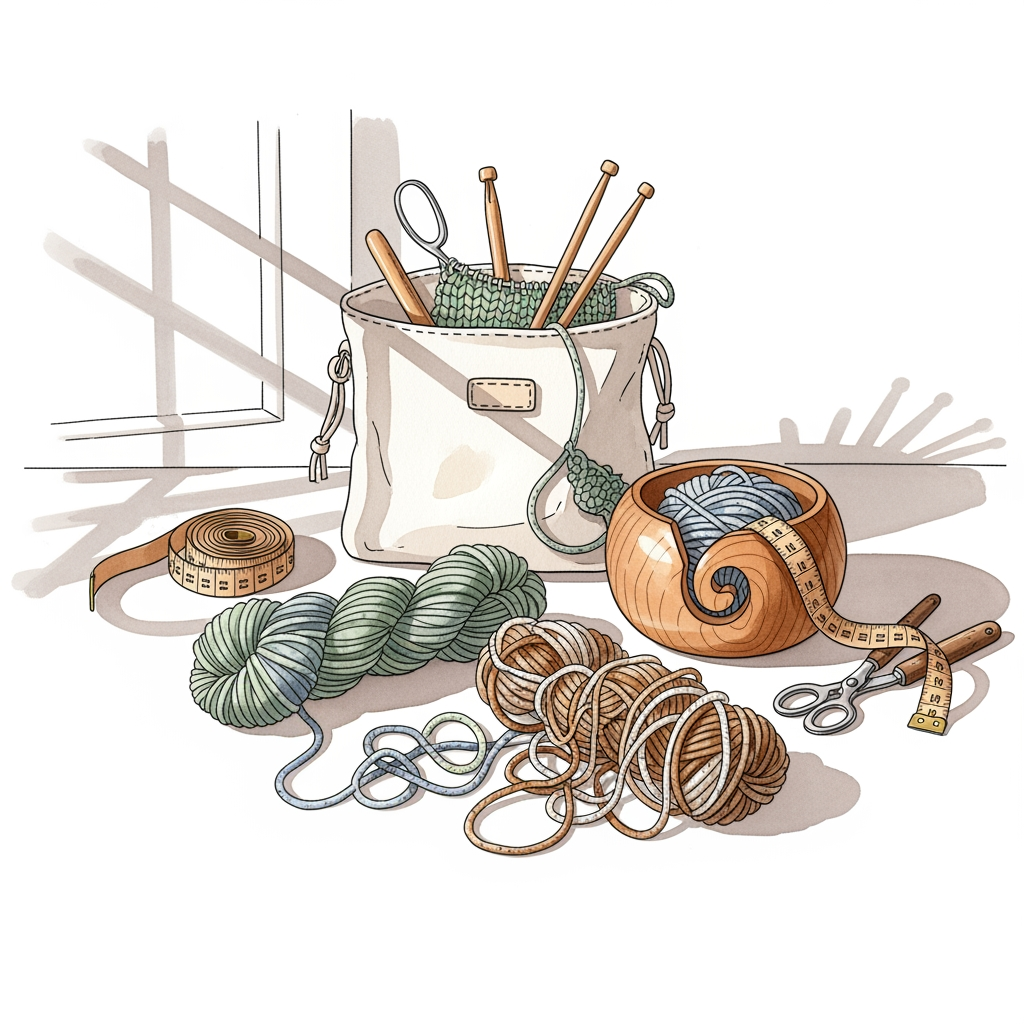
6 Best Project Totes For Mobile Crafting To Try
Discover the top 6 project totes for mobile crafting. We compare durability, storage, and portability to help you find the perfect bag for your creative needs.
Carrying a project from the living room to the coffee shop shouldn’t feel like a logistical nightmare. As a knitter, you need a vessel that protects your delicate hand-dyed wool from stray crumbs and snagging zippers while keeping your needles within arm’s reach. The right bag acts as a mobile studio, ensuring your rhythm remains unbroken regardless of your surroundings. These six selections represent the gold standard for makers who refuse to leave their knitting behind.
Della Q Maker’s Canvas Backpack: Best Overall


This bag is a masterclass in functional design for the knitter who frequently transitions between commuting and crafting. Its primary strength lies in the thoughtful interior layout, which includes dedicated pockets for needles and a yarn feeder that prevents your working yarn from tangling while you walk.
The canvas construction is rugged enough to withstand the wear and tear of daily travel without looking like a piece of camping gear. It sits upright on its own, a critical feature when you are trying to pull a new color of yarn from your skein in a cramped train seat.
However, the backpack style can be a double-edged sword if you are prone to overpacking. While it distributes weight beautifully, it is easy to overload it with too many projects, which can lead to accidental yarn tangling at the bottom of the main compartment.
Cocoknits Maker’s Portfolio: Best for Organization
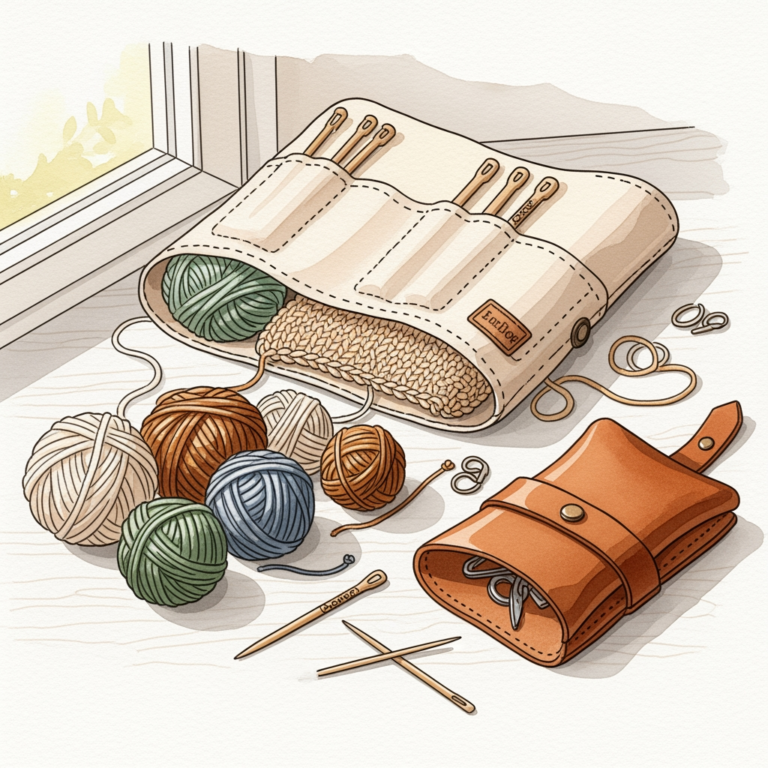
If you are the type of knitter who owns a full set of interchangeable needles and a dozen different stitch markers, this is your sanctuary. It functions less like a tote and more like a high-end filing system for your knitting life.
The portfolio format allows you to see every tool at a glance, eliminating the "digging" phase that often results in lost tapestry needles. It is particularly effective for those working on complex lace or cables, where having your chart, highlighter, and specific needle sizes organized is essential for maintaining your place.
The tradeoff here is portability; it is not a "toss-it-in-the-car" bag for a quick sock project. It is designed for the meticulous maker who needs their entire arsenal accessible, even when away from their home studio.
Fringe Supply Co. Field Bag: Best Minimalist Tote
There is a quiet confidence in the simplicity of this bag. It is designed for the knitter who prefers to focus on the stitches rather than the container, offering just enough space for a sweater quantity of yarn and the current project.
The bag’s structure is soft, meaning it conforms to your body as you carry it, making it an excellent companion for a long day of errands. The interior pockets are perfectly sized for a pair of circular needles and a small tin of notions, keeping the essentials from migrating to the bottom.
Because it lacks a rigid frame, it does not offer the same protection against heavy items being placed on top of your project. If you are working with delicate, single-ply yarns that are prone to felting or snagging, keep this bag in your lap rather than on the floor.
Namaste Maker’s Mini: Best Compact Carryall
Small projects like socks, hats, or mittens require a bag that doesn’t swallow your work whole. The Maker’s Mini is sized perfectly to keep a single project contained, preventing the yarn from rolling around and picking up unwanted debris.
Its compact footprint makes it a favorite for traveling light, as it fits easily into a larger carry-on bag or a standard purse. The material is typically wipeable, which is a massive advantage if you are knitting with lighter-colored wool that shows every speck of dirt.
Do not expect this bag to hold your entire collection of spare needles or a bulky reference book. It is a specialized tool for the minimalist who knows exactly what they need for a quick session of knitting while waiting for an appointment.
Thread & Maple The Maker’s Satchel: Best Luxury
This bag is an investment piece, crafted with the kind of attention to detail that mirrors the effort put into a hand-knit heirloom. It features high-quality leather and hardware that ages beautifully, developing a patina that tells the story of your knitting journey.
Beyond the aesthetics, the internal modularity is what sets it apart. It allows you to customize the space to fit your specific needs, whether you are carrying a large blanket project or several smaller accessory pieces.
The luxury comes with the responsibility of maintenance, as leather requires more care than canvas or nylon. If you choose this bag, be prepared to treat it with the same respect you give your most expensive hand-dyed yarns.
Tom Bihn Swift Knitting Bag: Best Durability

If your knitting bag is going to live in the trunk of your car or survive a hiking trail, the Tom Bihn Swift is the undisputed champion. It is built with heavy-duty materials that are practically indestructible, protecting your project from the elements and rough handling.
The design is utilitarian, focusing on ease of access and structural integrity. The top opening is wide enough to retrieve your knitting without catching your yarn on zippers or sharp edges, a common frustration with lesser bags.
The look is undeniably functional rather than fashionable, which may not suit every knitter’s personal style. However, if your priority is ensuring your knitting arrives at your destination in the exact condition you packed it, this is the most reliable choice.
What to Look for in a Knitting Project Tote Bag
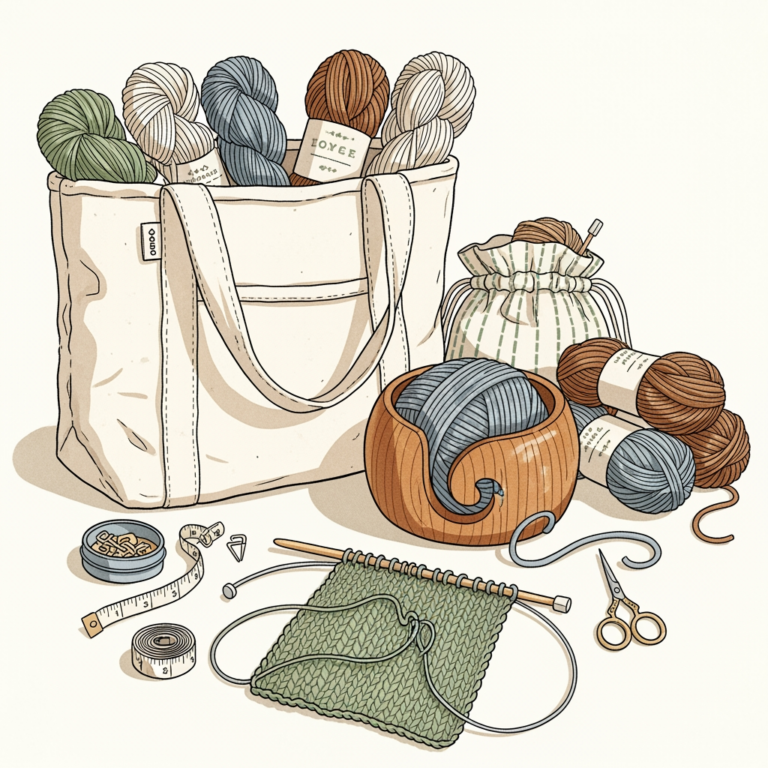
When shopping for a tote, prioritize the yarn feeder—a small grommet or opening that allows your yarn to flow from the inside of the bag while the lid remains closed. This single feature prevents the dreaded "yarn barf" and keeps your working yarn clean.
Consider the stiffness of the bag relative to your project type. If you are knitting a sweater with long circular needles, you need a bag that is wide enough to accommodate the cord without forcing the needles into a sharp bend that could damage them over time.
Finally, evaluate the closure mechanism. Zippers are secure but can snag delicate mohair or loose-ply yarns; magnetic snaps or drawstring closures are often safer for the fibers themselves, provided they offer enough security to keep your needles from sliding out.
Essential Features for Mobile Crafting Success
- Vertical orientation: Keeps the yarn feeding smoothly and prevents tangles.
- Needle pockets: Essential for keeping your circulars or DPNs from piercing the bag lining.
- Water-resistant base: Protects your project if you have to set the bag down on a damp surface.
- Light-colored interior: Makes it significantly easier to find black stitch markers or dark-colored notions.
How to Organize Your Notions for Travel Knitting
Do not carry your entire notions collection; curate a "travel kit" that contains only what the current project requires. A small, transparent pouch is better than a large organizer, as it allows you to verify you have your scissors, tape measure, and darning needle at a glance.
Store your stitch markers in a dedicated, secure container rather than loose in a pocket. If you are using delicate markers, a small magnetic tin is an excellent way to ensure they don’t vanish into the abyss of your bag.
Always keep a spare set of point protectors in your notions pouch. When you are knitting on the go, your needles are prone to sliding out of the stitches; capping them is the only way to ensure you don’t return to a dropped-stitch disaster.

Protecting Your Fiber Projects While on the Go
The greatest threat to a mobile project is the "toss-and-go" mentality. Always ensure your project is tucked inside a project bag before placing it into your larger tote, especially if that tote contains keys, pens, or other sharp objects.
If you are working with high-twist or superwash wools, be aware that they are more susceptible to snagging on zippers. If your bag has an exposed zipper, use a small piece of fabric or a needle case to create a barrier between the metal teeth and your precious fabric.
Lastly, be mindful of temperature and humidity changes. Natural fibers like wool and alpaca can absorb moisture; if you are traveling between climates, keep your project in a sealed, breathable bag to maintain the integrity of the yarn’s twist and the gauge of your fabric.
Finding the perfect knitting bag is a journey of trial and error, much like finding your favorite needle material or yarn base. Choose a bag that respects the time you put into your stitches and fits the reality of your daily commute. Once you have the right vessel, you will find that your knitting becomes a seamless part of your life rather than a chore to pack. Happy knitting, and may your yarn never tangle.