
6 Best Cotton Embroidery Threads For Reinforcing Edges
Discover the 6 best cotton embroidery threads to reinforce edges. Learn which durable, colorfast options ensure your needlework stays polished and fray-free.
Reinforcing the edges of your hand-knitted garments is the secret difference between a piece that lasts for decades and one that stretches out of shape after a single season. Many knitters focus entirely on the main body of their work, yet the structural integrity of a sweater or sock often fails at the seams and bind-offs. By selecting the right cotton embroidery thread, you can provide the invisible, non-stretching support necessary to keep your stitches crisp and secure. This guide explores the best cotton threads to help you master the art of structural reinforcement.
DMC Pearl Cotton Size 8: The Best All-Rounder


DMC Pearl Cotton Size 8 is the industry standard for a reason, offering a perfect balance of twist and tensile strength. It is a non-divisible, mercerized thread that maintains its integrity even when pulled through heavy wool or alpaca fabrics.
For most knitters, this is the go-to choice for reinforcing button bands or stabilizing a neckline. Its smooth finish ensures it slides easily through knitted stitches without snagging or fraying the host yarn.
Because it is widely available, you can easily match it to almost any color palette in your stash. The bottom line is simple: if you need a reliable, everyday thread that won’t let you down, reach for DMC Size 8.
Anchor Pearl Cotton: Superior Color Fastness

If you are working with high-contrast colorwork or expensive, hand-dyed yarns, color bleeding is a genuine nightmare. Anchor Pearl Cotton is renowned for its exceptional color fastness, ensuring that your reinforcement thread won’t stain your main project during the first wash.
The thread has a slightly softer hand than other brands, making it feel less intrusive against the skin. This is particularly important when reinforcing the interior edges of a cardigan that might rub against your neck or wrists.
While it excels in stability, keep in mind that its softer nature means it has slightly less "bite" than harder-twisted threads. Use Anchor when color security is your absolute priority, especially on light-colored garments.
Weeks Dye Works: Best for Variegated Projects
Weeks Dye Works produces beautiful, hand-over-dyed threads that offer subtle color shifts. When you are reinforcing a project knit with variegated yarn, a solid-colored thread can sometimes look stark or out of place.
These threads provide a more organic transition, blending into the variegated landscape of your knitting. They are slightly thicker and have a more matte finish, which mimics the texture of natural wool better than highly mercerized options.
Be aware that because of the dyeing process, the color distribution is intentional and irregular. Choose Weeks Dye Works when you want your reinforcement to disappear visually into a complex, multi-colored fabric.
Valdani Hand-Dyed: Best for Heirloom Quality
Valdani threads are the gold standard for projects intended to be passed down through generations. These threads are color-fast and, more importantly, they are extremely resistant to fading over time.
The thread itself has a luxurious, slightly rustic texture that provides excellent grip when sewn into a knitted edge. It acts almost like a structural skeleton, holding the knitted fabric firmly in place without adding unnecessary bulk.
Because it is a premium product, it is an investment for your most precious garments. Reserve Valdani for your heirloom sweaters and intricate lace projects where longevity is the primary goal.
Presencia Finca: Best Value for Bulk Projects
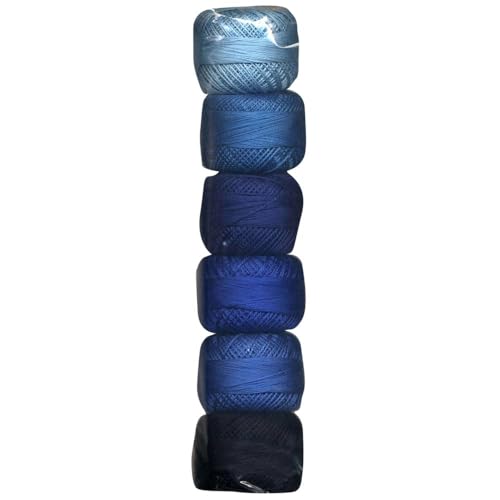
When you are finishing a large collection of items or reinforcing the edges of many baby blankets, cost becomes a factor. Presencia Finca provides high-quality Egyptian cotton at a price point that makes it feasible for bulk work.
It is a very consistent, strong thread that doesn’t snap under tension. This consistency is vital when you are working long, straight lines along a cardigan front where you need the thread to hold even tension throughout.
Do not mistake the lower price for lower quality; it is simply a more utilitarian option. Stock up on Presencia Finca for your heavy-duty finishing needs and large-scale reinforcement projects.
Aurifil 12wt Cotton: Best for Delicate Edges

Aurifil 12wt is significantly thinner than standard Pearl Cotton, making it ideal for fine-gauge knitting. If you are working with fingering weight or lace weight yarn, a heavy embroidery thread will look bulky and awkward.

The 12wt thread provides enough strength to stabilize a delicate edge without adding weight or stiffness. It is remarkably smooth, which prevents the "sawing" effect that thicker threads can sometimes have on fine wool fibers.
It is a favorite among machine quilters, but it translates beautifully to hand-finishing for knitters who appreciate a subtle, refined look. Use Aurifil when you need a "barely there" reinforcement that preserves the drape of your delicate fabric.
Why Reinforcing Edges Improves Garment Longevity
Knitted fabric is essentially a series of loops that want to move and stretch. Without reinforcement, heavy areas like button bands, pockets, and necklines will inevitably sag under the weight of the garment.
By sewing a non-elastic cotton thread into these high-stress zones, you create a permanent anchor. This prevents the "growing" effect that happens when you hang a heavy sweater on a hanger or wear it frequently.
Think of it as the foundation of a house; the knitting is the decor, but the reinforcement is the structural support. A small amount of effort at the finishing stage prevents hours of repair work later.
Understanding Cotton Thread Weights and Thickness
In the world of embroidery thread, the weight number is counter-intuitive: the higher the number, the thinner the thread. A size 12 thread is much finer than a size 5 thread.
For knitting, you must match the thread weight to the yarn weight to avoid distorting the stitches. If you use a thread that is too thick, it will pull the stitches out of alignment; if it is too thin, it may not provide enough support.
- Size 5-8: Best for worsted and bulky weight yarns.
- Size 12: Best for fingering and sport weight yarns.
- Size 16+: Best for lace weight and extremely delicate projects.
How to Choose the Right Thread for Fiber Matching
The goal of edge reinforcement is to be invisible while providing maximum support. You should always aim to match the fiber content of your reinforcement to the fiber of your garment when possible, but cotton is the universal choice for its lack of stretch.
Consider the "hand" of your yarn; if your yarn is fuzzy and matte, a high-sheen mercerized thread will stand out like a sore thumb. In those cases, choose a matte-finish cotton thread to ensure a seamless look.
Always perform a "stretch test" by sewing a small sample of your thread into a swatch of your yarn. If the thread causes the swatch to pucker, you are using too much tension or a thread that is too heavy.
Essential Tips for Securing Edges While Knitting
The best time to think about reinforcement is while you are still working on the garment. You can carry a strand of reinforcement thread along the edge as you knit, or sew it in later using a tapestry needle.
When sewing it in later, use a "running stitch" that mimics the path of the knitted stitches. This allows the reinforcement to move slightly with the fabric while still providing a hard stop against over-stretching.
Never pull the thread tight; it should sit neutrally against the fabric. If you pull it tight, you will create a permanent pucker that ruins the drape of the garment. Always lay your work flat to ensure the reinforcement is applied without tension.
Reinforcing your knitwear is the hallmark of a truly skilled maker. By choosing the right cotton thread and applying it with care, you ensure that your hard work survives the test of time and heavy wear. Start with a small experiment on a swatch to see how different weights interact with your chosen yarn. With these tools in your kit, you can confidently finish your garments knowing they are built to last.

