
6 Best Protective Spray Sealants For Costume Jewelry
Keep your favorite pieces shiny and tarnish-free with these 6 best protective spray sealants for costume jewelry. Read our expert guide and shop the top picks.
Costume jewelry, much like a hand-knit garment, requires intentional care to maintain its luster and structural integrity over time. While a delicate lace shawl benefits from gentle hand-washing and proper blocking, metal jewelry is prone to oxidation, tarnishing, and skin-reactive discoloration. Applying a protective sealant acts as a barrier, similar to how one might treat finished felted items to prevent pilling or wear. Selecting the right product ensures that a piece remains a staple in a collection rather than a fading memory.
Krylon Crystal Clear: The Best Overall Sealant


Krylon Crystal Clear serves as the industry standard for a reason: it balances accessibility with a reliable, non-yellowing finish. Much like choosing a versatile wool-nylon blend for socks, this sealant provides a sturdy, predictable outcome for a wide variety of metal bases.
It dries exceptionally fast, preventing the “tacky” feeling that can plague poorly cured pieces. This is vital when working with costume components, as humidity can cause jewelry to stick to skin or clothing if the sealant remains soft.
Opt for this when dealing with inexpensive base metals that are prone to turning skin green. A light, even mist provides enough coverage to stop oxidation without building up a thick, plastic-like layer that obscures fine details.
Mod Podge Acrylic Sealer: Best for DIY Crafters
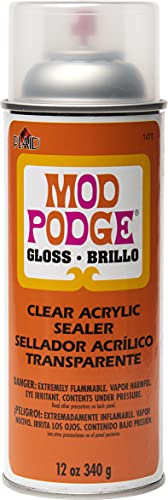
Mod Podge Acrylic Sealer excels in projects where a softer, more matte appearance is preferred over a high-shine, industrial look. Think of it as the difference between a natural, rustic wool and a highly mercerized cotton; one highlights texture, while the other emphasizes shimmer.
Because it is water-based, it behaves predictably with various materials, including wood beads, painted metal, and delicate charms. It is particularly forgiving for beginners who might accidentally apply too heavy a coat, as it tends to self-level better than solvent-based sprays.
However, note that it does not provide the heavy-duty weather resistance of an enamel. It is ideal for “everyday” jewelry rather than pieces meant to endure harsh conditions or constant exposure to oils and lotions.
Rust-Oleum Clear Enamel: Most Durable Finish

When longevity is the primary concern, Rust-Oleum Clear Enamel provides a robust, rock-hard protective shell. This is the heavy-duty workhorse of the group, comparable to using a tight, worsted-weight yarn for a project meant to last decades.
This spray is designed to resist chipping and scratching, making it the perfect choice for jewelry that gets worn frequently, such as daily rings or bracelets. It stands up to friction against fabric and contact with hard surfaces, ensuring the underlying finish remains pristine.
The trade-off for this durability is a slightly stronger odor and a longer curing time. It requires a well-ventilated space, but the result is a professional-grade finish that resists environmental stressors better than most craft-store alternatives.
Everbrite ProtectaClear: For Your Best Pieces
Everbrite ProtectaClear stands out as a specialized coating designed specifically to prevent tarnish on high-end costume metals like brass, copper, and silver-plate. This product is for the “heirloom” items that deserve the same meticulous care one gives to a fine mohair or silk project.
Unlike standard aerosol sprays, it is formulated to stay clear and flexible, meaning it won’t crack or peel when metal naturally expands and contracts with temperature changes. It provides a deeper, richer finish that mimics the look of high-quality fine jewelry.
Use this when the aesthetic value of the piece outweighs the cost of the sealant. It is an investment, but for jewelry that you intend to keep for years, it offers a level of protection that cheaper alternatives simply cannot match.
Aleene’s Sealer Spray: Best High-Gloss Finish
Aleene’s Sealer Spray is the go-to for achieving a dramatic, glass-like shine that makes colors pop and metals shimmer. If a project relies on visual impact—such as a piece with vibrant enamel or bright, reflective beads—this finish adds a layer of depth that enhances the overall design.
It is particularly effective on pieces where a “dipped” look is desired. The high-gloss finish reflects light beautifully, which can elevate the perceived quality of mass-produced components.
Keep in mind that high-gloss finishes show imperfections more readily than matte options. Ensure the surface is perfectly clean and free of dust before spraying, as any stray fiber or hair will be permanently magnified under that brilliant gloss.
Liquid Shieldz Sealant: Best Hypoallergenic Pick
For those with sensitive skin, Liquid Shieldz is a critical tool that bridges the gap between fashion and comfort. It creates a robust, inert barrier between the metal and the skin, effectively neutralizing the nickel-leaching that causes irritation.
This is the jewelry equivalent of wearing a silk liner under a scratchy, pure wool sweater. It doesn’t just protect the finish of the jewelry; it protects the wearer, making otherwise unwearable pieces safe for sensitive ears and wrists.
Apply multiple thin coats to ensure complete coverage, especially on the parts of the jewelry that make direct contact with the skin. It is a reliable solution for anyone who loves costume jewelry but struggles with contact dermatitis.
How to Choose the Right Sealant for Your Jewelry
Choosing the correct sealant depends on the material, the frequency of wear, and the desired aesthetic. Start by identifying the base metal; porous surfaces like wood or plated metal require different considerations than solid, non-porous metals.
- For durability: Choose high-enamel formulas.
- For skin sensitivity: Choose hypoallergenic, barrier-focused formulas.
- For aesthetic enhancement: Choose high-gloss or matte finishes based on the design’s intent.
Think about the environment where the piece will be worn. If the jewelry encounters sweat or water regularly, a high-durability enamel is non-negotiable. If it is for occasional evening wear, a lighter, aesthetic-focused spray will suffice.
Tips for a Flawless, Bubble-Free Application
Preparation is the secret to a professional result, much like blocking a garment correctly before it ever sees a photo shoot. Clean every piece with a mild degreaser to remove fingerprints and body oils; otherwise, the sealant will not adhere properly.
- Distance: Hold the can 10 to 12 inches away from the piece.
- Motion: Use short, sweeping motions to prevent pooling or dripping.
- Environment: Spray in a low-humidity area to prevent cloudiness or “blooming.”
Always err on the side of multiple thin coats rather than one heavy, saturated layer. One heavy coat will inevitably lead to drips, bubbles, and an uneven texture that is difficult to correct once it begins to cure.
Safety First: How to Use Sealant Sprays Safely
Safety is paramount when working with aerosol sealants, which contain volatile organic compounds (VOCs). Treat your crafting space with the same respect you show when working with sharp needles or hot tools.
- Ventilation: Use these sprays exclusively outdoors or in a space with powerful, constant airflow.
- Protection: Wear an appropriate respirator mask to avoid inhaling fine mist particles.
- Storage: Keep cans away from heat sources and store them in a cool, dark place to maintain shelf life.
Never spray near open flames or in enclosed areas like a small laundry room or closet. The fumes can linger, and improper ventilation can lead to headaches or more serious respiratory irritation.
What Not to Seal: When You Should Skip the Spray
Not every piece of jewelry benefits from being coated. Skip the spray on pieces that feature delicate, porous gemstones like opals, pearls, or turquoise, as the chemicals in the sealant can permanently damage or dull their natural luster.
Additionally, avoid sealing pieces that have intricate moving parts, such as complex watch-part jewelry or articulated chains. The sealant can seep into the joints, causing them to stiffen or lock up completely, rendering the piece unusable.
Finally, if a piece is intended for resale as “vintage,” sealing it might be seen as altering its original state. Always consider whether the sealant will protect the integrity of the piece or simply interfere with its natural patina and historical value.
Selecting the right sealant is a final, vital step in the process of preserving costume jewelry. By considering the material, the wearer’s sensitivity, and the intended environment for the piece, you can effectively extend the life of your collection. Treat your jewelry with the same care you afford your finest handmade textiles, and it will remain a cherished part of your wardrobe for years to come.
