7 Best Crafting Shears For Cutting Heavy Fabrics
Struggling with thick materials? Discover the 7 best crafting shears for cutting heavy fabrics with precision and ease. Upgrade your sewing kit and shop today.
Cutting heavy fabrics like boiled wool, dense felt, or multi-layered batting requires tools that move beyond standard crafting scissors. When working on projects like lined felted bags or structured garment linings, the wrong blade can drag, chew, or leave jagged edges that ruin a finished piece. Investing in high-quality shears is akin to choosing the right needles for a specific yarn weight—it changes the entire quality of the output. These seven options represent the industry standards for precision, durability, and ease of use in heavy-duty textile work.
Gingher 8″ Knife Edge Shears: Best Overall
These shears are the gold standard for those who switch between medium and heavy-weight fabrics regularly. The knife-edge grind allows the blade to slice through dense fibers with a smooth, continuous motion rather than a choppy snap.
The balance of the handles and the sharpness of the point make them reliable for trimming bulky seam allowances or clipping curves in thick wool. Because they are tempered to hold an edge, they maintain their performance even after cutting through multiple layers of heavy stabilizer.
Bottom line: Choose these if you want one reliable pair of scissors that handles both everyday cottons and tougher, heavier materials without compromise.
Kai 7250 10-Inch Shears: The Pro’s Choice


Professional garment makers often favor these 10-inch blades for their sheer mechanical advantage. The longer length provides extra leverage, which is essential when cutting through thick, felted materials or heavy-weight coating fabrics in a single pass.
These shears utilize high-carbon stainless steel that remains incredibly sharp while resisting the inevitable friction of dense fabric construction. The ergonomic handle is designed to keep the wrist in a neutral position, reducing fatigue during long sessions of cutting complex pattern pieces.
Bottom line: Invest in these if you are a frequent maker of heavy garments and need the extra length to ensure long, clean lines across thick materials.
Fiskars Amplify Shears: For Toughest Materials

These shears feature a unique Amplify technology that senses the thickness of the fabric and adjusts the blade tension accordingly. This mechanism is specifically engineered for those who struggle with hand fatigue when pushing through heavy materials like upholstery-weight wool or multiple layers of dense canvas.
The torsion bar system within the pivot point makes these shears feel remarkably lighter than they appear. While the plastic casing may seem less “heirloom” than all-metal counterparts, the cutting power is undeniable for thick, stubborn substrates.
Bottom line: If hand strength or joint pain is a concern, these shears provide the necessary assistance to power through thick layers with minimal effort.
LDH Midnight Edition Shears: Ultimate Comfort
The Midnight Edition stands out for its high-grade carbon steel construction and its signature black finish. These are exceptionally well-balanced, feeling like a natural extension of the hand during long cutting sessions.
The precision grind allows for delicate work on heavy fabrics, ensuring that even thick felt does not slide away from the blade during a cut. Their aesthetic appeal is matched only by their structural integrity, making them a favorite for those who value both form and function.
Bottom line: These are the best choice for makers who prioritize handle comfort and high-end materials for extended, high-intensity cutting.
Singer ProSeries Bent Shears: Top Budget Pick
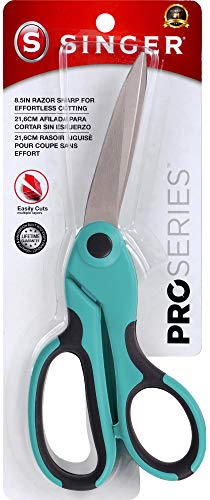
Singer provides an entry-level professional tool that performs surprisingly well on heavy-duty projects. The bent-handle design ensures that the fabric lies flat against the cutting table, which is crucial for maintaining an accurate seam allowance when working with thick, bulky textiles.
While they may not hold their edge as long as more expensive boutique shears, they are easily sharpened and provide excellent value. They are heavy enough to feel stable in the hand, providing the weight necessary to glide through dense materials.
Bottom line: A solid, reliable choice for the budget-conscious maker who needs a dependable workhorse for heavy fabrics without the premium price tag.
Wiss W20 Industrial Shears: The Powerhouse

The Wiss W20 is designed for the factory floor, meaning it is built to handle constant, heavy use. These are significantly heavier than standard sewing shears, which provides immense downward pressure—an advantage when cutting thick, fibrous materials that tend to shift.
These industrial-grade tools are nearly indestructible, often lasting decades with proper care. They are best suited for those who treat their fabric cutting as a heavy-duty mechanical task rather than a delicate craft.
Bottom line: Choose these if durability and raw cutting power are the only metrics that matter to the workspace.
Havel’s 8″ Serrated Shears: No-Slip Cutting
Serrated blades provide a unique advantage when cutting slippery or difficult heavy fabrics. The tiny teeth on the lower blade grip the material, preventing it from sliding or pushing forward as the blades close.
This is particularly useful when working with dense, slick fabrics or heavy bonded materials that have a tendency to “creep” under a standard knife-edge blade. The serrations ensure every cut is exactly where the blade is placed, eliminating the need for excessive pinning.
Bottom line: Use these if your heavy-fabric projects frequently involve materials that are difficult to control or prone to shifting.
What to Look For in Heavy-Duty Fabric Shears
Choosing the right tool requires an assessment of your typical projects and physical comfort needs. Blade material is the first consideration; high-carbon steel stays sharper longer but is prone to rust if not kept dry, whereas stainless steel offers better corrosion resistance.
Handle ergonomics are equally vital, as heavy-duty cutting requires more force than light fabric work. A bent-handle design is non-negotiable for accuracy, as it allows the bottom blade to remain parallel to the cutting surface.
Consider these factors before buying: * Weight: Does the weight of the tool assist the cut, or does it contribute to hand strain? * Length: Longer blades (9-10 inches) are superior for long, straight cuts, while shorter blades offer better control for intricate curves. * Pivot Quality: A high-quality adjustable pivot screw allows the tension to be fine-tuned as the shears wear down over time.
Keeping Your Shears Sharp: A Maintenance Guide
Even the most expensive shears are only as effective as their edge. Never use fabric shears to cut paper, plastic, or wire, as these materials can dull a precision-ground blade almost instantly.
Regular maintenance involves wiping the blades with a clean, dry cloth after every use to remove lint and debris. Once a month, apply a tiny drop of sewing machine oil to the pivot screw to keep the action smooth and prevent oxidation.
If the shears begin to “chew” the fabric rather than slicing it, the tension is likely too loose. Tighten the pivot screw in minute increments until the blades feel firm but move without resistance.
Serrated vs. Knife-Edge: Which Blade to Pick?
The decision between a knife-edge and a serrated blade depends on the “texture” of the fabric. Knife-edge shears offer the cleanest, most professional finish, slicing through fibers like a razor.
Serrated blades are specialized tools designed for control. They function by gripping the fabric, which makes them ideal for synthetic blends, heavy silks, or dense, slippery coatings that refuse to stay put.
Use a knife-edge for thick wools and cottons where a clean edge is paramount. Keep a serrated pair in the kit for when the fabric composition makes a standard blade feel like it is losing the battle against the material.
Properly maintained shears are the difference between a project that feels like a struggle and one that feels like a craft. Selecting the right tool for the specific weight and texture of your material will yield cleaner results and protect your joints over years of making. When in doubt, prioritize the edge grind that matches the density of your most frequent fabric choices.