6 Upholstery Needles For Securing Tufting To Try
Struggling to perfect your tufting projects? Discover 6 essential upholstery needles for securing tufting and upgrade your professional craft skills today.
Securing tufting on a textile project is the difference between a loose, sagging heirloom and a crisp, professional piece that stands the test of time. Much like selecting the correct needle for a delicate lace project, choosing the right upholstery needle requires an understanding of tension, fiber density, and material resistance. When the internal structure of a cushion or a heavy-knit pouf needs to be anchored, the tool used to pull the twine through must be as sturdy as the intent behind the work. This guide explores six essential needles that provide the control and strength necessary to execute deep, durable tufts without compromising the integrity of the surrounding fibers.
Dritz Curved Needles: Best for General Use


Curved needles are the workhorses of the upholstery world, offering the ergonomic advantage of exiting the fabric without needing to pass the entire tool through a deep core. They are indispensable when working on items where the back of the piece is inaccessible, such as fixed-seat chair cushions.
These needles are designed to arc through stuffing or batting, allowing for a precise path that keeps the twine tension consistent. Because they come in assorted sizes, they accommodate everything from lightweight linen to heavier upholstery weights.
The primary tradeoff with curved needles is the lack of leverage compared to a straight shaft. If the stuffing is exceptionally dense or the resistance is high, the curve can sometimes bend under pressure, making them better suited for medium-weight projects rather than industrial-grade restorations.
C.S. Osborne Tufting Needle: Pro’s Choice

For those who treat fiber arts with professional rigor, C.S. Osborne is the industry standard. These needles are forged for longevity, resisting the metal fatigue that often plagues cheaper, mass-produced steel alternatives.
The strength of these needles lies in their tempering, which provides enough rigidity to pierce through thick layers of foam or batting without snapping. They hold their point through extensive use, ensuring that the twine enters the fabric cleanly without snagging or damaging delicate surface yarns.
These are an investment, not a disposable tool. They are best reserved for projects where precision is non-negotiable and the density of the filling material demands a high-quality, non-flexing steel.
Singer Heavy Duty Set: A Versatile Starter
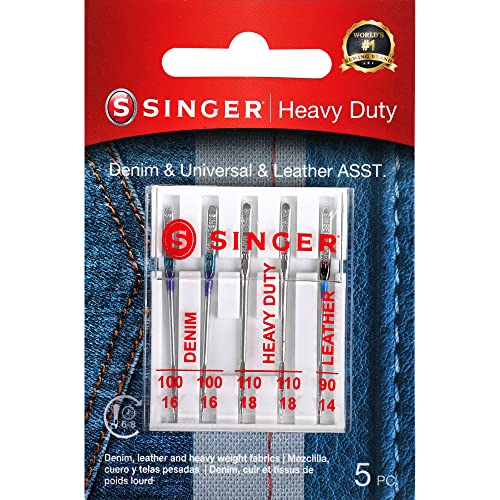
A set of Singer heavy-duty needles provides an accessible entry point for beginners who are unsure of the specific curvature or length required for a first-time tufting project. The variety included in these sets allows for experimentation across different material thicknesses.
These needles are generally reliable for standard upholstery twine and provide enough variety to handle everything from basic button tufting to decorative stitching. They perform well for light-to-medium restoration work, where extreme penetration isn’t the primary challenge.
While they lack the specialized tempering of professional-grade tools, they serve as an excellent teaching set. Start here to learn the mechanics of tufting before upgrading to specialty needles once a specific preference for curvature and gauge has been established.
John James Needles: For a Sharper Point

John James is a name synonymous with precision in the needlework industry, and their upholstery range is no exception. These needles feature exceptionally fine, polished points that glide through fabric layers with minimal friction.
For knitters working with dense or high-twist yarns, a sharper point is critical to avoid splitting the fibers during the tufting process. A duller needle can catch and distort the stitch pattern, but these needles penetrate cleanly, leaving the surrounding structure undisturbed.
The trade-off for this extreme sharpness is the potential for the tip to dull over time if used on abrasive backing materials like burlap or heavy canvas. Use them with care to maintain that fine point, reserving them for final finishing steps where surface appearance is the priority.
Boao Long Straight Needles: For Deep Tufting
Deep tufting, which creates those signature indentations in high-backed chairs or thick cushions, requires a reach that curved needles simply cannot provide. Boao straight needles offer the necessary length to span deep structures while ensuring the exit point is perfectly aligned with the entry.
These needles act as a bridge through the entire depth of the item. Their length allows for a stable, straight path that keeps the tufting twine from wandering inside the cushion, which is essential for uniform button placement.
Exercise caution with longer needles, as they are more susceptible to bending if forced against an internal frame. Aim for a straight, smooth path through the stuffing to ensure the tool maintains its shape and the tension remains balanced throughout the pull.
Tandy Glover’s Needles: For Tough Materials
When the project involves thick leather, heavy-duty vinyl, or multi-layered industrial fabrics, Tandy Glover’s needles provide the necessary piercing power. They are engineered to handle high-resistance materials without yielding.
These needles are significantly stiffer than standard crafting tools, allowing for the application of force needed to penetrate dense materials without the risk of the needle bowing. They are ideal for projects that border on heavy-duty construction, such as exterior seat covers or weighted floor cushions.
Because they are built for toughness, these needles are quite thick and can leave a visible entry hole in thinner, more delicate fabrics. Reserve these specifically for heavy, non-delicate materials where structural strength is prioritized over a fine, invisible finish.
Curved vs. Straight: Picking the Right Needle
The decision between curved and straight needles hinges entirely on the accessibility of the work surface. Curved needles are designed for surface-to-side exits, making them ideal when the worker can only access one side of the cushion.
Straight needles, conversely, are the only choice for “through-and-through” tufting. This method requires the needle to enter the front and exit the back, allowing for a tight, secure tie-off that ensures the tuft will never loosen over time.
- Curved Needles: Best for hidden tufts, surface buttons, and upholstery with attached backings.
- Straight Needles: Best for deep structural anchoring and through-the-cushion button connections.
Match the needle type to the physical geometry of the furniture. If you are struggling to pull the needle through the exit point, a change in curvature is often the solution, not a change in force.
What to Look For in a Quality Tufting Needle
A quality tufting needle should feel substantial in the hand, with a polished finish that prevents it from grabbing onto fibers or stuffing. Look for needles that are forged from tempered steel, which offers a balance of strength and flexibility.
Check the eye of the needle specifically. A smooth, well-rounded eye ensures that even thicker upholstery twine passes through without fraying or snapping. If the eye is rough, it will act like a knife against the twine, compromising the strength of the final tie.
- Tip Sharpness: Must be consistent enough to penetrate without tearing.
- Finish: A slick, polished surface reduces friction during the push-through.
- Gauge: Choose a thickness that is proportional to the twine used; a needle that is too thick for the twine will leave an unsightly gap.
Prioritize tools that feel ergonomic for your specific hand size. If you have grip sensitivity, look for needles with a slightly larger shank that is easier to stabilize during the push.
Threading Your Needle: A Quick How-To Guide
Threading a large-eye tufting needle is often simpler than threading a sewing needle, but the bulk of the twine requires a specific technique to ensure it doesn’t slip out during use. Folding the end of the twine back through the eye can create a secure lock.
If the twine is particularly thick, use a lead thread to pull it through the eye of the needle. A small piece of dental floss or a thin, high-tensile sewing thread can be threaded first, then looped through the thicker tufting twine to guide it into the eye.
Always leave a tail long enough to prevent the twine from pulling through during the first tensioning move. A double-knot at the eye, if the eye is large enough, can provide extra security during the high-tension stages of tightening the tufting buttons.
Choosing the Best Twine for Your Twine Job
Not all twine is created equal, and the fiber choice dictates the longevity of the tuft. Waxed nylon twine is the gold standard for upholstery because it resists abrasion and holds knots securely, preventing the “creep” that causes tufts to loosen over time.
Natural fiber twines, such as cotton or jute, are aesthetically pleasing but are prone to stretching and rotting when exposed to moisture. Reserve these for decorative-only projects that will not endure heavy daily wear and tear.
- Waxed Nylon: The most durable option; resists moisture and holds tight knots.
- Polyester Cord: Strong and consistent; does not stretch as much as cotton.
- Cotton Twine: Best for vintage aesthetics; requires frequent tightening and is less durable.
Match the twine weight to the fabric weight. Using an overly thick twine on a delicate textile will force the needle to create a hole larger than the twine, leaving the tuft vulnerable to shifting.
Mastering the mechanics of tufting is a natural progression for any serious fiber artist looking to elevate their textile work from simple soft goods to durable, well-structured home accents. By aligning the correct needle geometry with the right twine and structural approach, the results will possess a level of professional polish that reflects both the care and the precision put into every stitch. Always start with a test sample if working with an unfamiliar fabric to ensure the needle gauge and twine thickness are perfectly matched, and enjoy the transformative power of a properly set tuft.