6 Craft Room Task Lights For Precision Work
Brighten your workspace with our top 6 craft room task lights designed for precision work. Click here to find the perfect lighting solution for your projects.
Struggling to see dark navy lace stitches at midnight is a rite of passage every knitter eventually outgrows. Proper illumination does more than just save eyesight; it prevents dropped stitches, highlights yarn tension issues, and ensures color accuracy when shopping for stash matches. Whether navigating black mohair or complex cables, the right task light turns a frustrating session into a fluid, productive one. This guide navigates the essential features that turn a dimly lit sofa corner into a professional fiber arts studio.
Brightech Litespan LED Floor Lamp: Best Overall
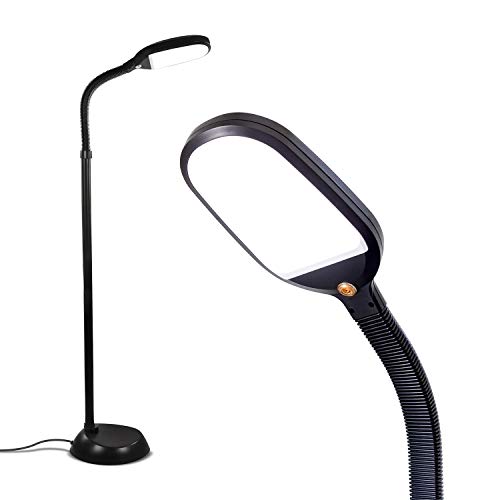

The Brightech Litespan excels because it provides a clean, neutral light that mimics natural daylight without the harsh blue tint found in cheaper LEDs. For knitters, this color accuracy is non-negotiable when discerning between subtle tonal variations in hand-dyed wools.
Its slim profile fits neatly between a favorite armchair and a side table, taking up minimal footprint in a crowded room. The flexible neck allows the light to be directed precisely over the hands, ensuring no shadows fall across the needles during intricate colorwork.
While it lacks a built-in magnifier, the brightness levels are highly adjustable, making it easy to dim during late-night binge-watching sessions. It serves as a reliable, unobtrusive workhorse for daily knitting.
Neatfi XL 2,200 Lumens Bifocals Lamp: Top Pick
When working with fine lace weight yarn or repairing a dropped stitch in a complex brioche pattern, raw power matters. The Neatfi XL provides an immense amount of light, which helps minimize eye strain during long marathons of repetitive work.
The inclusion of a bifocal lens allows for magnification without requiring the knitter to wear specialized eyewear. This is particularly helpful when checking the ply of a yarn or ensuring that a delicate mohair fiber isn’t snagged during a transition.
This lamp is physically large and requires a sturdy surface for clamping, so it is best suited for a dedicated crafting desk or table. It is the gold standard for those who demand total clarity for the most precision-heavy projects.
OttLite 2-in-1 LED Magnifier Floor & Table Light

Versatility is the primary advantage of the OttLite 2-in-1 system. Being able to transition from a full-standing floor lamp to a compact table unit allows for ergonomic adjustments based on the current seating arrangement.
The light quality is designed specifically to reduce glare, which is critical when working with high-sheen yarns like mercerized cotton or silk. Glare on shiny fibers often masks stitch definition, leading to missed errors in the pattern.
Consider this model if the craft space is fluid or if knitting occurs in multiple areas of the home. It bridges the gap between portability and professional-grade illumination.
BenQ e-Reading LED Swing Arm Desk Lamp: Best Tech

The BenQ e-Reading lamp uses sensors to automatically adjust brightness based on the ambient light in the room. For a knitter, this means the light level shifts seamlessly as the sun sets, preventing the eyes from constantly readjusting to changing conditions.
The wide, curved head design provides an expansive field of illumination. This is exceptionally beneficial for projects that require a larger workspace, such as keeping a complex, multi-page chart open next to the knitting needles.
While it is a significant investment, the quality of light is unparalleled in terms of reducing fatigue. It is the premier choice for tech-forward knitters who want a “set it and forget it” lighting solution.
Glocusent LED Neck Reading Light: Most Versatile

Sometimes the best light is the one that moves exactly where the hands move. The Glocusent neck light offers a hands-free solution that is perfect for knitters who prefer to lounge on a sofa rather than sit at a desk.
Because the light sources are mounted on flexible arms, it is easy to focus illumination directly on the needle tips. This is especially useful for those working with dark, low-contrast yarns that seem to disappear into the background.
It is lightweight and rechargeable, making it an essential companion for travel or knitting groups. It will not replace a high-lumen desk lamp for long-term detail work, but it is the ultimate accessory for casual crafting comfort.
Daylight Duo-Lamp Floor Lamp: For Large Projects
The Daylight Duo-Lamp features two adjustable heads, which allows for dual-directional lighting. This configuration eliminates shadows from both sides of the hands, which is a common complaint with single-source lamps.
This design is particularly effective when working on large-scale projects like blankets or oversized garments that span the entire lap. Even lighting across a large surface area helps keep track of stitch counts and pattern repeats without moving the lamp constantly.
The build is robust, though it demands a bit more room than a standard single-head lamp. It is a specialized tool that excels at large-scale, intricate projects where detail must be maintained across a wide span.
How to Choose the Right Light for Your Craft Space
Selecting a light involves balancing floor space against the need for mobility and brightness. If the knitting chair is fixed, a heavy-duty floor lamp provides stability and professional reach.
If the environment is transient, look for lightweight, portable options or desk-clamping models with articulating arms. Always evaluate the height of the chair relative to the lamp’s reach, as a light that sits too low will eventually become a neck-craning annoyance.
- Footprint: Does the base slide under the couch or chair?
- Adjustability: Can the light reach over the knitting while the arms are at rest?
- Color Index: High CRI (Color Rendering Index) is essential for yarn color accuracy.
Lumens vs. Color Temperature: What Knitters Need
Lumens measure the intensity of the light, while color temperature measures the warmth or coolness of the glow. For knitting, a higher lumen count (above 1,000) is usually better for detail work, while color temperature should sit around 4,000K to 5,000K to simulate natural daylight.
Avoid “warm” bulbs that lean yellow, as they muddy the appearance of dark greens, blues, and purples. A neutral, daylight-balanced light ensures the yarn looks the same under the lamp as it does in the store.
Remember that higher lumens do not equal better light; aim for brightness without harsh glare. Soft-touch LEDs that diffuse the light are much easier on the eyes than bare bulbs.
Floor Lamp, Desk Lamp, or Neck Light: A Comparison
The choice between these form factors depends entirely on the knitter’s physical setup. Floor lamps provide the most consistent, wide-angle illumination for extended sessions in a single location.
Desk lamps offer the best precision for detailed cable work or stitch repairs, provided the chair can be pulled up to the desk. Neck lights are the best secondary option for portability and directed, close-range focus during travel or lounging.
- Floor Lamps: Best for consistent, long-term studio work.
- Desk Lamps: Best for high-precision, magnified detail.
- Neck Lights: Best for mobility and occasional short-duration tasks.
Do You Really Need a Magnifying Craft Lamp?
Magnification is not just for aging eyes; it is a critical tool for diagnostic knitting. If there is a recurring issue with consistent gauge or hidden “split” stitches in a strand of high-ply wool, magnification reveals the anatomy of the stitch clearly.
However, over-reliance on magnification can sometimes hinder the development of tactile intuition. Use magnification to solve specific, complex problems rather than as a crutch for every basic knit and purl.
For those working with extremely fine-gauge needles—anything below 2.0mm—magnification often provides the clarity needed to see individual fibers within a stitch. It is a specialized tool that turns a “blind” task into a controlled, visual process.
Proper lighting is as much a part of a knitter’s toolkit as the needles and yarn themselves. By selecting a light that complements the workspace and project demands, fatigue is reduced and the quality of the finished garment improves significantly. Take the time to consider how illumination impacts the craft, and the investment will pay dividends in every finished row.