6 Crochet Hook Rests For Reducing Hand Fatigue
Stop hand pain while crafting! Discover 6 ergonomic crochet hook rests that reduce hand fatigue and keep you stitching longer. Shop our top picks right now.
Hours of repetitive motion can turn a relaxing crochet session into a source of genuine physical discomfort. Persistent cramping or tension in the hands often stems from a death-grip on thin hooks or poor posture during long-term projects. Investing in tools that support your joints is not just a luxury; it is a vital step toward sustaining a lifelong fiber arts practice. Exploring specialized rests and ergonomic aids helps identify exactly what type of physical support is missing from a standard crafting routine.
Chetnanigans’ Hook Nook: The Artisanal Choice
Hand-turned wooden hook rests offer a touch of elegance that mass-produced plastic simply cannot replicate. These artisanal pieces provide a stable, weighted base that keeps hooks organized and within arm’s reach on a crowded side table.
Because they are crafted from natural materials, each piece brings a unique aesthetic to a workspace. The weight of high-quality wood ensures that the station remains planted, preventing accidental spills when reaching for a size H hook in the middle of a complex pattern.
While these rests prioritize beauty and organization, they serve a secondary ergonomic purpose by reducing the need for constant searching or bending. Keeping tools in a dedicated spot minimizes the chaotic “scavenger hunt” that breaks the flow of a rhythm-heavy project.
Yarn Valet Hook Station: The Tidy Crocheter


A dedicated hook station like the Yarn Valet helps maintain the physical order necessary for efficient crafting. When tools are scattered across a couch, picking them up often involves awkward reaches that strain the wrist or shoulder.

Centralizing your gear allows for a more streamlined workflow, particularly when working with multiple hooks for Tunisian crochet or complex colorwork. By ensuring every hook has a home, the stress of mid-project disorganization is effectively eliminated.
However, consider the footprint of any desk accessory before purchasing. If the crafting space is limited to a small chair or a travel bag, a bulky station might create more clutter than it solves.
Boye Ergonomic Handle: An Affordable Upgrade
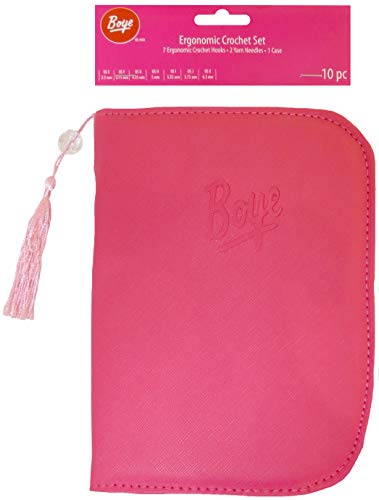
For those hesitant to invest in entirely new, expensive hook sets, a universal ergonomic handle is a sensible middle ground. These handles are designed to slide onto existing metal hooks, instantly increasing the diameter of the grip.
Thickening the handle is the single most effective way to combat hand cramping. When you use a pencil-thin metal hook, the hand muscles must engage in a constant, tight pinch, which eventually leads to fatigue and potential repetitive strain.
By increasing the surface area, the pressure is distributed more evenly across the palm. This simple mechanical adjustment allows for a “looser” grip while maintaining full control over the tension of the yarn.
Clover Soft Touch Hook: Ergonomics Built In

Clover Soft Touch hooks are widely regarded as the gold standard for integrated ergonomic design. The handle is flat, lightweight, and shaped specifically to accommodate the way human fingers naturally rest during a stitch.
These hooks are particularly beneficial for makers who suffer from arthritis or chronic joint pain. The slight “give” in the handle material provides comfort without sacrificing the precision required for fine lace or intricate doily work.
The trade-off here is the cost and the fact that the handle is permanently attached. If the specific grip shape does not align with your personal hand anatomy, there is no way to adjust or swap the handle for another style.
The ErgoRest Stand: For Hands-Free Moments
Sometimes, the best way to rest your hands is to stop holding the weight of the hook entirely. An ErgoRest stand or a similar support arm can hold the hook steady while the hand guides the yarn.
This is an advanced technique, often used by those recovering from injury or dealing with severe tendonitis. By offloading the weight, the hand performs only the necessary movements for tension control, rather than the heavy lifting of pulling the hook through every loop.
Integrating such a tool requires a learning curve, as it changes the biomechanics of your stitch. It is best suited for stationary desk work rather than casual crocheting in a reclined position.
Custom 3D Printed Rests: A Personalized Fit
3D printing has revolutionized the world of craft accessories, allowing for custom-molded grips that perfectly match an individual’s hand. If standard retail sizes feel too small or too bulky, a custom-printed solution is the final frontier of ergonomic comfort.
These rests are tailored to specific hook brands and personal measurements. Because they can be printed in various materials—from rigid plastics to flexible, rubber-like filaments—the possibilities for comfort are endless.
If choosing this route, look for a maker who understands the difference between a “knife-grip” and a “pencil-grip.” A grip designed for a knife-holder will be inherently uncomfortable for someone who holds their hook like a writing utensil.
How to Choose the Right Rest for Your Hooks
Selection should be based on your current physical symptoms rather than visual appeal. Start by assessing where the pain originates: is it the base of the thumb, the knuckles, or the wrist?
- For wrist pain: Focus on heavier, stable stands that allow you to put the hook down frequently.
- For thumb pain: Prioritize thicker handles that require less pinching force.
- For overall fatigue: Consider lightweight, ergonomic handles that reduce the mass of the tool being moved.
Always test your grip style before committing to a permanent handle. If you alternate between different holds throughout a single project, a universal, removable handle is almost always superior to a fixed-grip hook.
Beyond Rests: Stretches for Happy Hands
No tool can replace the necessity of movement. Even the most ergonomic hook will eventually cause pain if the hands remain in the same position for four consecutive hours.
Perform gentle wrist extensions and “claw stretches” every thirty minutes. Open the hand wide, stretch the fingers, and then slowly close into a soft fist to keep blood circulating through the small tendons.
Hydration and proper posture also play a massive role in hand health. Often, the strain felt in the fingers is actually referred pain from a hunched neck or tight shoulders.
Grip vs. Rest: What’s the Real Difference?
The terminology can be confusing, but the distinction is functional. A “grip” refers to the handle modification on the hook itself, aimed at improving the connection between your skin and the tool.
A “rest,” conversely, is an external storage or support device meant to keep your tools organized or to physically hold them for you. You need both to build a truly ergonomic workspace.
A great grip improves the quality of every stitch, while a great rest preserves the longevity of your practice by keeping everything accessible. Neglecting either can lead to a less-than-optimal experience.
Can a Hook Rest Really Prevent Hand Pain?
A hook rest is an accessory, not a medical cure. While it can significantly reduce strain and improve efficiency, it cannot undo the damage of poor technique or excessive, non-stop crocheting.
The most effective way to prevent pain is to combine ergonomic tools with consistent, mindful breaks. Treat your hands as carefully as you treat your finest cashmere or hand-dyed wool.
Use these tools to facilitate longer, more comfortable sessions, but always listen to the warning signs of your body. When the pain begins, the best tool is a period of total rest.
Investing in these ergonomic aids is a testament to your commitment to the craft. By balancing the right mechanical support with deliberate care for your joints, you can continue to crochet for years without the risk of burnout or injury.