7 Best Sewing Glues For Temporary Placement To Try
Struggling with fabric shifting? Discover the 7 best sewing glues for temporary placement to stabilize your projects with ease. Read our expert guide today!
Securing seams or embellishments before stitching requires a steady hand and the right adhesive. Pins often leave unwanted holes in delicate silk or fine-gauge knits, risking permanent damage to expensive fibers. Temporary fabric glues provide a stable hold that vanishes during the first wash, keeping complex construction projects perfectly aligned. Choosing the correct formula prevents residue buildup while ensuring the bond holds firm until the needle completes the work.
Roxanne Glue-Baste-It: Best for Precision Work


This water-soluble adhesive arrives in a needle-nose applicator designed for surgical accuracy. It excels when attaching intricate lace motifs or securing pocket linings where bulky glue lines would ruin the drape of a finished garment.
A tiny drop applied to a seam allowance holds firm almost instantly. Because the liquid is thin, it penetrates fibers without creating the stiff, “crusty” feeling often associated with heavier craft adhesives.
For those working with slippery rayon or delicate silk blends, this precision prevents the fabric from shifting under the presser foot. The bottle is easy to squeeze, allowing for controlled, minimal output that won’t bleed through to the right side of the project.
Collins Basting Glue: The Best All-Around Choice

Collins is a staple in many sewing kits because it balances hold strength with easy cleanup. It is particularly effective for thick, structured fabrics like wool coating or heavy denim where a lightweight glue might fail to grip.
This glue dries relatively clear and stays flexible, which is essential for projects that require some movement. It resists the urge to pull away from the fabric during heavy manipulation or repeated folding.
Avoid using excessive amounts on delicate fibers, as it can occasionally leave a faint residue if not thoroughly washed out. For most general-purpose garment assembly, it remains the gold standard for reliable, temporary adhesion.
Dritz Basting Glue Stick: Best Budget-Friendly Pick

The glue stick format offers a dry application method that minimizes the risk of fabric saturation. It is an ideal entry point for beginners who fear the mess associated with liquid glues.
This tool works exceptionally well for holding zippers in place before sewing. By applying a light swipe along the zipper tape, the hardware stays perfectly centered, eliminating the need for cumbersome pins that catch on the needle.
Because it is a solid, there is virtually zero risk of bleeding or staining. While it may not offer the same grip strength as high-end liquid formulas, its convenience and low cost make it perfect for quick, simple tasks.
Sewline Fabric Glue Pen: Top Choice for Quilters

The Sewline pen functions like a mechanical pencil, making it the most ergonomic option for long sessions of intricate prep work. It is favored for foundation paper piecing, where precision alignment is the difference between a flat quilt block and a wavy mess.
The adhesive is designed to be repositionable for a short window after application. If a piece of fabric is placed slightly off-center, it can be lifted and adjusted without damaging the fibers or losing all stickiness.
Once pressed with a warm iron, the bond becomes permanent enough to withstand aggressive handling. It washes out completely, leaving no trace behind even on light-colored, high-contrast fabrics.
Elmer’s CraftBond Fabric Glue: Most Versatile
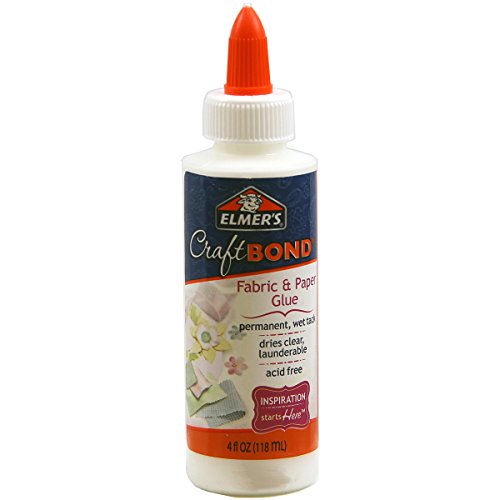
Commonly found in general craft stores, this adhesive is surprisingly effective for fiber arts projects beyond simple sewing. It handles a wider variety of materials, including thin leathers and some synthetic webbing that other glues struggle to bond.
The formula is thicker, providing a “tacky” grab that holds heavy materials together while the needle works through the layers. This makes it an excellent choice for stabilizing thick hems or repairing minor edge fraying on heavy canvas bags.
Use caution when working with very thin, porous fibers. The thickness can lead to over-application, which may require a slightly longer soak during the washing process to ensure every trace is removed.
Aleene’s Fabric Fusion: Strongest Temporary Hold

When a project involves layers that are prone to shifting—such as velvet or slippery polyester satin—Aleene’s provides the most secure temporary hold. It bridges the gap between a temporary basting agent and a permanent fabric glue.
This adhesive is quite thick, meaning it holds items in place even if the garment must be moved or hung before final stitching. It effectively replaces pins for heavy-duty applications where a pin might simply slide out of the fabric weave.
Because of its strength, use it sparingly. A little goes a long way, and applying it too generously will turn the fabric stiff until it is laundered.
Fons & Porter Glue Pen: Best Refillable System
Refillable glue pens reduce waste and offer a sustainable way to keep a consistent adhesive supply on hand. The design is sleek, fitting comfortably in the hand during long hours spent prepping appliqué or bias binding.
The adhesive is specifically formulated to be thin and non-staining. It works well on fine cottons and light linens, where heavy glues might leave a visible halo or alter the hand-feel of the fabric.
The modular nature of the pen makes it easy to replace empty glue sticks in seconds. For those who prioritize efficiency and organization, this system ensures the tool is always ready for the next project.
Pins vs. Glue: When to Use Temporary Adhesives
Pins remain a classic choice, but they possess clear mechanical limitations in certain scenarios. Use pins for thick, non-delicate fabrics where the hole they leave will be absorbed by the fiber’s loft, such as heavy wool felt or dense batting.
Choose glue when working with “hole-prone” fabrics like silk, leather, or synthetic microfiber. Pins in these materials create permanent, visible damage that ruins the final garment’s finish.
Glue also provides a consistent, flat bond that prevents fabric layers from “sliding” as they feed through the machine. Pins only hold points of contact, allowing the fabric between the pins to shift and ripple.
How to Use Fabric Glue Without Gunking Your Needle
A common complaint is that glue gums up the needle, causing thread breakage and skipped stitches. This almost always results from applying too much product or not allowing the glue to dry completely before beginning to sew.
Only apply glue to the seam allowance, or the area that will be hidden inside the garment. If the needle must pass through the glued area, wait until the adhesive is fully dry to the touch to prevent it from transferring to the needle shank.
If needle buildup does occur, wipe the needle with a cloth dampened with a small amount of rubbing alcohol. This dissolves the residue instantly, allowing for a smooth transition back to stitch perfection.
Choosing Your Glue: Stick, Pen, or Squeeze Bottle?
Selection should be based on the project scale and the fabric’s weight. Glue sticks are best for dry, clean applications where precision is secondary to convenience, such as general sewing prep.
Pens offer the most control for intricate, small-scale work like quilting, appliqué, or delicate seam alignment. They allow for thin, targeted lines that are easy to manage and clean.
Squeeze bottles are reserved for heavy-duty projects where a stronger, more substantial hold is required. Match the application method to the intricacy of the work, and remember that thinner applications are always easier to wash away later.
Temporary fabric glues serve as an essential “third hand” for any fiber artist, providing stability where pins fall short. By matching the adhesive type to the project’s weight and fiber density, the risk of damage is minimized while the precision of the construction is vastly improved. Always test on a scrap of fabric first to ensure the glue washes out cleanly, leaving only professional-grade results behind.