7 Best Grid Journals For Typography Planning To Try
Elevate your design projects with our top 7 grid journals for typography planning. Read our expert guide now to find your perfect notebook and start sketching.
Designing original knitwear requires moving beyond basic patterns to visualize complex stitch repeats and shaping. A reliable grid journal serves as the essential bridge between a vague creative concept and a functional, stitch-perfect chart. Choosing the right paper can mean the difference between a clear, legible roadmap for your needles and a messy, confusing tangle of ink. These seven journals offer the precision and paper quality needed to map out everything from delicate lace to bold, stranded colorwork motifs.
Rhodia DotPad: Best for Smooth, Inky Charting


The Rhodia DotPad is a staple for those who prefer fountain pens or high-flow ink markers when drafting charts. Its signature 80g acid-free, pH-neutral paper is exceptionally smooth, preventing the feathering and bleeding often encountered with lower-quality stationery.
When drafting complex fair isle charts, this smoothness allows for precise, clean lines that won’t smudge during a long session. Because the surface is so refined, there is no fiber snagging or ink spreading, which keeps stitch definitions crisp.
The dot grid is subtle, providing enough structure to align stitches without overwhelming the eye. This is particularly helpful when mapping out intricate cables where every single row must be accounted for to ensure symmetry.
Leuchtturm1917 Dotted: The All-Around Favorite
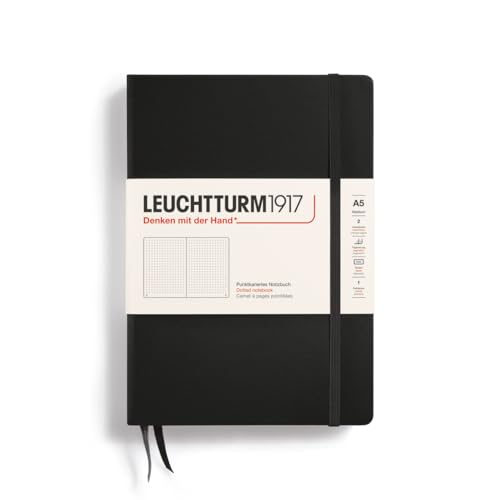
Reliability is the primary draw of the Leuchtturm1917, an industry standard for good reason. The numbered pages and table of contents are perfect for keeping a master record of various project swatches and stitch patterns.
The paper handles graphite and fine-liner pens with ease, though it may show slight ghosting if heavy markers are applied. For a knitter, this is a minor trade-off compared to the durable binding that withstands being tossed into a project bag next to sharp circular needles.
Consistency is key when developing a cohesive collection of patterns. Having a uniform journal style helps maintain a record of stitch counts and shaping adjustments over many years of crafting.
Midori MD Grid Notebook: For the Minimalist Crafter

The Midori MD notebook features a unique, high-quality Japanese paper that is designed specifically to resist bleeding through to the other side. Its minimalist, thread-bound design allows the notebook to stay open easily on a cluttered desk full of yarn balls and measuring tapes.
The grid lines are printed in a soft, non-intrusive blue that disappears into the background as soon as a design is inked. This is the ideal choice for designers who prefer a clean visual space to focus on the geometry of a garment’s silhouette.
Because the paper is slightly textured, it offers a pleasant tactile experience for those who prefer working with high-quality drafting pencils. It strikes a perfect balance for those who want a workspace that feels as intentional as a hand-knit heirloom.
Hobonichi Plain Notebook: For Detailed Colorwork

The Tomoe River paper used in Hobonichi notebooks is legendary for being incredibly thin yet remarkably resilient. It is the premier choice for designers who need to pack massive amounts of information into a compact space, such as charts for a multi-color sweater yoke.
Despite its light weight, this paper handles gel pens and fine-point markers exceptionally well without allowing the color to seep into the next page. When charting stranded colorwork, being able to flip quickly through dense color maps is an undeniable advantage.
This paper is ideal if the journal stays primarily at a desk, as the thin pages require a gentle hand. It is not the most rugged option for travel, but it is unmatched for dense, detail-oriented design work.
Moleskine Classic Dotted: The Iconic Go-To Journal
Moleskine remains a widely accessible, dependable choice that fits comfortably into any project bag. Its pocket-sized versions are excellent for sketching lace motifs or calculating gauge math while waiting for a flight or sitting in a car.
The paper is slightly cream-colored, which is softer on the eyes during late-night knitting sessions compared to stark white options. The robust elastic closure keeps the book secure, protecting your hard-won notes from snagging on stray yarn tails or stitch markers.
While the paper is best suited for ballpoint pens or mechanical pencils, it is perfectly capable of holding up to daily project tracking. It serves as a durable, no-nonsense companion for the working knitter who prioritizes function over specialized ink performance.
Baron Fig Confidant: The Opens-Flat Champion
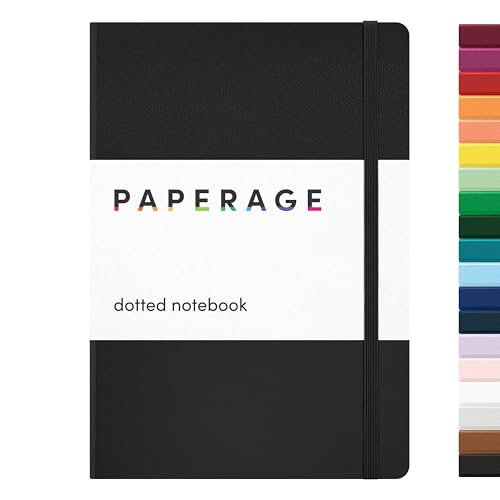
The Baron Fig Confidant is engineered to lie perfectly flat, which is a massive advantage when copying charts while balancing knitting needles in your lap. This feature eliminates the annoying struggle of keeping a page open while simultaneously tracking a stitch count.
The paper quality is substantial, minimizing bleed-through even if you prefer using bold, dark markers to distinguish between different colors of yarn in a chart. It provides a sturdy, stable surface for sketching structural details like set-in sleeves or complex gussets.
Its design philosophy centers on the act of creating, making it an excellent match for the meticulous process of pattern writing. It is built to endure the frequent referencing that occurs during the development of a long-term project.
Kokuyo Campus Grid: Best Budget-Friendly Pick
Kokuyo Campus notebooks offer a functional, economical solution for designers who go through paper quickly. The grid paper is specifically designed for technical drafting, making it easy to align vertical and horizontal stitch repeats accurately.
The paper is smooth enough to handle a variety of writing instruments without dragging or skipping. For knitters who are still experimenting with chart symbols and layout styles, this provides a low-pressure environment to iterate without worrying about the cost of the notebook.
These notebooks are lightweight and thin, making them easy to dedicate to specific projects or garment categories. They provide a utilitarian way to keep your design process organized without the bulk of a heavy hardcover book.
How to Choose the Right Grid for Your Crafting
Selecting the right grid is a matter of matching your paper density to your design complexity. If you are drafting simple textured patterns or ribbing, a larger grid square is often sufficient to keep your work legible.
For intricate lace or colorwork, however, look for a grid that allows for smaller, more precise markings. Always test your favorite drawing tools on a corner of the paper before committing to a final chart to ensure the ink doesn’t feather into the fibers of the page.
Consider whether you prefer a hard-cover book for stability or a soft-cover notebook for portability. If you frequently design on the go, choose a binding that allows the book to lie flat without needing to be held open with heavy objects.
Translating Your Grid Design to Knitting Stitches
The most important rule in translating a grid to knitting is acknowledging that stitches are rarely perfectly square. Most knit fabrics are wider than they are tall, meaning a grid design might look elongated or squashed once knitted.
To solve this, calculate your personal gauge—the number of stitches and rows per four inches—before finalizing your chart. If your gauge shows 20 stitches and 28 rows in a 4-inch square, your grid should ideally reflect a similar ratio to keep your motifs proportional.
Do not be afraid to use a “stitch-proportional” grid or simply adjust your design as you swatch. A grid is a guide, but the reality of the yarn’s elasticity and the needle size will ultimately dictate how the fabric behaves.
The Best Pens & Pencils for Charting Your Designs
Precision is paramount when charting, so reach for mechanical pencils with a 0.5mm lead for initial sketches. These allow for sharp, erasable lines that can be easily refined as you develop the stitch count and shaping of a garment.
When moving to final charts, archival ink pens are preferable because they won’t fade over time or smudge if your hands are slightly damp. For colorwork, consider using a set of fine-point colored pens that match the hue of the yarn you intend to use.
Avoid heavy felt-tip markers unless you have confirmed that the paper weight is sufficient to prevent bleed-through. The best tools are those that provide clear visibility without making the chart so busy that you lose track of individual stitch symbols during a complicated project.
Proper documentation is the foundation of a successful knitting practice. By choosing a journal that suits your specific drafting style and understanding how to translate those marks into a finished piece, you gain much more control over the final result. Whether you are a casual hobbyist or a professional designer, a well-kept grid journal is an invaluable tool for your knitting toolkit.