6 Best Craft Room Lighting Kits For Evening Work
Brighten your creative space with our top 6 craft room lighting kits for evening work. Read our guide now to find the perfect setup for your next project.
Evening knitting sessions demand more than just a standard living room bulb, especially when working with dark-colored yarns or intricate lace patterns. Proper illumination prevents dropped stitches, eliminates unnecessary eye strain, and ensures that complex cables or cables are executed with precision. Choosing the right craft light transforms a late-night hobby session from a squinting struggle into a productive, relaxing endeavor. The following six lamps offer the best solutions for illuminating your fiber projects with clarity and ease.
Brightech Litespan LED Floor Lamp: Best Overall
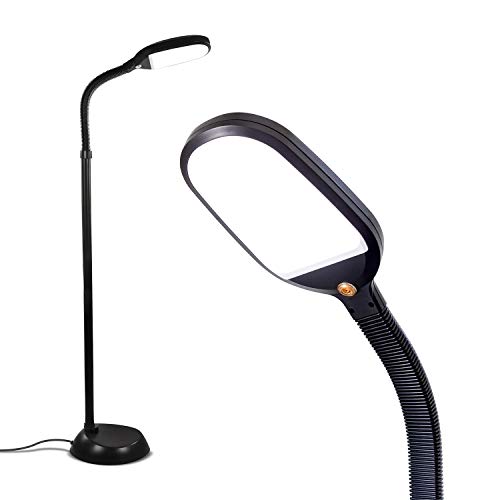

This lamp strikes the ideal balance between output and adjustability, making it a reliable workhorse for any knitter’s corner. Its tall, flexible neck allows the light source to hover directly over your hands, effectively eliminating the harsh shadows that often plague top-down room lighting.
The Litespan provides a clean, neutral light that is particularly helpful when working with delicate fibers like mohair or lace-weight silk. Because these fibers can be difficult to see against dark fabrics or upholstery, having a direct, flicker-free light source is essential for maintaining consistent tension and avoiding split plies.
While the footprint is slightly larger than a desk lamp, the stability is unmatched for long-term use. If you need a primary source of light that won’t shift or dim during a marathon knitting session, this remains the gold standard.
OttLite Rechargeable LED Desk Lamp: Best Portable

Portability is a game-changer for knitters who move between the living room, travel bags, and knitting group meetings. This desk lamp offers the flexibility of cordless operation, meaning your project remains perfectly lit even when a power outlet is nowhere to be found.
The light quality is designed to mimic natural daylight, which is critical for checking true color accuracy in multi-strand colorwork. When you are combining various yarns for a complex Fair Isle pattern, seeing the subtle differences in tone is the difference between a successful project and one that requires ripping back.
Keep in mind that rechargeable batteries have finite lifespans, so you will need to manage your charging cycle. If you value the freedom to knit anywhere without worrying about cord management, this is the most practical choice.
Neatfi XL Bifocals Magnifier Lamp: Best Budget

For those tackling fine-gauge projects or knitting with thin sock yarn, this magnifier lamp is an indispensable tool. It provides a wide, clear view of your work, making it significantly easier to spot a dropped stitch or identify the anatomy of a loop when picking up stitches along an edge.
The built-in magnifying lens allows for a closer inspection of intricate stitch patterns without the eye fatigue that often accompanies detailed work. While the magnification strength is moderate, it is usually enough to reduce the strain associated with tiny 2.25mm needles and lace-weight yarn.
This is a budget-friendly option that sacrifices some of the premium build quality of higher-end brands, but it makes up for it in raw functionality. It is a perfect entry-level choice for knitters who find themselves squinting at their needles after just a few rows.
Daylight Luminos Floor Lamp: Best Color Accuracy
True color rendering is the primary strength of this lamp, which is crucial for any fiber artist dyeing their own yarn or sourcing specific shades for high-contrast colorwork. It ensures that the color you see at night is identical to what you will see in daylight, preventing the common issue of unexpected color clashes in a finished garment.
The wide lamp head provides an expansive pool of light, covering both your hands and your project bag, which keeps your notions organized. This wide reach is particularly helpful for stranded knitting, where you might have three or four different colors of yarn feeding through your hands simultaneously.
It is an investment piece, but the superior color fidelity and coverage make it worth the cost for advanced knitters. If you are a perfectionist about your color choices, this lamp will ensure your vision translates perfectly from your workspace to the finished piece.
LEPOWER Clip-on Gooseneck Light: for Small Spaces

Small-space living often means there is no room for bulky floor lamps, making the clip-on variety an excellent space-saving solution. This light attaches firmly to the side of a table or the arm of a chair, directing illumination exactly where the action happens.
The gooseneck design is highly responsive, allowing you to reposition the beam as you rotate your knitting to reach a new cable crossing or decrease point. It is an ideal companion for small side tables where space is at a premium and a traditional base would be too cumbersome.
Because the clip-on is compact, it is less powerful than floor models and may not cover large blanket-sized projects. However, for focused, detail-oriented tasks like grafting stitches or finishing ends, its proximity to your work is unbeatable.
Dyson Lightcycle Morph Desk Light: Ultimate Splurge
This high-tech light uses sensors to adjust its intensity and color temperature based on your surroundings and the time of day. It is the pinnacle of engineering for a craft room, providing a consistent, high-quality beam that adapts to the ambient light in the room to keep eye strain to an absolute minimum.
The longevity of the LEDs is impressive, and the sheer amount of adjustability makes it adaptable to any project, from chunky wool sweaters to the finest lace. It effectively acts as a personal sun, tailored to the specific geometry of your workspace and the needs of your eyes.
This is a significant financial commitment that goes beyond standard hobby needs. Only choose this if you are a serious, long-term knitter who spends several hours every single day at the same dedicated workspace.
How to Choose the Right Light for Your Craft Space
Start by assessing your primary workspace, as the physical constraints of your room will dictate which lamp style is appropriate. If you knit in a recliner, a floor lamp with a long, flexible reach is often more practical than a desk-bound option that requires a solid surface for mounting.
Consider the nature of your projects; if you mostly knit large, variegated wool blankets, a broad-coverage floor lamp is essential. If you focus on fine sock knitting, prioritize a lamp with an integrated magnifying feature or a concentrated, high-lumen beam to help identify individual stitches.
- Footprint: Does your room have space for a floor base, or is a clip-on required?
- Adjustability: Does the neck bend far enough to reach over your lap?
- Power: Is the light source bright enough for your specific needle size and yarn color?
Understanding Lumens and Kelvin for True Yarn Color
Lumens measure the brightness of the light, while Kelvin measures the color temperature—the “warmth” or “coolness” of the glow. For fiber arts, aim for a Kelvin rating between 4000K and 5000K, which provides a neutral daylight appearance without casting a yellow or blue tint on your work.
Avoid “warm” bulbs under 3000K, as these will distort your perception of yarn colors, making cool-toned blues look like purples and neutralizing soft greys. Accurate color temperature is critical when checking your gauge swatch against a pattern photo or color-matching a yarn from a different dye lot.
High lumen counts are beneficial for working with dark yarn, as black or navy fibers absorb light and are famously difficult to see. A lamp offering at least 800 to 1000 lumens will provide enough intensity to highlight the texture and stitch definition of even the darkest materials.
Floor vs. Desk vs. Clip-On Lamps: Which is for You?
Floor lamps offer the most versatility and coverage, making them the best choice for knitters who move between chairs or sofas. They are heavy, stable, and usually offer the most robust light output, which is ideal if you tend to knit projects that occupy your entire lap.
Desk lamps are best for dedicated studios where your materials are laid out on a flat, stable surface. If you are doing a lot of counting, charting, or keeping complex notes in your pattern, a desk lamp provides a stable pool of light that illuminates both your knitting and your documentation simultaneously.
Clip-on lamps are the specialists of the group, designed for tight spaces or travel. While they lack the power of a floor lamp, their ability to be moved and repositioned makes them the best choice for focused detail work.
Tips for Positioning Your Light to Reduce Eye Strain
Never point your light directly into your face or at a surface that creates a high-glare reflection. Position the light source slightly to one side of your project, at a height that angles the beam across the surface of the yarn rather than hitting it head-on.
This “side-lighting” technique creates subtle shadows within the stitch loops, which actually helps your eyes differentiate between knit and purl stitches. It is a simple adjustment that can drastically reduce the amount of time you spend squinting at your needles, particularly when working with low-twist or novelty yarns that lack clear definition.
Regularly check your posture, as the lamp should be positioned so that you do not have to hunch over to get closer to the light. If you find yourself leaning in, adjust the lamp’s height or brightness first rather than sacrificing your neck and shoulder health for a better view.
Investing in a high-quality light source is arguably as important as choosing the right needles for your project. By carefully selecting a lamp that suits your specific workspace and fiber preferences, you can ensure that your evening knitting time remains a source of relaxation rather than physical stress. Happy making, and may your stitches always be clear and your gauge perfectly consistent.