7 Best Task Lightings For Evening Knitting To Try
Enhance your evening knitting with these 7 top task lights. Discover bright, flicker-free options that reduce eye strain and improve stitch clarity for crafters.
Knitting by candlelight might sound romantic, but your eyes will certainly pay the price by the time you finish your first row. Proper illumination is just as essential as choosing the right needle size or fiber content for your project. Whether you are working with dark mohair or intricate lace, the right light transforms a frustrating session into a relaxing one. Here are the best lighting solutions to keep your stitches crisp and your vision sharp.
OttLite Creative Curves LED Floor Lamp: Best Overall


This lamp is a staple in many dedicated craft rooms for a reason. The flexible neck allows you to direct light exactly where your needles meet the yarn, which is crucial when you are working on complex cables or bobbles.
Its high-definition lighting is designed to mimic natural daylight, preventing the color distortion that often happens with standard bulbs. If you have ever tried to distinguish navy blue from black yarn at night, you know exactly why this color accuracy matters.
The weighted base provides excellent stability, ensuring the lamp doesn’t tip over even if your knitting bag is nearby. It is a reliable workhorse that handles long sessions without flickering or dimming.
Mighty Bright Rechargeable LED Neck Light: Best Wearable

When you are knitting on the go—perhaps on a train or in a dimly lit waiting room—this neck light is a lifesaver. It sits comfortably around your neck, casting light directly onto your hands without bothering those around you.
Because the light source moves with your body, you never have to adjust a lamp when you shift your position on the sofa. It is perfect for those who prefer to knit in a reclined position where a floor lamp simply cannot reach.
Be mindful that the beam is more focused than a room lamp, so it works best for focused, small-scale work like sock heels or mitten thumbs. It is the ultimate companion for the nomadic knitter who refuses to put their needles down.
Daylight Company Wafer Lightbox: Best for Dark Yarns

If you have ever struggled to see your stitches while working with black or charcoal-colored wool, a lightbox is your best friend. By placing your knitting over this ultra-slim, illuminated surface, you create a high-contrast environment that makes every loop visible.
The light shines through the space between your stitches, effectively "backlighting" your work. This is a game-changer for identifying dropped stitches or checking your tension in dark, non-reflective fibers like matte alpaca or cotton.
It is incredibly thin, making it easy to tuck away under your current project on your lap. For those who love knitting with dark colors, this tool removes the guesswork and saves your eyes from unnecessary strain.
Vekkia Extra Wide LED Desk Lamp: Best for Large Work
If you are currently working on a massive blanket or a full-length sweater, a small spotlight just won’t cut it. This lamp features an extra-wide head that illuminates a large surface area, covering your entire project from cast-on to bind-off.
The wide coverage means you won’t have to constantly reposition the lamp as you move from one side of a large piece to the other. It provides consistent, even lighting that helps you maintain a steady gauge across wide panels.
It is particularly useful when you are working on stranded colorwork, where keeping track of multiple yarn strands requires a broad, clear view of your workspace. It is a sturdy, professional-grade solution for the dedicated garment knitter.
Globe Electric Architect Swing Arm: Best Budget Pick

The classic architect-style lamp is a favorite for a reason: its mechanical simplicity is hard to beat. The swing-arm design allows for incredible versatility, letting you pull the light close or push it away with a single motion.
While it lacks some of the high-tech bells and whistles of newer LEDs, it gets the job done at a fraction of the cost. It’s perfect for beginners who want to invest their budget in quality yarn rather than expensive lighting.
Just be sure to use a high-quality, daylight-balanced LED bulb in the socket to get the best performance. It is an honest, functional tool that respects your budget while providing the focused light you need.
Lumio Book Lamp: Best Portable and Stylish Option

This lamp is a beautiful marriage of form and function, shaped like a book that opens to emit a warm, soft glow. It is perfect for the knitter who wants a light that looks like a piece of decor when not in use.
Because it is cordless and rechargeable, you can set it up on a side table or even balance it on the arm of your favorite chair. It provides a lovely, diffused light that is gentle on the eyes during long evening sessions.
It is not the brightest option on this list, so it is better suited for straightforward garter or stockinette stitch projects rather than intricate lace. If you value aesthetics as much as utility, this is a charming addition to your knitting nook.
Phive Architect LED Clamp Lamp: Best Space Saver
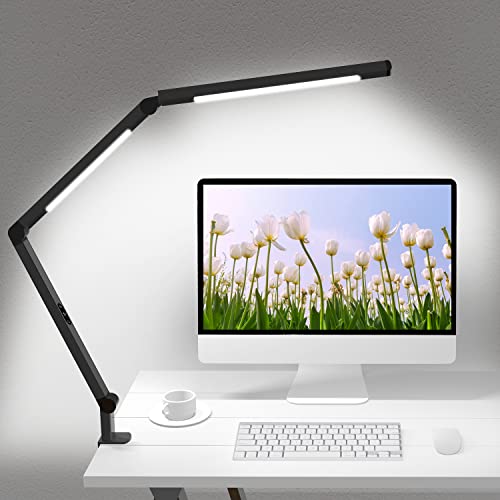
If your knitting space is also your desk or dining table, a clamp lamp is the smartest way to save surface area. It attaches directly to the edge of your table, leaving your workspace completely clear for your yarn bowl and pattern books.
The articulated arm is highly adjustable, allowing you to get the light source as close to your needles as possible. It is incredibly stable and won’t wobble when you are working on vigorous projects like felting or heavy wool knitting.
The integrated LED is energy-efficient and stays cool to the touch, which is a major plus when you are working in close proximity to your hands for hours. It is the perfect professional touch for a small, organized studio.
Why Proper Lighting Prevents Knitting Eye Strain
Knitting is a highly visual craft that requires you to focus on tiny, repetitive movements for extended periods. When light is insufficient, your eyes must work significantly harder to distinguish the yarn from the needles and the stitches from the background.
This strain often manifests as headaches, dry eyes, or blurred vision after just an hour or two of work. By providing high-quality task lighting, you allow your eyes to relax, which actually helps you knit faster and with more precision.
Think of lighting as a piece of equipment, just like your needles or stitch markers. Investing in the right light is an investment in your long-term ability to enjoy your craft without physical discomfort.
Essential Features to Seek in a Knitting Task Light
When shopping for a light, focus on these three critical aspects to ensure it meets the demands of your fiber arts practice:
- Color Temperature: Aim for "Daylight" (5000K-6500K) to ensure you see the true color of your yarn, which is vital for colorwork and yarn matching.
- Adjustability: Look for a lamp with a flexible neck or multiple pivot points so you can angle the light to avoid glare on your needles.
- Brightness Control: Dimmable features are essential, as you may need different levels of light for bright white acrylic versus dark, textured wool.
Prioritize lamps that offer a flicker-free experience, as constant micro-flickering can cause significant eye fatigue over time. Always check the base stability to ensure it won’t topple over when you reach for your scissors or measuring tape.
How to Position Your Lamp for Optimal Visibility
The goal of positioning is to illuminate your work while keeping the light source out of your direct line of sight. If you are right-handed, try placing the light over your left shoulder to minimize shadows cast by your dominant hand.
Angle the light so it hits the yarn at an oblique angle rather than straight down. This creates subtle shadows that highlight the texture of your stitches, making it much easier to see individual loops and identify potential errors.
Avoid placing the lamp directly in front of you, as this can create distracting reflections off your needles, especially if you use polished metal or nickel-plated options. Experiment with the height and angle until you find a position that highlights your work without creating glare.
Finding the right light is about understanding your own habits and the specific challenges of your current projects. A little extra illumination goes a long way in turning a dark evening into a productive and joyful knitting session. Choose the tool that fits your space, and your eyes will thank you for years to come. Happy knitting, and may your stitches always be clear and bright.