7 Best Precision Awls For Piercing Paper Holes Worth Using
Looking for the perfect tool for your paper crafts? Discover the 7 best precision awls for piercing paper holes and upgrade your workspace today. Shop our picks.
Whether mapping out a complex lace chart on printed paper or punching holes in cardstock tags for organizing stash yarn, the right precision awl acts as a vital extension of the maker’s hand. Just as selecting the perfect needle size for a delicate silk blend requires precision, choosing a tool for paper piercing requires balancing sharpness with control. A dull or poorly shaped tip can tear fibers instead of creating a clean, professional aperture. This guide explores the tools that provide the consistency needed to keep projects organized, labeled, and professionally finished.
Clover Tapered Awl: Best for General Crafting


The Clover Tapered Awl stands out for its ergonomic handle, which mimics the comfortable grip of a quality bamboo knitting needle. Its tapered profile allows for incremental hole sizing, making it ideal for when one needs to punch a small hole for a yarn swatch tag and then enlarge it slightly for a ribbon or heavy-weight twine.
This tool excels when managing paper-based craft organization, such as labeling skeins of delicate mohair or hand-dyed wool. Because the transition from the tip to the widest point of the taper is gradual, the risk of tearing the paper is minimal.
However, users should note that the tip is not as needle-sharp as some industrial options. For most labeling tasks, it is the perfect middle ground between precision and ease of use.
OLFA Cushion Grip Awl: Most Versatile Option
OLFA is known for durability in the cutting world, and their cushion grip awl brings that same reliability to paper piercing. The grip is noticeably soft, reducing hand fatigue during long sessions spent organizing a vast collection of patterns or knitting supply labels.
The tip is particularly robust, capable of piercing through multiple layers of cardstock or even thin fabric swatches without bending. This versatility is vital for crafters who frequently cross between knitting, embroidery, and paper craft.
If the goal is a tool that survives years of heavy use without dulling, this is a prime candidate. It is a workhorse that feels as sturdy in the hand as a high-quality stainless steel cable needle.
General Tools Scribe Awl: For Ultra-Fine Holes
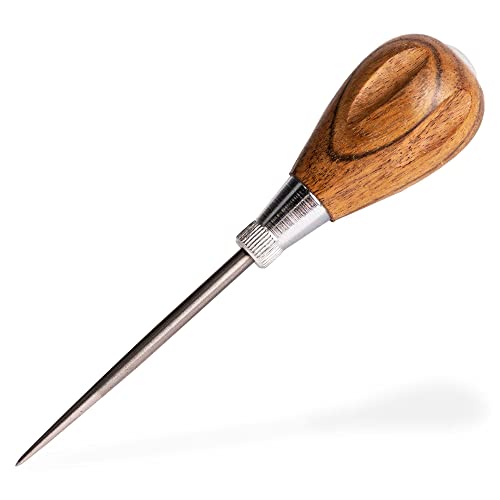
When a project calls for absolute precision, the General Tools Scribe Awl provides a tip that is effectively a hardened steel needle. It is the preferred choice for tasks where the hole must be nearly invisible, such as marking points on delicate drafting paper for sweater schematics.
Because the point is so fine, it creates clean, surgical holes without pushing the paper fibers out of shape. It acts much like a tapestry needle piercing through a fine-gauge knit; it moves between the fibers rather than forcing them apart.
One caveat remains: because the point is so thin, it is susceptible to breakage if used on thick boards or metal surfaces. Use it strictly for paper and light cardstock to preserve its integrity.
C.S. Osborne #496 Awl: The Heritage Choice
The C.S. Osborne #496 is an heirloom-quality tool that reflects traditional craftsmanship, much like a pair of forged steel scissors. Its long, tapered shank offers exceptional leverage and sightlines, which is beneficial when accuracy is paramount.
This is the choice for the maker who appreciates the tactile experience of a wooden handle that wears in over time. It offers a level of control that modern plastic-handled tools often lack, providing a distinct feeling of weight and balance.
While it requires a higher initial investment, it is designed to last a lifetime. For those who curate their craft room with tools that serve for generations, this is an unmatched option.
We R Memory Keepers Tool: Best for Bookbinding
The We R Memory Keepers piercing tool is designed specifically for paper crafts, making it a natural fit for those who bind their own knitting journals. Its handle is shaped to fit comfortably in the palm, allowing for the repetitive, rhythmic punching required for pamphlet stitching or custom pattern binding.
The tip is sturdy enough to pierce thick cardstock covers without excessive force. It creates a consistent hole size, which is essential for maintaining even tension when binding pages together.
If the focus is on creating custom knitting diaries or pattern collections, this tool simplifies the structural work significantly. It bridges the gap between functional office supply and specialized craft equipment.
Excel Blades Hobby Awl: A Top Budget-Friendly Pick
The Excel Blades Hobby Awl proves that high performance does not always demand a high price. It features a simple, knurled metal handle that provides an excellent non-slip grip, even if one has been working with moisturizing yarn or hand cream.
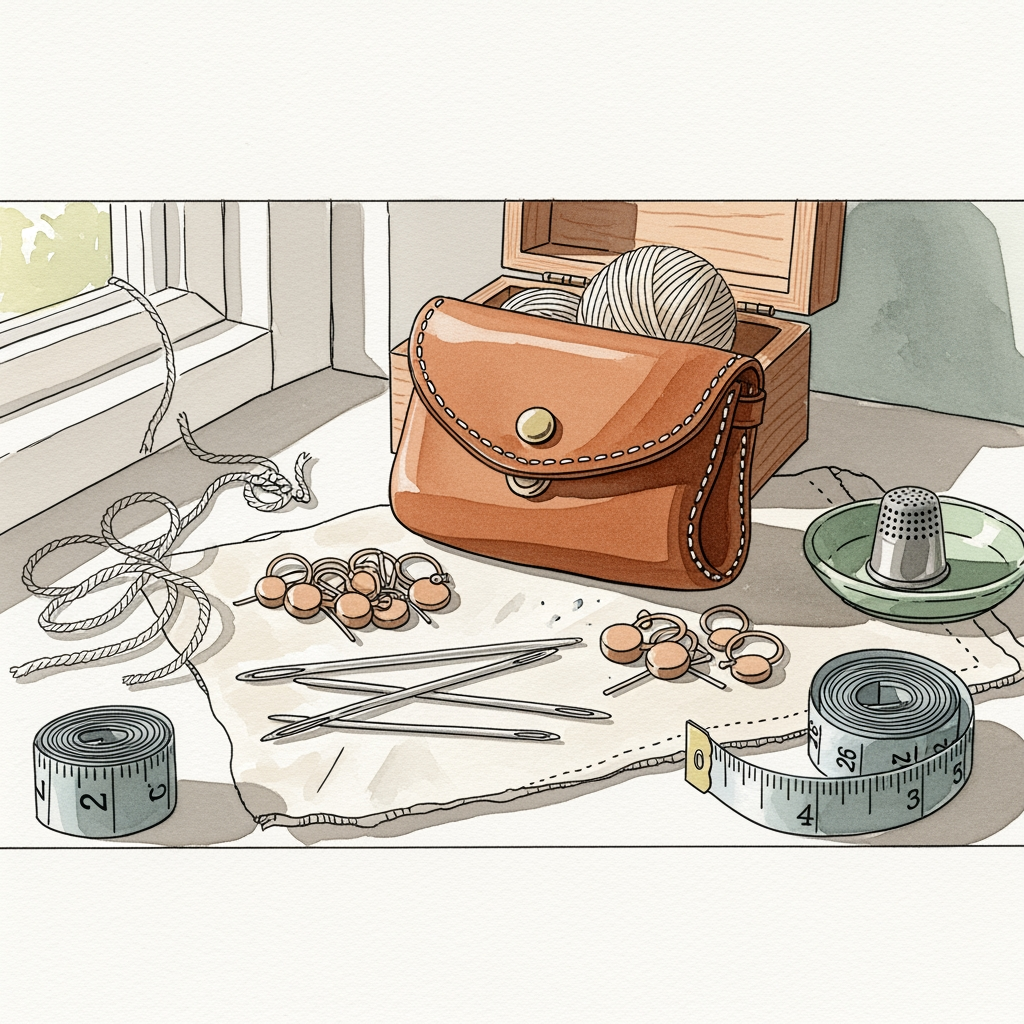
The blade is sharp and stays that way through significant use. It is small enough to fit easily into a notions pouch alongside stitch markers and measuring tapes, making it highly portable.
While it lacks the ergonomic cushion of more expensive options, its straightforward design is ideal for occasional use. It is a reliable, no-nonsense tool that performs exactly as expected without added bulk.
Cricut Weeder Tool: An Unconventional but Great Awl
Though marketed for weeding vinyl, the Cricut Weeder tool is a secret weapon for those needing a precision piercing point. Its slightly hooked, ultra-fine tip allows for picking at fibers or piercing paper with pinpoint accuracy in tight corners.
For a knitter, this tool can serve double duty; it is remarkably effective at picking up dropped stitches or pulling snagged yarn ends back into the fabric. The tip is fine enough to enter small areas where a standard awl might be too blunt.
It is highly versatile, though its non-traditional shape means it takes some practice to master for straight piercing. It is an excellent secondary tool to keep on the knitting table.
Choosing Your Awl: Handle, Grip, and Tip Shape
When selecting an awl, consider how it will be stored and used in relation to your other knitting notions. An ergonomic handle is non-negotiable if you experience hand stiffness after long hours of knitting or repetitive tasks.
- Handle Shape: Round handles allow for rolling the tool for precision, while contoured grips offer more torque for thick materials.
- Tip Geometry: Straight, needle-like tips are for clean holes; tapered tips allow for adjustable hole sizes.
- Weight: Heavier tools can provide stability, but lighter tools are often more comfortable for quick, frequent tasks.
Consider the material of the grip as well. Just as you might prefer wooden needles for slippery yarns, a grippy rubber handle will prevent the tool from sliding if your hands are prone to sweat during intense projects.
How to Safely Use a Precision Piercing Awl
Always treat an awl with the same respect given to sharp darning needles or cable needles. Never push the awl toward your body; always pierce away from yourself, preferably onto a self-healing cutting mat or a piece of scrap cardboard to protect the work surface.
To avoid injury, cap the tool immediately after use. An awl left on a table can easily be knocked over or snagged, leading to damaged surfaces or accidental pricks.
When punching through thick material, use firm, vertical pressure rather than wiggling the tool side-to-side. Wiggling weakens the material around the hole, whereas a direct, clean puncture maintains the structural integrity of your paper or tag.
Tapered vs. Straight Awls: Which Is Right for You?
The decision between a tapered and straight awl often comes down to the desired outcome. A straight, thin awl creates a uniform hole, which is critical for consistent bookbinding or when lacing tags with thin string or thread.
A tapered awl offers a degree of flexibility, allowing one tool to accommodate various cord thicknesses without needing a whole set. If you frequently change your organizational methods—moving from thin thread to heavier twine—a tapered awl is the more economical choice.
Ultimately, the best tool is the one that minimizes effort and produces a consistent result. Assess your most frequent paper-based tasks to determine if you need the surgical precision of a straight tip or the adaptable versatility of a taper.
When handled with care, a high-quality precision awl is an indispensable part of a well-organized creative workspace. By matching the tool’s geometry to the task at hand, the process of documenting and labeling becomes as fluid as the knitting itself. Invest in quality, keep the points sharp, and enjoy the satisfaction of a perfectly finished project.