6 Best Decorative Hooks For Hanging Kitchen Towels
Upgrade your space with our top 6 decorative hooks for hanging kitchen towels. Explore these stylish, functional options and find the perfect match for your home.
Kitchen towels are the unsung heroes of a craft room or home studio, keeping hands clean during long sessions of winding yarn or handling delicate fibers. Choosing the right hook for these towels is about balancing accessibility with fabric care, ensuring that precious, hand-knit items don’t snag or stretch. The following selections prioritize structural integrity and ease of use, keeping your workspace as efficient as a well-organized project bag. Selecting the perfect hardware means your favorite cotton-linen blend towels will remain pristine while staying within arm’s reach.
Franklin Brass Vessona Hook: Best Overall Value


The Franklin Brass Vessona Hook offers a clean, architectural silhouette that integrates seamlessly into any kitchen aesthetic. Its rounded profile is particularly gentle on fabric, preventing the concentrated stress points that lead to holes in delicate, hand-woven textiles.
For those working with heavier weight kitchen towels, such as those made from thicker, hand-spun cotton yarns, this hook provides a secure, non-slip grip. The smooth finish ensures that even open-weave structures won’t catch on sharp metal burrs during retrieval.
Reliability is the primary benefit here, as it performs consistently regardless of the towel’s weight. It serves as a utilitarian workhorse, much like a steady set of polished steel needles that never let a stitch slide off prematurely.
iDesign Twillo Over-Door Rack: Best for Renters
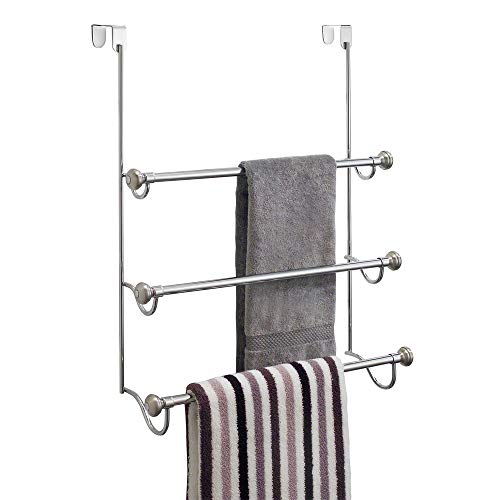
The iDesign Twillo Over-Door Rack is an ideal solution for those who want to avoid drilling into cabinetry or walls. Its non-invasive design allows for immediate installation, making it perfect for temporary workspaces or studio rentals.
The rack features a soft, padded backing that protects delicate cabinet finishes from scratches or wear. Because it sits over the door, it keeps towels hanging flat, which is essential for maintaining the structure of hand-knitted kitchen linens after they have been properly blocked and dried.
Consider this option if the kitchen layout lacks wall space near the sink or prep area. It offers maximum mobility, allowing the towel to be moved alongside the primary project station as the work evolves.
Liberty Hardware Mandara Double Hook: Most Versatile
The Mandara Double Hook is a masterclass in efficiency, offering two hanging points within a single compact footprint. This is invaluable when managing both a wet hand towel and a dedicated fiber-drying cloth in the same vicinity.
The curvature of the hooks is generous, meaning there is no risk of the yarn being pinched or forced into a sharp angle. Maintaining the integrity of a towel’s fiber content, especially if it contains rayon or linen blends, depends on avoiding these tight, tension-inducing spots.
For those who enjoy a cohesive look, the polished finish complements modern appliances without feeling overly industrial. It is a smart choice for the knitter who values a dual-purpose tool that saves precious wall real estate.
mDesign Farmhouse Wire Hooks: Best for Rustic Style

The mDesign Farmhouse Wire Hooks bring a traditional, hand-crafted aesthetic to the kitchen environment. The wire construction is lightweight yet surprisingly robust, providing a sturdy anchor for even the most absorbent, thick-ply towels.
Because these hooks have an open, airy design, they promote better airflow around the towel. This is a critical consideration for maintaining the hygiene of natural fibers that may hold moisture after a deep soak or accidental spill.
These hooks are best suited for towels with hanging loops or those that are folded over the hook rather than bunched. If you prefer a loose, relaxed drape for your linens, the slight resistance of the wire helps keep the towel in place.
Gatco Latitude II Modern Single Hook: Best Minimalist
The Gatco Latitude II is defined by its clean, unobtrusive lines and high-quality construction. It provides a sleek, sophisticated anchor that disappears into the background, letting the color and texture of the hand-knitted towels take center stage.
The surface finish is exceptionally smooth, which is a major advantage when hanging delicate lace-weight or fine-gauge cotton projects. Friction is the enemy of fine fiber, and this hook minimizes the potential for pilling or snagging on the towel’s surface.
For the minimalist, this hook offers a perfect balance between form and function. It remains sturdy and stable, providing a permanent home for the towel without cluttering the visual landscape of the workspace.
MyGift Rustic Wood Rack: Best Multi-Hook Panel
The MyGift Rustic Wood Rack provides a warm, natural contrast to metallic kitchen hardware. The wood backing acts as a buffer, ensuring that the towel rests against a soft surface rather than a cold, hard metal panel.
With multiple hooks, this panel is ideal for a dedicated drying station, holding everything from tea towels to small equipment covers. It keeps the workspace tidy, echoing the way a well-organized yarn wall keeps one’s stash accessible and orderly.
Always check that the wooden surface has been properly sealed to prevent splinters. A well-finished piece of wood will keep your fiber projects safe, while a rough edge could lead to unsightly pulls in your woven or knitted items.
How to Choose the Right Hook for Your Kitchen
When selecting a hook, prioritize the radius of the curve above all else. A sharp, narrow hook is the primary cause of fiber distortion and snagging, particularly on looser, hand-knit gauge structures. Look for hooks with a wide, rounded “throat” that supports the weight of the towel across a larger surface area.
Consider the weight of your preferred towels, especially if you favor heavy-duty, multi-ply cotton that holds significant moisture. A hook with a slight upward tilt or a ball-tipped end will provide the security needed to keep the towel from sliding off during busy kitchen tasks.
Finally, evaluate the installation method in relation to your long-term plans for the space. Choosing the correct hardware is a permanent decision that should be as carefully weighed as choosing a set of fixed circular needles for a long-term project.
Preventing Snags on Hand-Knit or Woven Towels
The most frequent cause of damage to hand-knit kitchen towels is contact with unfinished metal edges or decorative textures on hardware. If a hook feels rough to the touch, use a small piece of fine-grit sandpaper to smooth out the transition points.
Alternatively, consider the fiber content of the towel itself; mercerized cotton, which has a smoother, tighter twist, is naturally more resistant to snagging than soft, unmercerized organic cotton. If you choose a more rustic, textured yarn, avoid hooks with any decorative metal detailing or sharp angles.
Always hang your towels by a dedicated loop or by folding them precisely, rather than piercing the fabric with the hook. This practice distributes the tension evenly across the knitting, preventing the localized stretching that ruins the drape of your hard work.
Adhesive vs. Screw-In Hooks: Which Is Better?
Screw-in hooks provide the gold standard for load-bearing capacity and longevity. They are essential if the kitchen sees high-frequency use, as they won’t shift or detach over time. This stability is the physical equivalent of using high-quality fixed-tension needles that don’t allow for gauge fluctuations.
Adhesive hooks offer a compromise for those who want to avoid structural modifications. However, use caution with adhesive backings in a kitchen environment, as heat and humidity can compromise the bond over time. Always clean the mounting surface with rubbing alcohol to ensure a secure bond.
If the choice feels difficult, consider the permanence of the solution. Adhesive is temporary and forgiving, making it perfect for experimental layouts, while screw-in hardware is a long-term investment in the functionality of the home.
Where to Place Hooks for Style and Function
The optimal placement for a kitchen towel hook is within the “reach zone” near the primary sink or prep station. Place the hook at a height that allows the towel to hang freely without touching the floor or the countertop, ensuring the fiber stays clean and dry.
Consider the visual flow of the room by aligning hooks with other hardware like cabinet pulls or faucet finishes. Achieving symmetry creates a sense of professional organization that complements the structured nature of knitting and fiber arts.
Avoid placing hooks directly next to heat sources, as the temperature fluctuations can cause certain fibers to lose their elasticity over time. Good placement should be a balance of ergonomic convenience and the long-term preservation of your hand-knit linens.
Choosing the right decorative hook is a minor detail that pays off in both the longevity of your hand-knit textiles and the efficiency of your kitchen workspace. By selecting hardware that treats your fibers with care, you ensure that every towel stays as functional and beautiful as the day it was finished.