6 Best Craft Lights For Eye Strain Prevention
Stop straining your eyes during detailed projects. Discover the 6 best craft lights designed for optimal eye comfort and shop our top picks for your workspace.
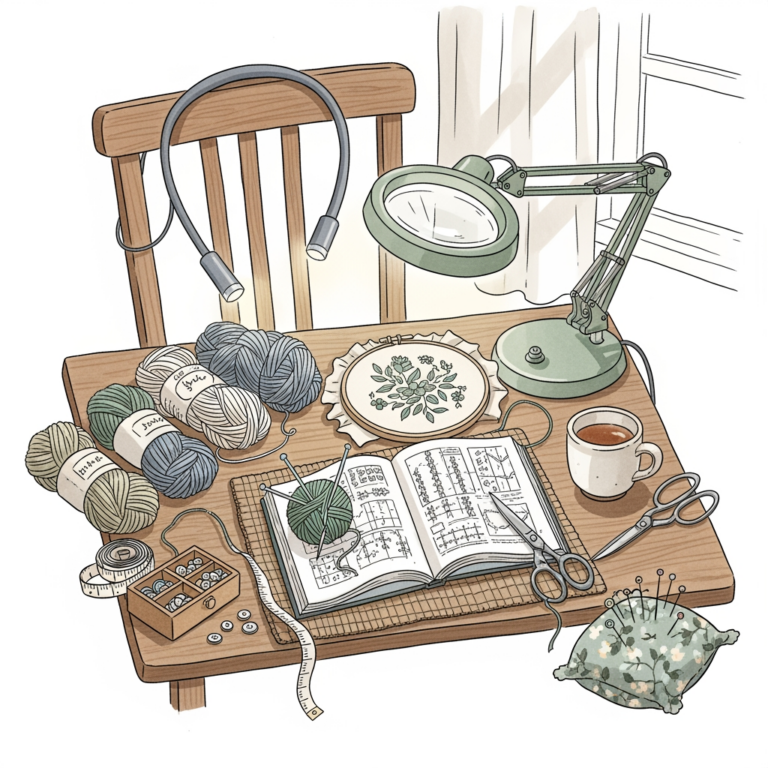
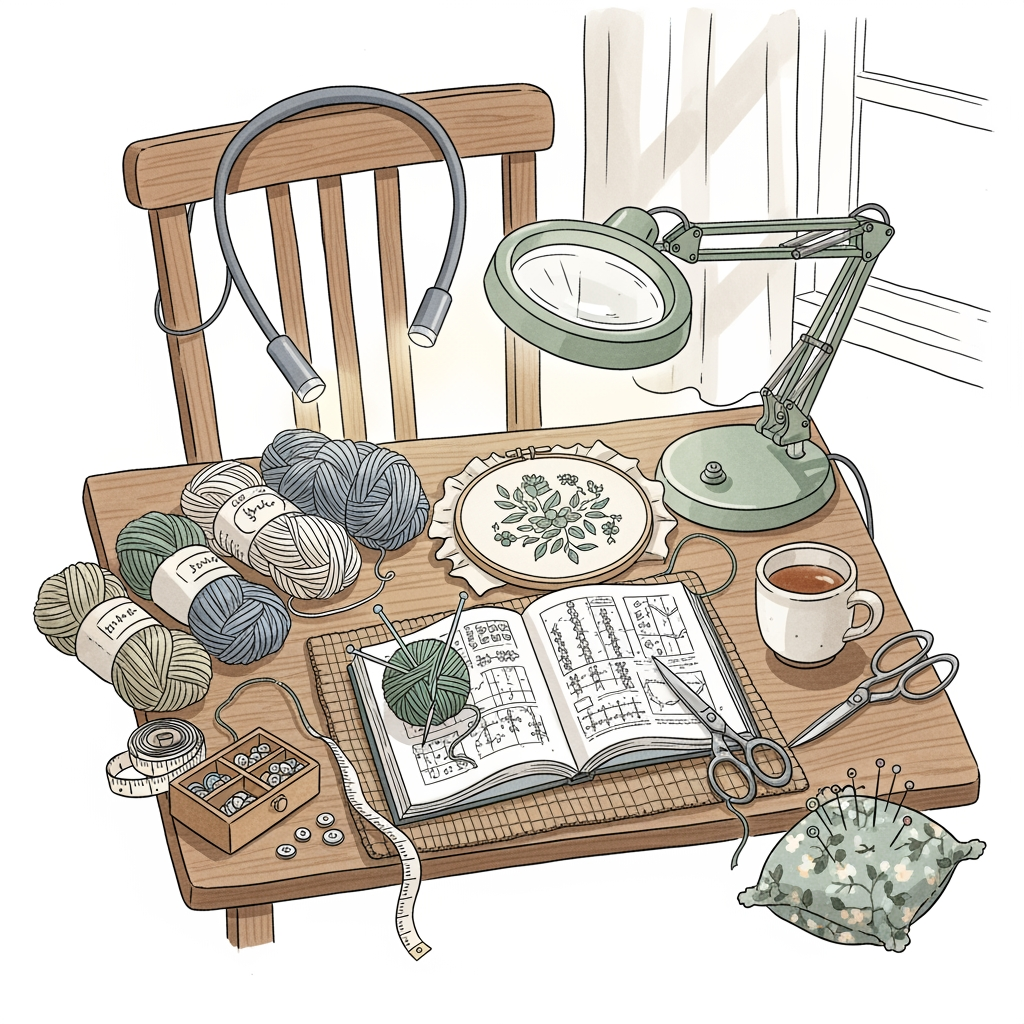
Straining to see dark-colored alpaca or deciphering a complex lace chart can turn a relaxing evening of knitting into a source of physical exhaustion. Proper lighting is not merely an accessory for the craft room; it is an essential ergonomic tool that protects eyesight and improves the accuracy of every stitch. High-quality illumination bridges the gap between frustration and fluidity, ensuring that tension remains consistent even during late-night sessions. Investing in the right craft light transforms how fiber reacts under the needle, revealing the subtle textures of cables and the clarity of intricate decreases.
OttLite Floor Lamp with Magnifier: Best Overall


This lamp excels because it balances broad-spectrum illumination with integrated magnification, which is vital when working with fine-gauge yarns. For knitters tackling intricate stranded colorwork or attempting to read complex, small-print schematics, the magnification component acts as a literal eyesaver.
The OttLite technology simulates natural daylight, minimizing the color distortion that often occurs under standard incandescent bulbs. When choosing yarns—especially those with subtle tonal variations or similar values—this color accuracy prevents errors that might only be discovered after blocking.
The primary tradeoff is the physical footprint and the fixed nature of the magnifier. If the knitting chair is tucked into a corner, the weighted base requires specific placement to ensure the magnifier sits comfortably at eye level without forcing a hunched posture.
Brightech Litespan LED Floor Lamp: Best for Big Projects
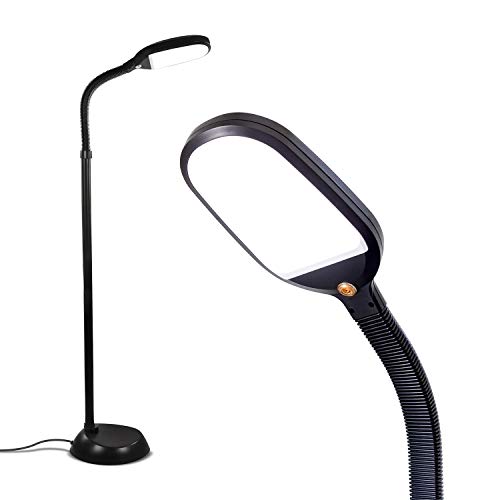
When working on a large-scale project like a queen-sized afghan or a bulky-weight sweater, uniform light distribution is non-negotiable. The Litespan provides a wide, flicker-free beam that covers the entire lap area, ensuring that edges and centers are equally visible.
This lamp is particularly useful for those who alternate between different weight categories of yarn throughout the week. Because the brightness is adjustable, one can dial down the intensity for a light cotton project or crank it up to maximum when working with black wool that swallows light.
Because it lacks an integrated magnifier, this is a better choice for those who do not require visual assistance but suffer from general eye fatigue. It is a workhorse that prioritizes coverage over specialized optical features.
Glocusent LED Neck Reading Light: Most Portable Option
Portability is the greatest advantage for the knitter who frequently visits local meetups or travels. The Glocusent wraps comfortably around the neck, directing light exactly where the hands meet the needles, which is ideal for those who tend to shift their knitting position throughout the evening.
The ability to adjust the light temperature is a standout feature for different fiber types. Warmer light often makes natural wool fibers easier to see, while cooler light can help distinguish the individual plies in synthetic or metallic-infused yarns.
Users must be mindful of the battery life and the physical weight on the neck over long sessions. If a marathon knitting session is planned, consider the potential for neck strain, though the lightweight design largely mitigates this risk.
Neatfi XL Bifocals Super Bright Lamp: Pro-Level Pick
The Neatfi XL represents a professional-grade investment for those who spend hours each day at a craft desk. The extra-large lens allows for a wider field of view, which is essential when working with delicate lace weight yarns where every tiny snag must be caught immediately.
The bifocal element is a massive benefit for those who switch between looking at their work and looking at a pattern. It provides both wide-area illumination and a high-magnification zone, reducing the need for constant eye refocusing.
This lamp is significant in size and requires a sturdy, reliable desk edge for clamping. It is not an item for the casual hobbyist but rather for the dedicated maker who views proper lighting as a prerequisite for long-term eye health.
Daylight Company Duo-Lamp: Best for Maximum Coverage
The Duo-Lamp features two adjustable heads, which allows a knitter to eliminate shadows entirely by casting light from multiple angles. This is highly effective when working with textured stitches like bobbles or brioche, where shadows can hide the actual structure of the stitch.
Having two arms means that if one section of the project is being adjusted or turned, the second lamp head can be repositioned to maintain consistent lighting. It essentially provides a studio-quality setup for a home crafting space.
Be prepared for a more complex setup process compared to a standard floor lamp. While the flexibility is unmatched, it requires a bit of trial and error to find the perfect configuration that doesn’t create glare on the needles themselves.
LuminoLite Clip-On Light: Best for Knitting on the Go

For the knitter who enjoys working in dim environments like a living room sofa or a train, a sturdy clip-on is indispensable. The LuminoLite is lightweight enough to attach to the edge of a book, a side table, or even a knitting bag, providing a focused beam exactly where it is needed.
The main benefit here is the ability to maintain a consistent light source regardless of the ambient lighting in the room. It is a cost-effective solution that doesn’t compromise on the quality of light, even if it lacks the power of a large-scale floor unit.
The tradeoff is the limited battery life and the necessity of finding a reliable clip-on point. It is best used as a supplemental tool rather than a primary light source for complex, dark-colored projects.
How to Choose the Right Craft Light For Your Needs
Selecting a craft light begins with assessing the specific project type and the physical environment where the knitting happens. If the focus is on lace weight yarns or dark, non-reflective fibers, a lamp with high CRI (Color Rendering Index) and integrated magnification is a priority.
Consider the ergonomics of the space; a floor lamp is excellent for stationary chair knitting, but it can be a nuisance in tight quarters. If the knitting habit involves moving from the chair to the bed to the kitchen table, prioritize a neck light or a portable, rechargeable clip-on model.
Finally, evaluate the light’s adjustability in terms of both position and intensity. A lamp that is permanently fixed in one angle will eventually cause issues if the posture changes, whereas an articulated arm allows for subtle adjustments that protect the back and neck as much as the eyes.
Understanding Lumens and Color Temperature (Kelvin)
Lumens measure the brightness of the light, but for knitting, higher lumens are not always superior. Excessive brightness can cause glare, especially if the needles are metallic or highly polished, making it harder to see the yarn structure.
Color temperature, measured in Kelvin (K), is arguably more critical for fiber arts. Aim for lights in the 4000K to 5000K range, which closely mimics daylight. This range ensures that color contrast remains sharp, preventing the common mistake of misidentifying yarn colors under warm yellow indoor lighting.
Avoid lights that are too “cool” or blue, as they can cause eye strain and make certain colors appear washed out. A neutral, daylight-balanced light ensures that the yarn purchased in the shop looks the same as it does at the knitting table.
Floor vs. Desk vs. Neck Light: Which Type Is for You?
Floor lamps are the gold standard for dedicated crafting corners, offering the most stable and comprehensive light coverage. They are ideal for projects that stay in one room, as their weighted bases prevent tipping and provide the most consistent illumination across a wide lap area.
Desk lamps are best for those who knit at a table, perhaps while following a digital pattern on a tablet. Their primary advantage is the ability to clamp onto the workspace, keeping the light source fixed and steady even when the hands are in constant motion.
Neck lights are the superior choice for comfort and portability. They offer a unique “follow-me” capability that is unmatched by static lamps, making them the perfect companion for travel or casual knitting in varied settings.
Tips for Setting Up Your Light to Prevent Eye Strain
Position the light source slightly behind or to the side of the shoulder, rather than directly in front, to minimize glare. If using a metallic needle, ensure the light hits the yarn at an angle that highlights the texture without creating a blinding reflection off the needle tips.
Take frequent “vision breaks” by looking at a distant object for twenty seconds every twenty minutes. Even the best lighting cannot prevent the natural strain that occurs when eyes remain fixed at a close distance for hours on end.
Keep the work area clean and clear of clutter that might cast distracting shadows. Shadows are the enemy of consistent tension; when the path between the light and the stitches is blocked, the eyes have to work much harder to decipher the fabric, leading to premature fatigue.
Proper lighting is as much a part of the knitting toolkit as a good pair of needles or a sharp pair of scissors. By selecting the right source for the specific project and environment, the craft remains a source of joy rather than a chore. Whether it is a professional-grade bifocal lamp or a simple, portable neck light, the investment in visibility pays dividends in every stitch. Consistency in light means consistency in gauge, and that is the hallmark of a truly polished project.