6 Best Bag Stiffening Sheets For Flat Bottoms
Keep your handbags looking structured and professional. Explore our top 6 best bag stiffening sheets for flat bottoms and improve your bag’s shape today.
A slumped bag bottom can turn a meticulously knitted or crocheted tote into an unrefined mess. Proper structure transforms a simple handmade piece into a functional accessory that holds its shape under the weight of yarn cakes, needles, and patterns. Achieving that crisp, architectural look requires the right internal stabilizer tailored to the fabric weight and intended use. Selecting the correct stiffening sheet ensures the base remains flat and supportive throughout the lifespan of the project.
Pellon Peltex 71F: Top Pick for Ultra-Firm Base


Peltex 71F is a heavy-duty, single-sided fusible stabilizer that functions like a fabric-covered board. It is the gold standard for makers who demand a rigid, architectural profile that refuses to buckle.
Because it is ultra-firm, it is ideal for large project bags or oversized totes that need to stand upright when placed on the floor. The fusible side adheres directly to the lining, eliminating the risk of the stiffener shifting inside the base of the bag during transit.
Be mindful that this material is quite thick, which can create challenges when sewing through multiple layers. Use a heavy-duty needle and ensure the seam allowance remains clear to avoid breakage.
ByAnnie’s Base Stabilizer: Best for Heavy Loads

ByAnnie’s Soft and Stable is engineered for makers who prioritize structure without compromising the ability to fold a bag for storage. It offers a balance of firmness and flexibility that is difficult to replicate with standard interfacings.
This stabilizer is particularly beneficial for heavy-duty project bags intended to carry glass jars of notions or several hundred grams of dense wool. Unlike brittle plastics, this foam-based product maintains its loft and shape even after being compressed.
It acts as a shock absorber, protecting fragile items like circular needles or delicate yarn cakes stored in the bottom. While it provides excellent structure, it is softer than rigid plastic, making it a superior choice for bags that require a more organic feel.
Dritz Plastic Canvas: Most Versatile Budget Option

Plastic canvas is a classic choice for a reason: it is inexpensive, waterproof, and entirely rigid. It serves as an internal “skeleton” that forces the fabric into a perfect rectangle.
This material is perfect for beginners who want to experiment with bag construction without investing in specialized fusible sheets. It can be easily cut to size with standard shears to accommodate custom base measurements.
Since it is not adhesive, it must be encased in a fabric pocket or sewn into the lining. This allows for removal if the bag ever requires a deep cleaning or machine wash, making it highly practical for long-term use.
Bosal In-R-Form Plus: Best Double-Sided Fusible
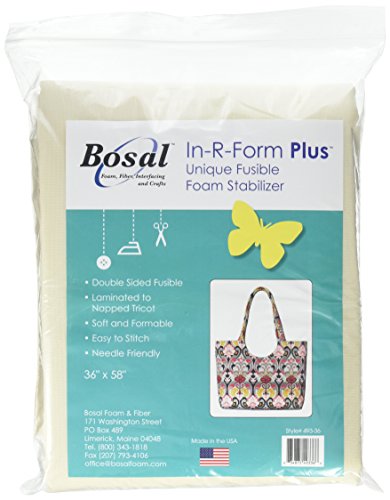
Bosal In-R-Form Plus provides a unique solution by featuring fusible adhesive on both sides of the foam. This creates a cohesive “sandwich” between the outer fabric and the interior lining, locking the base into place permanently.
This double-sided adhesion prevents the common issue of the lining bubbling away from the base over time. It creates a seamless, professional finish that hides the structure of the stabilizer entirely.
Consider this option for luxury knitting bags where a high-end, store-bought appearance is the goal. Because it binds two layers, it effectively eliminates the need for complex quilting or topstitching to keep the layers aligned.
Clover Bag Bottoms: Easiest Pre-Cut Solution

For makers who prefer to skip the measuring and cutting phase, Clover offers pre-cut, rigid bag bottoms. These are designed to be inserted into a fabric sleeve or attached directly to the base of the project.
These inserts are consistent, durable, and save significant prep time. They are ideal for quick gift projects or situations where standard bag dimensions are being utilized.
The primary limitation is the lack of custom sizing. Before committing to this option, ensure the dimensions align perfectly with the pattern, as an ill-fitting insert can cause the fabric to warp or pull at the corners.
Go-To Notions Acrylic Bases: The Pro-Level Insert
Acrylic bases offer a sophisticated, high-clarity finish that is often used in high-end leather and structured fabric bag making. These inserts provide the absolute maximum level of rigidity available for handmade accessories.
They are virtually indestructible and provide a perfectly flat surface for the bag to sit on, regardless of the weight distribution inside. When carrying expensive needles or delicate tools, this base ensures the bag never tips or sags.
They are usually installed using a pre-sewn fabric “pocket” at the bottom of the lining. This creates a hidden compartment that protects the bag’s integrity while providing a sturdy base that looks intentional rather than improvised.
How to Choose the Right Stiffener for Your Bag
Selecting a stabilizer depends heavily on the weight of the outer fabric and the intended load. A delicate, linen-blend project bag requires a lighter touch, whereas a heavy, felted wool tote needs substantial support.
Consider the following factors when making a choice: * Weight: Will the bag hold lightweight shawls or heavy skeins of bulky yarn? * Flexibility: Does the bag need to fold flat for storage or travel? * Durability: Does the project require cleaning, or is it a decorative carry-all? * Thickness: Will the sewing machine handle the combined thickness of fabric and stiffener?
If the project requires frequent laundering, avoid permanent fusibles and opt for removable inserts. If the aesthetic is a structured, bucket-style bag, choose a firm, fusible foam.
Fusible vs. Sew-In vs. Insert: Key Differences
Fusible stabilizers are the easiest to install, providing a smooth finish that feels integrated with the fabric. However, they can be difficult to remove if the bag sustains damage or requires cleaning.
Sew-in stabilizers offer more control during assembly, allowing for fine-tuning before the final seams are closed. They are excellent for heavy fabrics that might react poorly to the heat required for fusion.
Inserts represent the ultimate in structural support. While they require the construction of a specific pocket or interior flap, they allow for the greatest longevity and ease of maintenance in a heavily used knitting bag.
Tips for Cutting and Installing Your Bag Base
Always round the corners of rigid inserts. A square corner on a piece of plastic or Peltex can eventually poke through fabric seams, creating a visible stress point.
Use a heavy-duty rotary cutter for plastic or thick foam to achieve clean lines. Avoid using good fabric scissors on plastic canvas, as the material can dull blades rapidly.
When installing, verify that the base is centered perfectly before final assembly. A slightly off-center stiffener will cause the bag to lean, compromising the aesthetic of the final project.
Can You Use Cardboard for a Bag Bottom? (FAQ)
While using scrap cardboard might seem like a quick fix, it is generally discouraged for long-term projects. Cardboard absorbs moisture from the air and will eventually soften, warp, or even grow mold if the bag is exposed to damp environments.
Furthermore, cardboard cannot be laundered, which limits the lifespan of the bag. Investing in synthetic materials like plastic or specialized foam ensures the bag remains a functional, long-lasting accessory.
If cost is a factor, choose inexpensive plastic canvas over cardboard. It provides the same structural benefit without the risk of degradation or moisture damage.
The choice of bag stiffener dictates the longevity and usability of every knitting bag produced. By selecting the right material—whether a firm acrylic base or a flexible foam—a project gains a professional, durable finish that protects the gear held within. Investing a little extra effort into this hidden component elevates the quality of the work and ensures the bag remains a reliable companion for many years of crafting.