
7 Best Sketch Book Clips For Open Page Stability
Stop your pages from flipping while you draw. Discover our top 7 best sketch book clips for open page stability and keep your workspace steady. Shop the list now.
Finding the right pattern-holding solution is essential when working through complex cable repeats or intricate lace charts. A pattern that snaps shut at the worst possible moment often leads to dropped stitches or errors in a row’s sequence. The following guide explores seven effective methods to keep a sketchbook or pattern book open and accessible during long knitting sessions. By balancing page stability with fiber and paper protection, these tools ensure focus remains entirely on the needles.
Clover Wonder Clips: A Versatile Crafting Clip
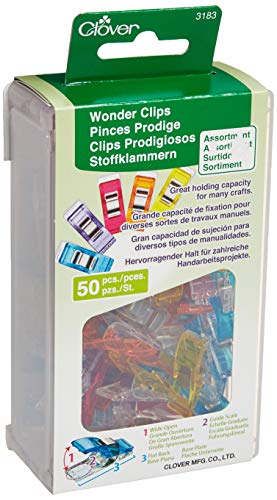

Clover Wonder Clips are a staple in most sewing kits, but their utility extends perfectly to the knitting room. These small, spring-loaded clips offer a secure grip that holds even the thickest pattern booklets open without exerting damaging pressure on the binding.
Their flat base allows them to rest on a table surface without wobbling, making them ideal for reference materials positioned next to a project. Since they feature a wide opening capacity, they can handle multiple pages at once, which is helpful when tracking multi-part charts.
The primary tradeoff is the clip’s reach; it can only secure the outer edges of the page. For larger binders, a single clip may not be enough to keep the center of the page flat. If the pattern book has a stiff spine, use two clips placed at the bottom corners for the best results.
Large Binder Clips: The Ultimate Budget Choice

Standard office-grade binder clips remain the most accessible solution for knitters on a budget. They provide a firm, reliable hold that is difficult to replicate with lighter-weight accessories.
The trick lies in the ability to fold the metal arms down against the paper to keep the workspace clear. This is particularly useful when knitting in tight quarters, such as an airplane seat or a crowded commuter train.
Be cautious with the silver metal finish on cheaper clips, as these can sometimes snag delicate yarn if left too close to the project bag. Always ensure the clip is firmly attached to the cardboard cover rather than the printed chart itself to avoid accidental tears.
The Original Book Bone: A Simple Weighted Hold

The Book Bone is a weighted, flexible strip that lays across an open book to hold pages down via gravity. This design is excellent for knitters who dislike the visual clutter of bulky plastic clips.
Because it does not rely on mechanical tension, it carries zero risk of tearing page corners or indenting thinner pattern paper. It is particularly effective for heavy hardback knitting pattern books that tend to fight against staying open.
However, the Book Bone requires a flat surface to function properly. If a pattern is balanced on a lap or a soft knitting pillow, the weight may slide off, rendering it ineffective. Keep this tool on a dedicated side table for maximum stability during long sessions.
FlipKlip Book Holder: For Hands-Free Reading
The FlipKlip is a specialized device designed to keep large, heavy reference books open and angled toward the knitter. Its mechanical arms provide significant leverage, making it the top choice for thick knitting encyclopedias or stitch dictionaries.
This tool shines when following a tutorial that requires both hands for complex maneuvers like brioche or intarsia. By elevating the book, the knitter reduces neck strain, which is a common complaint during hours of repetitive knitting.
The mechanical nature of the device means it is less portable than a simple clip. It is best suited for a permanent knitting station rather than a portable project bag.
Book Darts Line Markers: Gentle on Your Pages
Book Darts are thin, brass markers that slide onto a page to indicate exactly where a specific row ends or a chart begins. While not a clip in the traditional sense, they are essential for maintaining your place in a written pattern.
These markers are incredibly thin and lightweight, ensuring they do not distort the book’s binding or create gaps in the pages. They are perfect for knitters who work on multiple projects simultaneously and need to jump back into a pattern without searching for the last row worked.
Because they are made of metal, ensure they are stored away from moisture to prevent patina or potential transfer to light-colored paper. They serve best as a navigational aid rather than a primary page-holder.
Manhasset Music Clip: For Binders & Big Books
Originally designed for music stands, the Manhasset Music Clip acts as a powerful, wide-span page holder. If a knitting pattern is stored in a large, three-ring binder, this clip is the strongest option available for keeping it open.
The tension on this clip is significantly higher than a standard office binder clip. It can hold a large volume of paper open even when the book is positioned at a steep angle.
It is perhaps too aggressive for thin, single-sheet pattern printouts, which might tear under the force of the spring. Reserve this tool for your heaviest project binders and thickest pattern collections.
Acmine Reading Stand: The Stable Book Easel
The Acmine Reading Stand is a full-featured easel that provides the ultimate viewing experience for detailed charts. It allows for height and angle adjustments, which is a game-changer for those dealing with vision fatigue while reading small text on complex lace patterns.
Having a dedicated stand prevents the “pattern-burying” phenomenon where the book gets covered by balls of yarn or spare needles. It keeps the workspace organized and the pattern visible at eye level.
The main drawback is its footprint; it takes up valuable table space. If the knitting area is already crowded with tools, light sources, and fiber, consider if the physical space justifies the convenience.
How to Pick the Best Clip For Your Project Book
Selecting the right tool depends on the physical anatomy of the pattern material and the environment where the knitting occurs. Consider the following criteria:
- Weight of the book: Heavier books require a weighted solution or a heavy-duty easel.
- Portability requirements: Binder clips and Book Darts are ideal for travel, while stands are better for home use.
- Paper quality: Use gentle, non-mechanical options for vintage pattern sheets to prevent rips.
If the pattern is frequently moved from the living room to the car, prioritize small, robust clips that won’t fall off in a project bag. If the focus is on sedentary, long-term work on a sweater, invest in an easel or a weighted holder.
Weighted vs. Clip-On: Which Style Is for You?
Weighted holders, like the Book Bone, offer the benefit of being “set and forget” without damaging page edges. They are best for knitters who appreciate a cleaner aesthetic and need to turn pages frequently without unclipping anything.
Clip-on solutions, by contrast, offer superior security against drafts or movement. They are essential for outdoor knitting or sessions near an open window.
- Choose Weighted if: You need to flip pages often and want zero page damage.
- Choose Clip-On if: You need the book to stay at a specific, locked-open angle despite movement.
Ultimately, the best approach is often having a small variety of tools available. Most knitters eventually find that a combination of a clip for security and a marker for position works best for complex projects.
Protecting Your Patterns From Clip Damage
Even the most useful clips can cause damage over time if handled incorrectly. Repeatedly clipping and unclipping from the exact same spot on a page will eventually cause thinning or creasing.
Rotate the placement of your clips slightly every time the project is put away to distribute the pressure. If a clip seems too tight, place a small scrap of felt between the clip and the paper to soften the bite.
Taking care of the pattern is just as important as taking care of the needles. A well-maintained pattern book serves as a reliable reference for years, making the investment in proper holding tools well worth the cost.
Proper pattern management is the secret to a stress-free knitting life. By choosing the right tool for the specific project, you ensure that your focus stays on the rhythm of the needles and the quality of the stitch. Experiment with these options to find which best complements your knitting style and workspace, and enjoy the peace of mind that comes with a perfectly stable pattern.
