6 Best Protective Masks For Ink Handling Safety
Protect yourself from harmful fumes with our guide to the 6 best protective masks for ink handling safety. Read our expert reviews and upgrade your gear today.
Working with powdered dyes and chemical fixatives in a home studio requires more than just a dedicated workspace; it demands rigorous attention to respiratory health. While fine wools and delicate silk yarns are beautiful, the airborne particulates created during the dyeing process can be hazardous if inhaled over time. Establishing a professional safety standard is as essential as mastering your tension or understanding fiber content. These six mask recommendations provide the necessary protection to ensure that creative practice remains a lifelong, healthy endeavor.
3M 8210Plus N95: The Reliable Studio Standard


The 3M 8210Plus N95 is the quintessential baseline for any fiber artist who occasionally works with powdered pigments. Its dual-strap design provides a secure, consistent seal that many disposable options fail to match.
This mask excels in environments where you are weighing dry dye powders for a small batch project. Because the seal is reliable, there is minimal risk of “blow-by,” which is the annoying way fine dust can escape around the nose bridge.
Consider this the “workhorse” of the studio. It is straightforward, effective, and provides peace of mind when dealing with standard acid dyes that come in powder form.
3M 6200 Half Facepiece: Best for Heavy-Duty Use
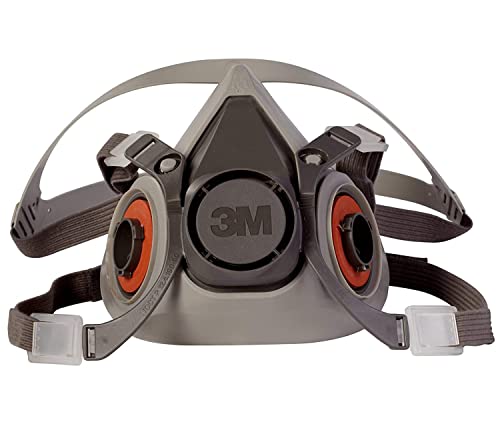
For the production dyer who spends hours over steam vats or mixing high-volume chemicals, a half-face respirator like the 3M 6200 is the gold standard. Unlike disposable masks, this unit utilizes replaceable cartridges that can be tailored to specific chemical risks.
The silicone facepiece creates an airtight barrier that is far superior to any foam-based or simple elastic mask. This is critical when working with volatile mordants or intensive color-stripping agents that require more than just particle filtration.
While the upfront cost is higher, the long-term utility is unmatched. You will find that the ability to swap filters for organic vapors—as opposed to just particulates—makes this the safest choice for serious dye work.
Honeywell DF300 N95: Best Flat-Fold for Storage

The Honeywell DF300 is ideal for the knitter with limited space who needs quick access to protection. Its flat-fold design means it can be tucked into a knitting bag or kept in a drawer without losing its structural integrity.
Because it folds flat, it stays protected from lint and debris when not in use. This prevents the mask from becoming a collector of studio dust before it even hits your face.
The fit is secure, and the fold-out design offers a generous breathing chamber. It is an excellent choice for someone who needs to keep their studio kit organized and minimal.
GVS Elipse P100: Most Comfortable Low-Profile Fit
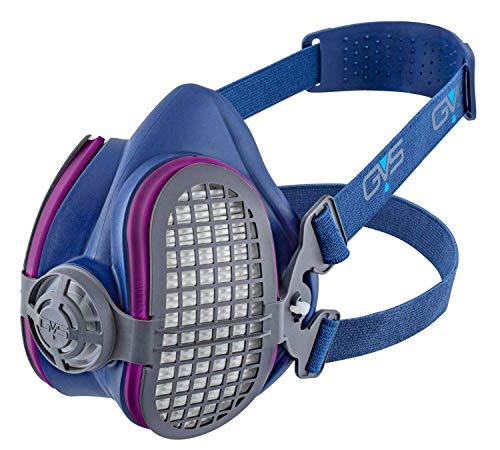
The GVS Elipse P100 is designed with a sleek, low profile that does not interfere with your line of sight. This is a significant advantage when you need to watch the precision of a dye bath or check the saturation of a skein of yarn.
The P100 filters offer a higher level of protection than standard N95s, capturing virtually all airborne particulates. The compact shape means you can lean in close to your work without the mask bumping into your mixing tools or equipment.
Comfort is the main selling point here. If you find standard masks claustrophobic or intrusive, the ergonomic design of the Elipse will feel like a much more natural part of your studio routine.
Moldex 2200 N95: Best for Hot, Humid Conditions

Dyeing is inherently hot work, especially if you are steaming yarn to set colors. The Moldex 2200 features a unique design that is built to resist collapsing even when the air is thick with humidity and steam.
The nose cushion is particularly soft, preventing the irritation that often leads to mask-shifting during long sessions. A secure, comfortable fit is more likely to be worn correctly for the duration of the task.
If you struggle with the “sweaty” feeling that plagues most disposable masks, this model is a relief. It keeps the workspace cool and keeps you protected without the constant need for adjustment.
3M Aura 9205+ N95: Best Fit for Most Face Shapes
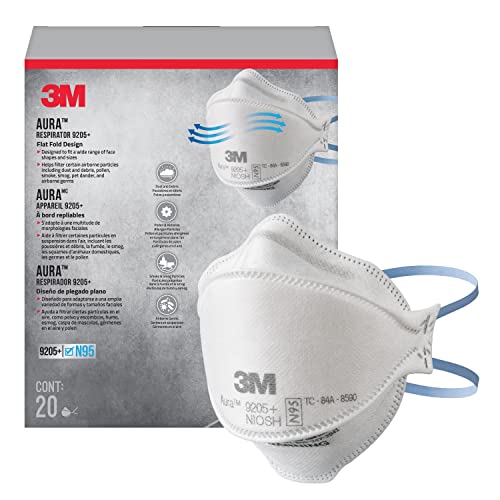
The 3M Aura 9205+ uses a three-panel design that accommodates a wide variety of facial structures. This is a major benefit for those who have struggled to find a mask that doesn’t gap near the cheeks or chin.
Its embossed top panel helps reduce eyewear fogging, which is a major pain point for those who wear glasses while reading patterns or measuring chemicals. The soft, breathable material feels less restrictive than traditional molded shells.
It is arguably the most user-friendly N95 on the market. For the average fiber artist, it provides the perfect balance of comfort, fit, and reliable filtration.
N95 vs. P100: What Do Respirator Ratings Mean?
Understanding the rating system is key to matching protection to your specific chemical exposure. An N95 mask is rated to filter at least 95% of airborne particles, making it sufficient for most non-toxic dye powders and natural pigments.
A P100 filter is the highest level of particulate protection, capturing 99.97% of particles and being oil-proof. While P100 is “better,” it is often overkill for simple dust-heavy tasks but essential when dealing with finer synthetic particles.
Think of it like choosing between a delicate lace needle and a sturdy wood needle; use the right tool for the specific job. N95s handle dust, while advanced cartridge systems handle chemical vapors.
Choosing the Right Mask for Your Dyeing Process
Selecting the right protection depends entirely on the substances being used in the studio. If you are exclusively using natural dyes or low-impact powders, an N95 is more than adequate.
However, if your process involves high-heat steaming of synthetic dyes or the use of harsh liquid fixatives, you must consider a respirator with organic vapor cartridges. These cartridges protect against the invisible fumes that particles alone cannot stop.
Consider the ventilation in your studio as well. Even with the best mask, working in a space without airflow is a recipe for trouble. Always prioritize a well-ventilated, well-lit workspace alongside proper personal protective equipment.
How to Ensure a Proper, Protective Seal on Your Mask
A mask is only as good as the seal it creates against the skin. Before starting any dyeing session, perform a simple “user seal check” by covering the filter area with your hands and inhaling sharply.
The mask should pull toward your face. If you feel air leaking around the bridge of your nose or the edges, the seal is compromised and the mask is not functioning as intended.
Facial hair can often interfere with the seal of tight-fitting respirators. If you are serious about studio safety, ensure the area where the mask meets your skin is clean-shaven or that the mask style is specifically chosen to accommodate your facial features.
When to Replace Your Mask or Its Filters
Disposable N95 masks should be discarded if they become dirty, wet, or difficult to breathe through. In a dye studio, these indicators often happen faster than in other settings due to the presence of airborne moisture and dye residue.
For respirators with replaceable cartridges, follow the manufacturer’s schedule regarding usage hours. If you can smell the chemicals you are working with, the filters have reached their capacity and must be replaced immediately.
Treat your mask as a critical piece of studio gear, much like a good pair of shears or a digital scale. When the integrity of the tool is in doubt, it is time to retire it.
Maintaining a safe studio environment is a vital skill that complements the technical mastery of knitting and dyeing. By selecting the right respiratory protection and ensuring a proper fit, you safeguard your health while preserving your ability to experiment with color and texture for years to come. Remember that consistent habits are the true hallmark of a seasoned maker.