6 Best Knitting Kits For Lace Beginners To Try
Master lace knitting with these 6 beginner-friendly kits. Learn essential techniques like yarn-overs and decreases with these curated, stress-free projects.
Stepping into the world of lace knitting can feel like moving from a comfortable stroll to a delicate dance, but the right kit makes all the difference. Many beginners are intimidated by the thinness of lace-weight yarn, fearing it will be too fiddly or prone to tangles. However, with the right structure and guidance, lace is simply a rhythmic repetition of simple increases and decreases. These curated kits provide the perfect entry point to transform fine fibers into ethereal, wearable art.
KnitPicks Lace Beginner’s Shawl Knitting Kit


This kit is a masterclass in accessibility, focusing on the fundamental "yarn over" and "k2tog" techniques that define lace. It typically features their Palette yarn, a fingering-weight wool that is sturdy enough to handle the inevitable frogging—or unraveling—that comes with learning new stitches.
The beauty of this kit lies in its simplicity. By using a slightly heavier lace-weight wool, you avoid the frustration of working with wispy, slippery mohair blends right out of the gate.
If you find your tension is uneven, don’t panic; this wool has a slight "tooth" that grips the needle, preventing those tiny stitches from sliding off mid-row. It is an honest, no-frills choice for those who want to focus on stitch formation rather than managing difficult fibers.
WEBS Valley Yarns Lace Scarf Starter Kit
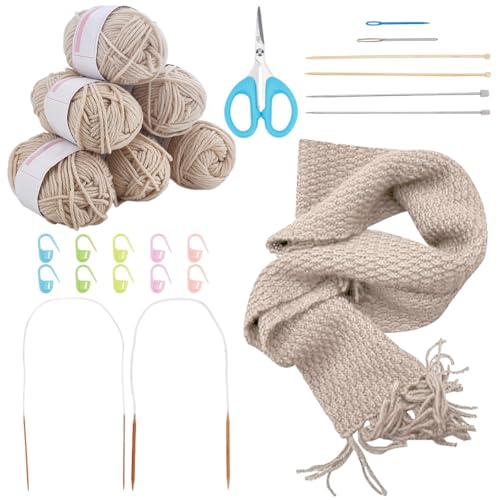
Valley Yarns are a staple for a reason: they offer incredible value without sacrificing the integrity of the fiber. This kit usually pairs a high-quality, long-staple wool or alpaca blend with a pattern that emphasizes vertical movement, which is excellent for learning how to read your knitting.

When you work with these fibers, you’ll notice they have a beautiful drape, which is the hallmark of a successful lace project. The kit is designed to teach you how to maintain consistent tension, which is the biggest hurdle for new lace knitters.
If you are prone to tight knitting, I suggest pairing this kit with a pair of nickel-plated needles to help the stitches glide. Conversely, if your stitches feel loose, reach for bamboo or wood needles to provide that extra bit of friction.

Purl Soho Heirloom Lace Wrap Knitting Kit
Purl Soho kits are undeniably elegant, often featuring high-end fibers like mulberry silk or fine merino. This is the kit you choose when you want the process to feel as luxurious as the final product.
The instructions are famously clear, written in a way that demystifies the structure of the wrap. You aren’t just following a chart; you are learning how the lace motifs repeat and grow.
Be aware that these premium fibers can be unforgiving. If you are a complete novice, take your time; silk, in particular, has very little "memory" or elasticity, meaning it won’t bounce back if you stretch it out of shape.
Wool and the Gang Lace Shawl Project Kit
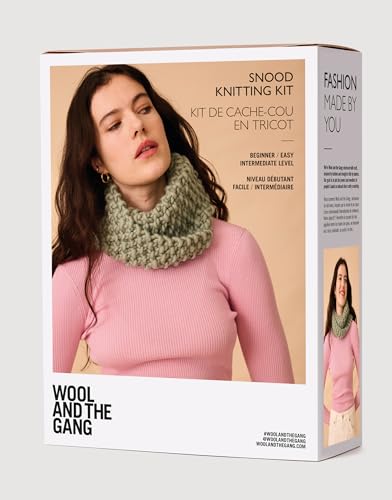
If you want a kit that feels modern and approachable, this is your go-to. Wool and the Gang excels at making intimidating techniques feel like a fun weekend project rather than a daunting academic exercise.
Their patterns are often visually focused, which helps if you struggle with traditional written instructions. They prioritize the "big picture" of the project, which keeps your motivation high as you watch the lace pattern emerge.
Keep in mind that these kits often use slightly thicker, more rustic yarns. While this makes the knitting faster, it results in a chunkier lace than a traditional fine-gauge wrap.
Lion Brand Lace Weight Beginner Shawl Kit

This is an excellent option for those who want to practice lace without a significant financial investment. It is widely available and uses accessible, easy-to-care-for fibers that can handle a bit of wear and tear.
The yarn provided is often a synthetic-blend, which is actually a secret weapon for beginners. It is incredibly consistent, meaning you won’t have to deal with the thick-and-thin variations found in hand-spun or artisanal yarns.
If you are worried about the "dreaded tangle," synthetic fibers are your best friend. They are less prone to felting if you have to rip back your work multiple times, which is a common reality for any beginner.
Darn Good Yarn Lace Weight Scarf Starter Kit
Darn Good Yarn brings a unique, bohemian flair to lace knitting. Their kits often feature recycled silks or interesting textures that make the final result look much more complex than it actually is.
The texture of these yarns acts as a visual guide, helping you see where your yarn-overs are located. This is a huge advantage for a beginner who hasn’t yet developed the "knitter’s eye" for identifying stitches.
Just remember that textured yarn can be harder to "read" when you make a mistake. If you drop a stitch, take a deep breath and use a crochet hook to gently walk it back up to the current row.
Essential Tools for Every New Lace Knitter
Before you start, ensure your toolkit is ready for the precision required by lace. You will need a set of sharp-tipped needles, which are essential for maneuvering into those tight decrease stitches.
- Stitch Markers: Use locking markers to track your pattern repeats.
- Tapestry Needles: Essential for weaving in ends on delicate lace.
- A Row Counter: Keeps you from losing your place in a 20-row lace repeat.
- A Crochet Hook: Your best friend for picking up dropped stitches.
Do not overlook the importance of a good light source. Lace knitting is taxing on the eyes, and having a dedicated task lamp will save you from unnecessary mistakes caused by poor visibility.
How to Choose Your First Lace Weight Yarn
When you move beyond kits, look for yarns with a high twist, as they are less likely to split while you work. A "plied" yarn is generally much easier for a beginner to handle than a "single" ply, which can easily fray.
- Wool/Nylon Blends: Durable and easy to work with.
- Alpaca: Offers great drape but can be slippery.
- Silk: Beautiful but lacks elasticity.
If you are choosing your own yarn, look for a "halo"—the fuzzy fibers surrounding the strand. A moderate halo is fine, but avoid high-mohair content for your first project, as it makes unknitting nearly impossible.
Understanding Lace Charts and Stitch Keys
Lace charts are essentially maps of your fabric. Each square represents a stitch, and the symbols tell you exactly what to do, which is often far more intuitive than reading pages of written text.
Always start by studying the stitch key provided with your pattern. It is the legend that decodes the symbols, and it will tell you exactly how a "yarn over" or a "ssk" (slip, slip, knit) is represented in that specific project.
Remember: lace charts are read from right to left on right-side rows, and left to right on wrong-side rows. Once you master this grid-based way of thinking, you will find that you can knit almost any lace pattern in the world.
Tips for Blocking Your First Lace Project
Blocking is the "magic" step where your messy, bunched-up knitting transforms into a professional-looking lace piece. You must wet the finished item in lukewarm water, gently squeeze out the excess, and pin it into shape on a mat.
The secret is to stretch the lace firmly but not aggressively. You want to open up the eyelets—the holes created by your yarn-overs—without distorting the integrity of the stitches themselves.
Let the piece dry completely while pinned. When you unpin it, you will see the lace "set" into its final, beautiful form, making all your hard work truly shine.
Lace knitting is a journey of patience, precision, and the rewarding realization that you can create something so delicate with nothing more than two needles and some string. Don’t be discouraged by dropped stitches or the need to restart; every single mistake is simply a lesson in how your yarn behaves. Choose the kit that speaks to you, take your time, and enjoy the rhythmic meditation of the lace. Your first completed project will be a source of pride that lasts for years to come.