6 Best Bamboo Shuttles For Lightweight Weaving
Discover the 6 best bamboo shuttles for lightweight weaving to improve your project speed and comfort. Upgrade your weaving toolkit and shop our top picks today.
Weaving with a bamboo shuttle transforms the tactile experience of the craft, replacing the heavy, clacking weight of traditional wooden or plastic tools with something almost ethereal in the hand. Because bamboo is inherently lightweight yet remarkably strong, it reduces fatigue during long sessions at the loom. Whether managing a delicate silk wrap or a sturdy wool rug, the choice of shuttle dictates the rhythm and fluidity of every pick. Finding the right balance between slickness, surface area, and weight is the secret to achieving a clean shed and a consistent fell. This guide explores the best bamboo shuttles to elevate efficiency and comfort in the studio.
The Woolery Bamboo Stick Shuttle: Best Budget Pick


The Woolery Bamboo Stick Shuttle stands out for those who prioritize function over ornamentation. Its clean, streamlined profile ensures it glides through the warp without catching on fragile fibers.
This shuttle is an excellent choice for a weaver building a primary tool kit without overspending. It offers the classic feel of bamboo—warm to the touch and naturally grippy—without the premium price tag often associated with exotic hardwoods.
Keep in mind that budget-friendly often means a simpler finish. A light sanding with fine-grit sandpaper may be necessary to ensure the edges are perfectly smooth before the first use.
Schacht Slim Bamboo Stick Shuttle: Most Versatile
Schacht is a name synonymous with precision in the weaving world. The Slim Bamboo Stick Shuttle lives up to this reputation by offering a profile that fits comfortably through even the most crowded sheds.
Versatility is the primary advantage here. The slim design allows for more clearance in the warp, which is invaluable when working on looms with lower tension or those set to a high density.
If the goal is to have one shuttle that transitions easily between fine linens and medium-weight wools, this is the superior option. It balances weight and durability, standing up to years of frequent shed transitions.
Ashford Bamboo Stick Shuttle: Best for Beginners
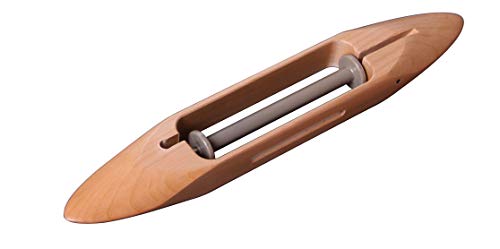
When starting out in weaving, the greatest challenge is often managing the physical mechanics of the loom while keeping the warp threads intact. The Ashford Bamboo Stick Shuttle is designed specifically to simplify this learning curve.
It features a user-friendly shape that is easy to grip, even for hands still adjusting to the rhythm of the beat. Its balanced construction helps prevent the shuttle from tipping or twisting during the throw, a common frustration for novice weavers.
Because Ashford equipment is so widely distributed, these shuttles are easy to find and integrate into any existing setup. They offer a reliable, predictable experience that builds confidence with every completed inch of cloth.
Beka 11″ Bamboo Shuttle: Ideal for Rigid Heddle
Rigid heddle looms present a unique set of constraints, primarily regarding the height of the shed. The Beka 11″ Bamboo Shuttle is perfectly sized for these compact setups, preventing the awkward bumping that occurs with larger tools.
The length is optimized to clear the frame of common rigid heddle looms without overshooting the width of the warp. This control makes it significantly easier to maintain a clean edge and prevent draw-in, where the fabric narrows unintentionally at the sides.
While it excels on rigid heddle looms, it is also a fantastic secondary shuttle for larger floor looms. Use it for narrow strips, tape weaving, or when working with supplemental wefts.
Yarnology Bamboo Shuttle Set: Best Value Multi-Pack
Variety packs are an essential strategy for weavers who experiment with different yarn weights or project widths. The Yarnology Bamboo Shuttle Set provides multiple sizes in a single purchase, removing the guesswork from tool selection.
Having several shuttles on hand is vital for projects involving colorwork or multiple weft yarns. Instead of stopping to unwind and rewind a single shuttle, simply swap the tool for the next color in the sequence.
The quality is consistent, though the finish may be slightly more rustic than boutique alternatives. For the weaver who needs to stock a studio quickly, this set provides an immediate, functional inventory.
KnitPicks Woven Bamboo Shuttle: Smooth & Lightweight
KnitPicks has long understood the intersection of natural fibers and tool mechanics. Their bamboo shuttle is engineered for a glass-like finish that minimizes friction against delicate, high-twist yarns.
This shuttle is remarkably lightweight, making it a favorite for weavers who experience wrist strain or repetitive motion fatigue. The bamboo is polished to a high degree, ensuring that it moves through the warp with almost no resistance.
This is the ideal tool for working with luxury fibers like bamboo rayon, alpaca, or fine silks. When the yarn is prone to snagging, the smoothness of the shuttle becomes the most critical feature in the studio.
How to Choose the Right Shuttle for Your Weaving
Selecting a shuttle begins with measuring the width of the warp and the height of the loom’s shed. A shuttle that is too wide for the shed will cause the warp threads to lift unevenly, leading to skipped picks or broken threads.
Consider the weight of the yarn being used. Heavy, bulky yarns require a larger, sturdier shuttle to carry enough length, whereas fine lace yarns benefit from a smaller, thinner tool that won’t disrupt the tension.
- For narrow items: Choose a shorter shuttle to minimize arm movement.
- For wide blankets: Use a longer shuttle to hold more yarn, reducing the number of joins.
- For sticky fibers: Prioritize the smoothest finish possible.
Stick vs. Boat Shuttles: Which Is Right for You?
Stick shuttles, like the bamboo options listed here, are essentially flat, notched sticks that hold yarn wrapped around their length. They are simple, lightweight, and perfect for beginners or for narrow projects where a boat shuttle would be overkill.
Boat shuttles are more complex tools that contain a bobbin and often a tensioning mechanism. They are superior for high-speed weaving and wide projects because they hold significantly more yarn and offer a more consistent tension delivery.
If the current project involves intricate patterns or massive yardage, a boat shuttle may be the necessary upgrade. However, for everyday projects, tapestry, or teaching, the simplicity and portability of a bamboo stick shuttle are hard to beat.
Winding a Shuttle for an Even, Tangle-Free Weft
Effective winding is the difference between a smooth weaving rhythm and constant frustration. The goal is to keep the yarn as flat and even as possible along the length of the shuttle, avoiding high spots that can catch on the warp.
Avoid winding the yarn too tightly, as this can stretch the fiber and cause uneven tension in the finished fabric. Instead, use a figure-eight pattern to distribute the yarn evenly across the notches, keeping it flush with the edges.
Check the tension by pulling a small amount of yarn from the shuttle before each pass. If it sticks or bunches, the wind is likely too uneven, and the shuttle should be re-wound to prevent loops in the selvage.
Caring For Your Bamboo Weaving Tools: Quick Guide
Bamboo is a natural fiber that can dry out or splinter over time if neglected. Periodically rubbing the shuttle with a tiny drop of food-grade mineral oil or beeswax will keep the wood supple and ensure it remains snag-free.

If the shuttle develops a rough spot, gently buff it with ultra-fine sandpaper or a piece of brown paper bag. Never use harsh chemicals or water to clean the shuttle, as this can cause the wood to warp or grain to rise.
Store shuttles in a cool, dry place away from direct sunlight, which can make the wood brittle. With simple, occasional maintenance, a quality bamboo shuttle can last for an entire weaving career.
The right bamboo shuttle acts as an extension of the hand, turning the mechanical task of passing yarn into an intuitive, rhythmic motion. By prioritizing the specific needs of the fiber and the loom, any weaver can improve the quality of their work and the comfort of their process. Choose the tool that best aligns with the current project, and watch how a minor adjustment in equipment leads to a major shift in the finished fabric.