6 Best Heavy Duty Shears For Thick Yarn Bundles
Cut through thick yarn bundles effortlessly. We review the 6 best heavy-duty shears, focusing on blade durability, ergonomic design, and precision cutting.
Whether you are trimming a thick, woolly roving for a spinning project or snipping through a heavy-gauge yarn bundle for a decorative tassel, the right tool makes all the difference. Dull or flimsy scissors often leave you with frayed ends and hand fatigue that can ruin the flow of your craft. Investing in heavy-duty shears ensures clean, crisp cuts on the first attempt, regardless of fiber density. Here are the top choices to keep in your knitting bag for those moments when basic craft scissors just won’t cut it.
Gingher 8-Inch Knife Edge Dressmaker Shears


Gingher is a name that commands respect in any sewing or knitting studio for a reason. These shears feature a precision-ground knife edge that slices through dense, multi-ply yarns as if they were butter.
Because these are double-plated with chrome over nickel, they offer exceptional durability and rust resistance. They are ideal for the knitter who frequently works with heavy worsted or bulky wools and needs a reliable, long-term cutting companion.
However, they do require a bit of respect regarding maintenance. Keep them away from paper or wire, as these materials will dull the precision edge faster than any fiber ever could.
Kai 7250 Professional 10-Inch Serrated Shears

If you find yourself struggling with slippery synthetic fibers or slick mohair blends that slide away from the blades, the Kai 7250 is your solution. The serrated edge acts as a grip, holding the yarn bundle firmly in place while the blade performs the cut.
These shears are surprisingly lightweight for their size, which is a massive benefit during long sessions of preparing fringe or cutting large batches of yarn for tassels. You won’t feel that familiar ache in your thumb joint after a dozen snips.
The tradeoff here is the specialized nature of the serrated edge. While it is perfect for high-loft or slippery fibers, it can sometimes leave a slightly jagged edge on delicate, thin-ply yarns.
Fiskars Amplify RazorEdge Fabric Shears
Fiskars introduced the Amplify technology specifically to solve the problem of thick materials pushing blades apart. The internal spring-action mechanism senses when you are cutting a heavy bundle and adjusts the tension accordingly.
This is a game-changer for knitters who find that their scissors "chew" on thick yarn rather than severing it cleanly. It effectively forces the blades together, ensuring a complete cut from pivot to tip.
While the plastic handle design feels less "heirloom" than traditional all-metal shears, the ergonomics are fantastic. If you have any issues with grip strength or hand fatigue, this is the most user-friendly option on the list.
LDH Scissors Midnight Edition Fabric Shears
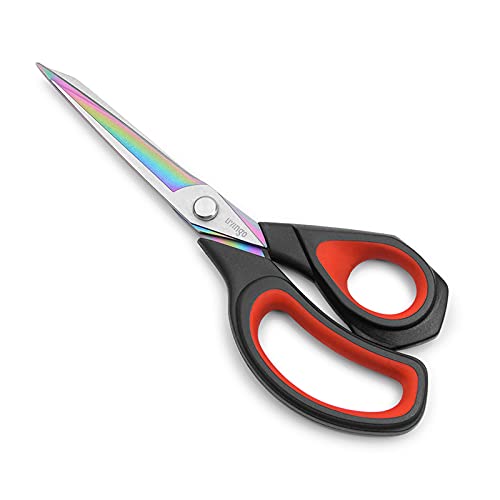
The LDH Midnight Edition shears are as beautiful as they are functional, featuring a matte black finish and high-carbon steel construction. They offer a very smooth, satisfying action that makes cutting through heavy yarn bundles feel effortless.
These are particularly well-suited for knitters who appreciate a balanced tool. The weight distribution is excellent, allowing the shears to do the heavy lifting rather than your hand muscles.
Do note that these require a bit more attention to oiling the pivot point. Because they are high-carbon steel, they are prone to oxidation if left in a humid environment, so keep them in a dry project bag.
Westcott Titanium Bonded Industrial Shears

Westcott’s titanium-bonded blades are significantly harder than standard stainless steel, making them incredibly resistant to wear. If you are the type of knitter who keeps a pair of scissors in a project bag with metal needles and other notions, these will hold up to the abuse.
The industrial design is utilitarian and sturdy, meant for heavy-duty work. They don’t have the finesse of a boutique shear, but they provide a consistent cut on everything from thick cotton cords to chunky acrylic blends.

The main advantage here is the price-to-performance ratio. You get a tool that can handle the toughest fibers without the high cost of professional-grade tailoring shears.
Wiss 10-Inch Industrial Inset Handle Shears

Wiss has been a staple in industrial settings for decades, and these 10-inch shears are built to last a lifetime. The inset handle design provides excellent leverage, which is useful when you are cutting through a thick "yarn cake" or a heavy bundle of wool for a project.
These are heavy tools, which some knitters find reassuring and others find cumbersome. If you have a dedicated workspace, these are the shears you want bolted to your desk or kept in a permanent spot.
Because they are so substantial, they are perhaps overkill for fine lace weight yarn. Reserve these for your heavy lifting, such as cutting through dense wool roving or large quantities of yarn at once.
Essential Factors for Choosing Heavy Duty Shears
When choosing shears for yarn, consider the "pivot tension." A loose pivot will cause the yarn to fold between the blades, while a pivot that is too tight makes the shears difficult to operate.
- Blade Material: High-carbon steel holds a sharper edge longer but requires more maintenance to prevent rust.
- Handle Ergonomics: Look for handles that allow for a natural grip, especially if you plan on using them for repetitive tasks like making pom-poms.
- Size: 8-inch shears are the "Goldilocks" size for most projects, but 10-inch shears provide better leverage for very thick bundles.
Always test your shears on a scrap piece of yarn before committing to a final cut on your project. If the yarn frays or pulls, your blades may be misaligned or dull.
Why Blade Serration Matters for Thick Yarn Bundles
Serration is essentially a series of micro-teeth along the cutting edge. In the context of yarn, these teeth grab the individual plies and hold them steady during the shearing process.
Without serration, a thick bundle of yarn has a tendency to "slide" toward the tip of the shears as you close them. This leads to an uneven cut where some strands are longer than others, which is a headache when you are trying to achieve a clean edge.
If you work exclusively with high-twist, smooth plied yarns, a standard knife-edge is fine. However, if you work with roving, soft singles, or slippery fibers, serrated blades are a necessity.
Proper Maintenance and Care for Your Fiber Shears
Treat your shears like you treat your favorite knitting needles. Never use your fabric shears to cut paper, plastic, or metal, as these materials contain abrasive fillers that will destroy the temper of the steel.
- Lubrication: Place a tiny drop of sewing machine oil at the pivot point once a month to keep the action smooth.
- Cleaning: Wipe the blades down with a soft, dry cloth after every use to remove fiber dust and natural oils from your hands.
- Storage: Always store your shears in a sheath or a dedicated case to protect the tips from accidental drops.
If your shears become dull, do not attempt to sharpen them with a kitchen knife sharpener. Send them to a professional who specializes in fabric shears to ensure the proper bevel is maintained.
Safety Tips for Handling Professional Cutting Tools
Professional-grade shears are incredibly sharp and can cause significant injury if handled carelessly. Always cut away from your body and keep your fingers well clear of the blade path.
When you are finished with your cutting session, close the blades completely and place them in a safe location. It is tempting to leave them sitting on the couch next to your project, but this is a recipe for a mishap.
If you are teaching a beginner to knit or craft, emphasize that these are tools, not toys. Proper habits formed early on will ensure that your fiber arts journey remains both productive and safe.
Selecting the right heavy-duty shears is an investment in the longevity and quality of your fiber projects. By matching the blade type to your specific yarn weight and fiber content, you eliminate the frustration of frayed ends and uneven fringe. Take the time to care for your chosen tool, and it will serve you faithfully for decades of knitting. May your cuts be clean and your projects always turn out exactly as you envisioned.