7 Chain Nose Pliers For Delicate Wire Bending Options
Discover 7 top-rated chain nose pliers perfect for delicate wire bending projects. Choose the right precision tools for your jewelry designs and shop today.
Mastering the art of jewelry-making or incorporating wire elements into knitwear requires tools as precise as a fine circular needle. Chain nose pliers serve as the primary extension of the hand when shaping, bending, and securing wire components. Choosing the right pair ensures the integrity of delicate materials, much like selecting the correct needle material preserves the loft of a cashmere yarn. Precision in tool selection directly correlates to the quality of the finished heirloom.
Beadsmith Chain Nose Plier: Best Overall Value


The Beadsmith Chain Nose Plier stands as a staple in the kits of those who bridge the gap between fiber arts and mixed-media jewelry. Its reliability makes it a standard recommendation for makers transitioning from simple wire-wrapping to more intricate metalwork.
These pliers offer a balanced weight that prevents hand fatigue during long sessions. For the knitter accustomed to long hours on a lace project, this stability is essential for maintaining control during repetitive wire manipulations.
The consistency of the jaw alignment ensures that wire does not slip or kink during bending. While not a professional-grade precision tool, its durability is unmatched at this price point. Consider this the “workhorse” needle of the jewelry world—dependable, functional, and accessible.
Xuron 450 TweezerNose: For Ultra-Fine Work
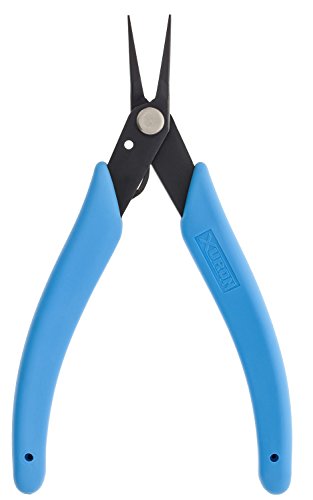
The Xuron 450 TweezerNose features a slender profile that excels in tight spaces. When working with fine-gauge wire that mirrors the diameter of a lace-weight silk, these pliers allow for surgical-like accuracy.
The tips meet with extreme precision, allowing for the gripping of wire ends that would frustrate larger, bulkier tools. This level of detail is vital when weaving wire through stitches or securing beads onto a finished garment.
The jaw design provides a delicate touch that minimizes surface marring. If the project involves precious metals or delicate enameled wire, the Xuron protects the finish, much like using wooden needles to prevent splitting delicate alpaca fibers.
Wubbers Classic Chain Nose: Ergonomic Comfort
Wubbers are designed for makers who struggle with hand strain or repetitive stress issues. The wide, padded handles distribute pressure across the palm, mirroring the benefit of ergonomic knitting needles during long sessions.
The substantial build of these pliers provides a sense of leverage that makes bending thicker, more stubborn wires feel effortless. If a project requires structural wire support, this added torque is a significant advantage.
The trade-off lies in their size; they can feel slightly cumbersome for extremely delicate work. However, for extended periods of wire-forming, the reduction in hand cramping is worth the minor loss in agility.
Lindstrom RX 7891 Plier: Ultimate Precision
Lindstrom is frequently cited as the gold standard for those who treat wire bending with the same gravity as high-stakes fair isle colorwork. The RX series features patented ergonomic technology that emphasizes the biomechanics of the hand.
The jaws are tapered to an incredibly fine point, enabling the creation of tiny, intricate loops that are perfectly symmetrical. This level of quality ensures that every bend is clean and professional.
Investing in these pliers is akin to purchasing premium nickel or carbon fiber needles. While the initial cost is significant, the performance improvement in complex, detail-oriented work is undeniable.
Beadalon Slim Line Plier: Great Budget Option
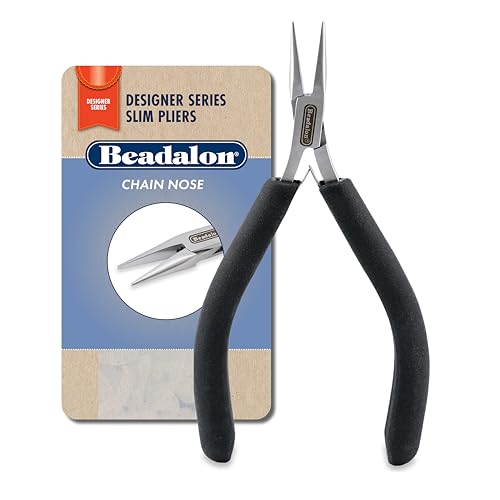
The Beadalon Slim Line Plier serves as an excellent entry point for beginners experimenting with wire work. These are ideal for those who aren’t yet ready to commit to professional-grade tools but need something more reliable than a generic craft store set.
The light weight of these pliers makes them easy to maneuver, particularly for those just developing the dexterity required for wire manipulation. They are straightforward and get the job done without unnecessary bells and whistles.
They do lack the longevity of more expensive options, as the finish on the tips may wear down over time. Think of these as the starter needles in a beginner kit—perfect for learning the fundamentals before upgrading.
EuroTool Ergo Chain Nose: All-Day Comfort Grip
The EuroTool Ergo series prioritizes the tactile experience of the maker. The textured grip ensures that the tool stays securely in hand, even during periods of high-intensity work where precision is paramount.
The tension of the internal spring is perfectly calibrated to assist in opening the pliers, reducing the effort required for each individual pinch or bend. This is particularly helpful for those working with stiffer wires that require more force.
The primary focus here is stamina. By minimizing the force needed to operate the tool, these pliers allow for longer, more productive crafting sessions. They strike a balance between professional performance and user comfort.
Tronex 544 Fine Chain Nose: For Serious Crafters
Tronex pliers are engineered for those who demand total consistency in their work. The 544 model is renowned for its durability and its ability to maintain tip alignment even after extensive use.
The smooth, tapered jaws allow for precise gripping without leaving marks on the wire. This is crucial when working with soft, high-quality wires that easily show impressions from serrated jaws.
For the artisan, these pliers represent a lifetime investment. Like a high-end collection of interchangeable needles, the quality is evident in every movement. They provide the confidence that the tool will perform exactly as expected, every single time.
Choosing Pliers: Smooth vs. Serrated Jaws
Selecting between smooth and serrated jaws is a critical decision that depends entirely on the material being used. Smooth jaws are non-negotiable when working with soft metals like sterling silver or copper, as serrations will quickly mar the surface.
Serrated jaws, by contrast, offer a superior grip on thicker or stiffer wires. These are useful when structural stability is needed and cosmetic imperfections are less of a concern.
- Smooth Jaws: Best for delicate wire, coated wire, and finished pieces where aesthetic perfection is required.
- Serrated Jaws: Best for heavy-gauge wire, pulling, and situations where maximum friction is necessary to prevent slipping.
Always match the jaw type to the delicacy of the project. Using the wrong tool for the material can lead to irreparable damage, much like using a needle that is too sharp for a loosely spun wool, resulting in unwanted pilling or snagging.
How to Care For and Maintain Your Pliers
Proper maintenance is the secret to extending the lifespan of jewelry-making tools. Keep the jaws clean of debris and residue from wire coatings, which can build up and compromise the grip.
Periodically apply a tiny amount of machine oil to the pivot point to keep the action smooth. A sticky or stiff hinge will hinder progress, much like a poorly joined cable connection disrupts the flow of stitches.
Avoid using pliers for tasks they weren’t intended for, such as cutting heavy-gauge wire or prying apart stubborn metal rings. This will misalign the jaws and dull the tips, rendering them useless for delicate bending.
Spring-Loaded vs. Standard: Which is for You?
Spring-loaded pliers automatically return to the open position, which significantly reduces hand fatigue during repetitive actions. For projects involving dozens of identical wire loops, this feature is a game-changer.
Standard pliers provide more control for those who prefer to manually regulate the opening width of the jaws. Some makers find that springs can feel “mushy” and prefer the direct, resistance-based feedback of a non-spring-loaded tool.
- Choose Spring-Loaded: If you perform repetitive movements or suffer from hand strain.
- Choose Standard: If you prefer tactile feedback or need the tool to remain in a fixed, closed position.
Ultimately, the choice comes down to personal ergonomics. Evaluate your project’s duration and the amount of repetitive bending involved before committing to one style over the other.
Selecting the right chain nose pliers is a fundamental step toward achieving professional results in wire work. By prioritizing jaw quality, comfort, and the specific needs of the wire material, you ensure that every twist and bend contributes to a beautiful, lasting creation. Much like the right knitting needles unlock the potential of a fiber, the right pliers will unlock the potential of your designs.