6 Best Drafting Stools For Workspace Comfort To Try
Upgrade your workspace comfort with our top 6 drafting stools. Discover the best ergonomic designs to support your posture and boost productivity—shop now.
Long hours spent hunched over complex colorwork patterns often lead to back strain and tension that can ruin even the most meditative knitting sessions. A specialized drafting stool provides the necessary height for working at various tables, ensuring the arms remain at an optimal angle to prevent shoulder fatigue. Choosing the right seat is just as critical as selecting the perfect yarn weight for a project, as comfort dictates the pace and quality of every stitch. Consider these six options to elevate the crafting experience and maintain posture during marathon sessions.
Varier Move Stool: Best for Active Crafters


The Varier Move stool promotes a dynamic sitting position, which is essential for knitters who find themselves constantly shifting to adjust tension or reach for notions. Its unique, saddle-shaped seat encourages an open hip angle, effectively keeping the spine in its natural alignment.
This design is particularly beneficial during long sessions of stranded colorwork where keeping the hands steady and the shoulders relaxed is paramount. Because the stool tilts with the body, it engages the core muscles, preventing the slouching that often occurs when working on heavy, multi-ply wool projects.
However, the lack of a backrest means this is not a chair for lounging. It is a precision tool for the active maker who needs to remain engaged and upright.
Flash Furniture Stool: The Top Budget-Friendly Pick

For those just beginning to build a dedicated craft space, the Flash Furniture drafting stool offers an entry-level solution without sacrificing essential height adjustments. It provides a straightforward, functional seat that allows for the necessary elevation to work at a taller cutting or drafting table.
While it lacks the sophisticated ergonomic adjustments of premium models, it covers the basics of seat height and swivel functionality. This is sufficient for shorter knitting sessions or for use in a secondary crafting area where a permanent, high-end chair might be overkill.
The trade-off is in the cushioning, which may compress over time compared to denser, high-density foam options. It is a reliable choice for the casual knitter who balances projects with other household tasks.
Herman Miller Aeron: The Ultimate Ergonomic Splurge

The Herman Miller Aeron remains the industry standard for a reason, offering unparalleled support for the lower back and shoulders. The Pellicle mesh material allows for breathability, preventing discomfort during the warmer months when working with dense, heat-retaining fibers like alpaca or thick roving.
The adjustable armrests are a game-changer for knitters, as they can be positioned to support the elbows during intricate lace work or complex cabling. By offloading the weight of the arms, the Aeron significantly reduces the strain on the neck and trapezius muscles.
This is an investment piece designed for the lifetime maker. While the price point is steep, the long-term benefit of avoiding repetitive strain injuries makes it a logical purchase for those who knit professionally or for several hours daily.
HON Volt Task Stool: Our Most Versatile Choice
The HON Volt task stool strikes an excellent balance between professional-grade ergonomics and everyday usability. It features a contoured backrest that provides lumbar support, which is critical when working on heavy garments like oversized sweaters that pull on the shoulders.
The pneumatic lift is smooth and consistent, allowing for quick height adjustments if the workspace doubles as a standard desk and a standing workstation. Its durable fabric is resistant to the accidental snags and loose fibers that are inevitable in a knitting room.
If a project requires switching between a standard knitting position and a standing position for blocking or measuring, this stool provides the necessary stability. It is the workhorse of the craft room.
Modway Veer Chair: Best for Style-Conscious Makers
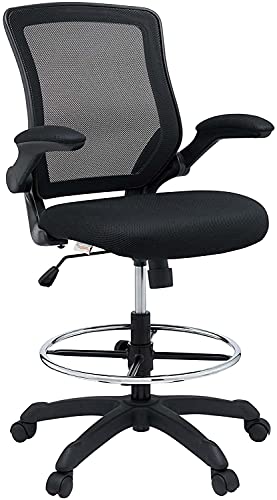
The Modway Veer chair offers a modern aesthetic without abandoning the requirements of a functional crafting seat. Its mesh back provides necessary ventilation, while the minimalist profile ensures it fits into shared living spaces where bulky office furniture would look out of place.
The seat padding is firmer than average, which actually benefits those who need to maintain a specific posture for long periods. A firmer seat prevents the sinking feeling that can occur in softer chairs, helping to keep the hips level while working on socks or smaller, portable projects.
It is an ideal choice for the apartment-dwelling knitter who needs a stool that can transition from a crafting workspace to a clean, modern home office. Style and utility do not have to be mutually exclusive.
Boss Caressoft Stool: Perfect for Small Spaces
Compact and functional, the Boss Caressoft stool is designed for the knitter working with a limited footprint. Its smaller seat dimensions and lack of wide, protruding armrests allow it to tuck neatly under a desk or table when not in use.
The Caressoft material is a durable, easy-to-clean vinyl, which is a major advantage if a crafting area is also a place where beverages or snacks are kept. A quick wipe removes any dust or stray fibers, keeping the workspace tidy and professional.
While it lacks the advanced ergonomic adjustments of larger chairs, it is far superior to a standard kitchen chair. It is the practical answer for the maker who prioritizes floor space without sacrificing the ability to sit at the proper height.
How to Choose the Right Stool Height for Your Desk
Selecting the correct stool height is determined by the distance between the floor and the work surface, not by preference. A standard desk is typically 29 to 30 inches high, while a dedicated drafting table may reach 36 to 42 inches.
Ensure the stool’s range allows the feet to rest flat on the floor or a footrest while the elbows remain at a 90-degree angle to the knitting surface. If the stool is too low, the shoulders will hunch; if it is too high, the wrists will bear too much weight.
Always measure the current desk or table before purchasing. A stool that cannot accommodate the height of the work surface will force poor posture, regardless of how ergonomic the seat itself is.
Armrests or Armless? A Knitter’s Stool Dilemma
The decision to use armrests depends entirely on the knitting style and the type of project. Armrests provide essential support for the elbows, which helps keep the upper arms relaxed during heavy, time-consuming projects like blankets or oversized cardigans.
However, armrests can become an obstruction for knitters who move their arms frequently or use a wider casting-on technique. If the arms of the chair hit the desk, the stool cannot get close enough to the work, forcing the knitter to lean forward and strain the lumbar region.
For most, adjustable armrests that can be lowered or removed entirely offer the best of both worlds. Test the reach before committing, as freedom of movement is just as important as structural support.
Key Ergonomic Features for All-Day Crafting Comfort
When assessing a stool, prioritize features that address the specific physical demands of knitting, such as back strain and limb fatigue. Look for these essential components to ensure the workspace supports the body:
- Adjustable Lumbar Support: Vital for maintaining the natural curve of the spine during long, sedentary sessions.
- Waterfall Seat Edge: A gentle, downward-sloping front edge that reduces pressure behind the knees and improves circulation.
- High-Density Foam or Mesh: Ensures the seat remains supportive over time and prevents heat buildup during long hours of work.
- 360-Degree Swivel: Essential for reaching for different needle sets, yarn balls, or patterns without twisting the torso.
Stool or Chair: Which is Right for Your Craft Room?
The choice between a stool and a traditional chair rests on the primary use of the workspace. If the desk height is fixed and elevated, a drafting stool is a requirement, not an option.
Conversely, if the room serves multiple purposes, a standard ergonomic office chair might be more versatile. Stools are generally better for those who need to stand and sit frequently to move between a sewing machine, a cutting mat, and a knitting chair.
Evaluate the daily flow of the crafting process before deciding. A stool that limits movement is a hindrance, whereas one that facilitates transitions is a core component of a productive and comfortable fiber arts practice.
Investing in a proper seat is a commitment to the longevity of the knitting practice. By selecting a stool that aligns with individual posture needs and workspace dimensions, the physical toll of hours spent working with needles and yarn is significantly reduced. Focus on adjustable features and support, and choose the piece that best facilitates the rhythm of the work. Consistency in comfort leads to consistency in the craft, allowing for many more years of beautiful, tension-free knitting.