6 Best Soft Storage Bags For Preventing Scratches
Protect your delicate items with our top 6 picks for the best soft storage bags for preventing scratches. Shop our curated selection to keep gear safe today.
The difference between a pristine lace shawl and one riddled with snagged yarn often comes down to the storage environment. Choosing the wrong bag means risking friction damage, color bleeding, or even the heartbreak of a snapped needle tip buried in a cluttered abyss. High-quality soft storage acts as a protective cocoon for delicate fibers like mohair or silk. Protecting your investment ensures that hours of meticulous work remain as flawless as the day they were cast on.
Della Q Canvas Backpack: Best All-in-One Storage


The Della Q Canvas Backpack serves as a mobile studio for the dedicated knitter. Its primary advantage lies in the internal structure, which features dedicated pockets for needle cases, notions tins, and pattern keepers.
This organization prevents the “knitting debris” problem, where stray stitch markers or loose needle tips migrate toward your yarn. When a project is safely sequestered in its own compartment, the risk of accidental snags during transit drops to nearly zero.
However, consider the weight. Because it is designed to hold an entire library of tools, it can quickly become heavy if overpacked. Use this bag if the primary goal is keeping everything you need for a complex, multi-skein sweater project in one secure, accessible place.
Fringe Supply Co. Field Bag: The Iconic Project Tote

The Field Bag excels by keeping the yarn feed separate from the main interior cavity. By using the internal grommets to pull yarn from a ball held inside, you ensure that the skein doesn’t roll around in the bottom of the bag where dust and debris gather.
The canvas construction is stiff enough to hold its shape, which prevents the bag from collapsing onto delicate lace work. It eliminates the friction that occurs when yarn rubs against the synthetic linings found in cheaper, flimsier totes.
Be aware that it lacks a closure across the entire top. It is best suited for at-home knitting or local transit rather than being tossed into a suitcase where yarn could spill out into the broader environment.
Cocoknits Kraft Caddy: Best for At-Home Organization
The Kraft Caddy provides a rigid, upright structure that mimics a desktop organizer. Its greatest strength is the vertical orientation, which keeps works-in-progress upright and away from the heavy clutter of the coffee table.
Because the material is a durable, washable paper, it offers a unique tactile experience that doesn’t attract lint like felt or wool bags. It is an excellent choice for knitters who suffer from allergies or sensitivities to pet dander often trapped in fabric bags.
This caddy is not designed for travel, as it does not zip closed. It functions best as a stationary home for active projects that require frequent monitoring, such as keeping track of a long colorwork chart.
Tom Bihn Swift: The Ultimate Durable Project Bag
The Tom Bihn Swift is built for the knitter who demands military-grade protection for high-end fibers. Its nylon exterior is essentially indestructible, and the internal coating ensures that no moisture or dirt penetrates to the fiber level.
The drawstring closure is engineered to cinch perfectly around the yarn, leaving no gaps for needle points to poke through. This feature is a lifesaver for those who knit with sharp, stainless steel needles that often snag on standard cotton bags.
If you prioritize longevity and total weather resistance over aesthetic fluff, this is the gold standard. It is a workhorse designed to protect expensive cashmere and alpaca from the rigors of travel.
Joji & Co. Pouch: Best for Luxury Project Protection
Luxury pouches from Joji & Co. prioritize the preservation of the yarn’s surface texture. The leather or high-quality fabric interiors are incredibly smooth, preventing the “fuzzing” that occurs when delicate yarns rub against coarse, cheap lining materials.

These bags often feature minimalist designs that cater to single-project storage. By focusing on one item, you reduce the chance of metal tools scratching delicate silk or mohair fibers.
The trade-off is the price point and the specialized care required for materials like leather. They are ideal for storing finished projects or heirloom-quality lace work that deserves to be shielded from the elements.
Erin Lane Bags: Best for Fun, Everyday Protection
Erin Lane bags specialize in vibrant, drawstring-style protection that accommodates everything from a single sock project to a large throw blanket. Their soft, patterned cotton exteriors are often paired with smooth linings that are gentle on yarn.
The wide opening allows for easy access, which is crucial if you frequently switch between projects. Because they are machine washable, they provide an easy solution for keeping your knitting environment hygienic.
These bags are the most versatile option for the everyday knitter. While they may not offer the rigid structure of a caddy, their portability and ease of maintenance make them an essential staple for any knitting collection.
Canvas vs. Leather: Which Material Is Best for You?
Canvas offers breathability, which is critical for natural fibers like wool that need to avoid moisture buildup. If you live in a humid climate, canvas is the safer bet to prevent mold or musty smells from clinging to your fiber.
Leather, conversely, provides a superior barrier against external sharp objects and spills. It is an excellent choice for a travel project where the bag might be shoved under an airplane seat or into a crowded trunk.
- Choose Canvas if: You knit primarily with animal fibers and need consistent airflow.
- Choose Leather if: You prioritize durability, longevity, and protecting projects from accidental punctures.
Choosing the Right Bag Size for Your Knitting Project
Always size the bag to the project, not the other way around. A massive bag for a pair of socks results in the project tumbling around, which can lead to tangled yarn and unnecessary friction against the bag’s interior seams.
Conversely, cramming a large sweater project into a small pouch will crush the stitches. This compression can distort the gauge, particularly with fibers that have low memory, such as certain plant-based yarns.
- Small Pouch (6-8 inches wide): Perfect for socks, hats, and notions.
- Medium Tote (10-12 inches wide): Ideal for sweaters and shawls in progress.
- Large Backpack/Caddy (15+ inches wide): Necessary for blankets and multi-skein projects.
How to Organize Your Bag to Prevent Internal Snags
The most common cause of snagging is storing needles loosely with the yarn. Utilize a dedicated needle case or tip protector to cover the sharp ends before placing them inside the bag.
Small notions like stitch markers should never be loose; keep them in a small metal or wooden tin. A single stray metal stitch marker can easily catch a strand of luxury yarn and ruin the tension of your entire row.
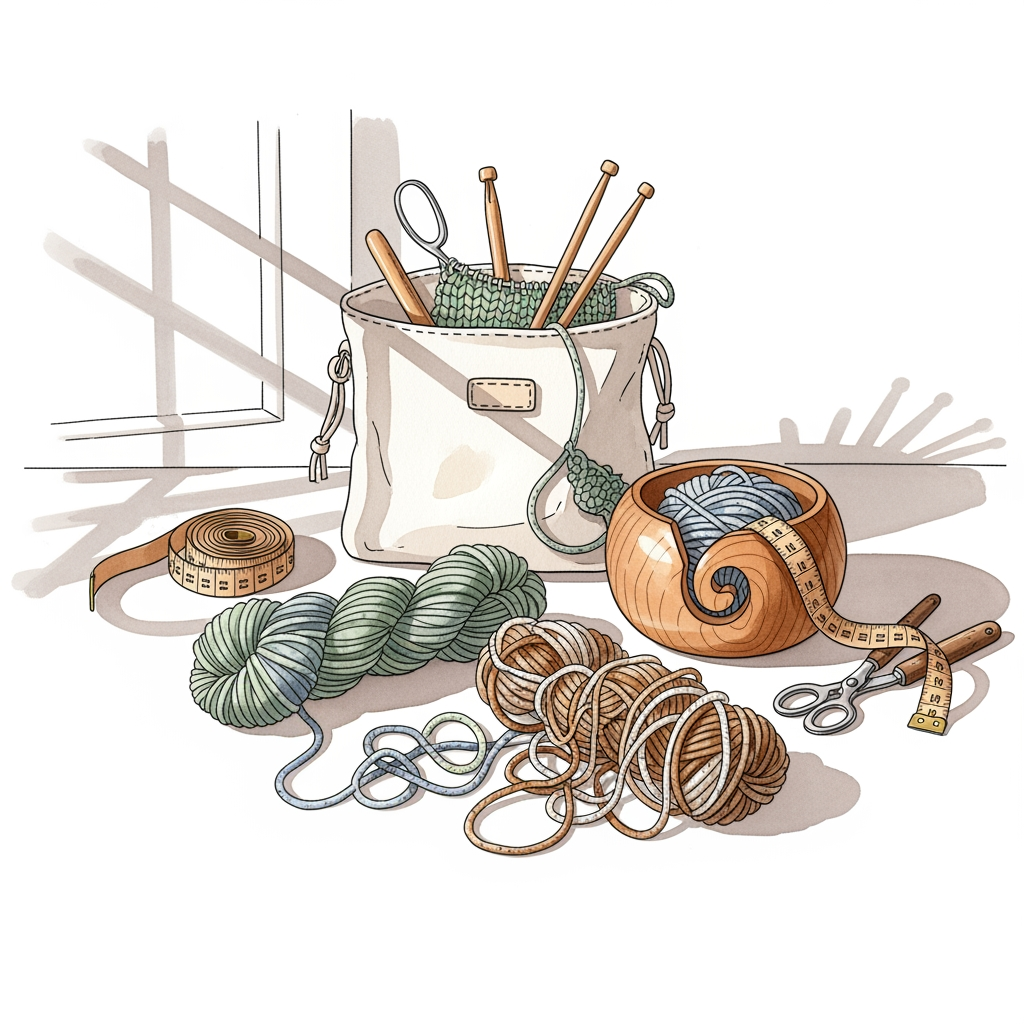
Position your yarn so that the working thread has a clear, smooth path from the ball to your needles. Use a yarn bowl or a center-pull ball to ensure the yarn flows without jerking against the sides of the bag.
Keeping Your Project Bags Clean: A Simple Guide
Regular maintenance prevents the buildup of dust and stray fibers that can transfer back onto your knitting. For canvas or cotton bags, turn them inside out and vacuum the seams where debris naturally collects.
Most fabric project bags can be machine washed on a gentle cycle, but always air dry to prevent shrinkage. If you use a leather bag, stick to a damp cloth for spot cleaning and apply a leather conditioner twice a year to keep the interior supple.
Never store a wet or damp project inside a bag. Allow all pieces to dry completely after blocking before tucking them away to prevent the growth of bacteria and the development of unpleasant odors.
Investing in a high-quality project bag is an investment in the long-term health of your knitting. By prioritizing structure, material, and organization, you ensure that every project remains a pleasure to work on from start to finish. Choose the style that fits your workflow and your lifestyle, and enjoy the peace of mind that comes with knowing your stitches are safe.