6 Best Storage Boxes For Art Supplies To Organize With
Tired of messy supplies? Discover the 6 best storage boxes for art supplies to keep your workspace organized. Shop our top picks and simplify your studio today.
A sprawling stash of yarn and a tangled mess of notions can turn a relaxing evening of knitting into a frantic search for the right cable needle. Choosing the right storage solution is as foundational to a successful project as choosing the correct needle size for a specific yarn weight. These six storage options offer distinct approaches to organizing fiber arts supplies, balancing accessibility with long-term protection. Understanding the unique demands of wool, cotton, and delicate accessories will transform a cluttered craft room into an efficient, inspiring workspace.
ArtBin Super Satchel: Best for Versatility


The ArtBin Super Satchel excels when an organization system needs to adapt to changing project scopes. Its adjustable dividers allow for the creation of customized compartments, which are ideal for sorting needles, interchangeable tips, and various lengths of cables.
This satchel is particularly effective for keeping circular needle sets orderly. By designating specific sections for different tip materials—such as smooth nickel for fast knitting or grippy bamboo for slick mohair—the risk of losing a specific size is significantly reduced.
The rigid construction provides a reliable buffer against crushing, which is vital for delicate bamboo or wooden needles. While the size is convenient for storage, it may be too bulky for travel to local knitting meetups. Prioritize this option for a home-based studio where centralizing tools is the primary goal.
IRIS USA Project Case: Best for WIP Protection
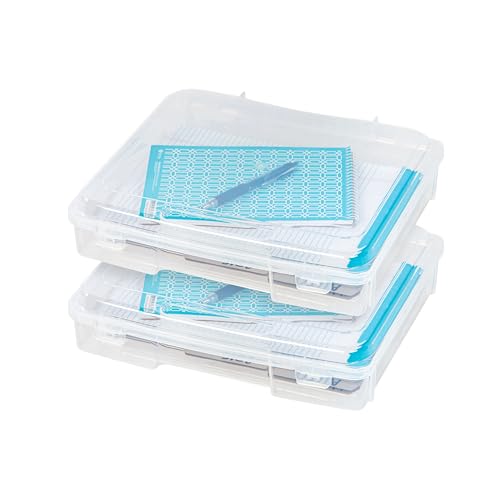
A Work-in-Progress (WIP) requires a dedicated space that keeps the yarn clean and the needles from slipping out during transport. The IRIS USA Project Case serves as an excellent “incubator” for active projects, keeping patterns, swatches, and yarn balls protected from dust and snagging.
Because these cases are transparent, identifying which project is inside—whether it is a complex lace shawl or a simple stockinette sweater—takes only a glance. The snap-tight latches ensure that even if the case is turned sideways in a bag, the contents remain contained.
Consider using these for long-term projects that might sit for months. Storing a garment in progress inside a hard-sided case prevents yarn from picking up pet hair or household debris, which is essential when working with light-colored or high-moisture-content wool.
Sterilite ClearView Latch Box: Best Budget Pick

The Sterilite ClearView Latch Box offers a straightforward, no-nonsense approach to bulk storage. These are perfect for keeping finished yarn, spare skeins, or seasonal wool stashes sorted by weight or fiber content.
Transparency is the standout feature here, allowing for easy inventory checks without opening every bin. When organizing a large collection, labeling the exterior with the yardage and fiber type is a simple habit that prevents unnecessary trips to the yarn store for an emergency skein.
While these boxes are inexpensive, they are not airtight. For long-term storage of fine fibers, consider tucking a cedar sachet or lavender bundle inside to discourage pests. They represent the most economical way to keep a growing stash off the floor and out of reach of dust.
Deflecto Caddy Organizer: Best Portable Solution

The Deflecto Caddy Organizer mimics the convenience of a traditional tool kit, bringing every essential notions accessory within arm’s reach. This is an ideal solution for holding scissors, measuring tapes, point protectors, and darning needles.
A portable caddy is especially helpful for knitters who move between the living room and a dedicated craft space. Having a dedicated station for tools prevents the “where is my stitch counter” panic that happens mid-row during a complicated cable sequence.
Ensure the caddy stays on a flat surface, as the open design means contents can spill if the unit is knocked over. This is not the place for yarn storage, but it is the ultimate home for the small, vital accessories that keep a project running smoothly.
Aozita 3-Tier Rolling Cart: Best for Mobility
The 3-tier rolling cart functions as a mobile knitting station, allowing the user to push their entire current project setup wherever they decide to sit. The shelves are deep enough to house yarn bowls, larger project bags, and reference books.
Efficiency in a knitting space is often about minimizing the physical effort required to switch tasks. Placing the cart beside a favorite chair creates a “command center” where the current pattern, yarn, and tools are all immediately accessible.
Because the cart is open, it should be reserved for items used regularly rather than long-term storage. Avoid placing it in direct, harsh sunlight to prevent potential color fading in sensitive natural fibers over extended periods.
Creative Options Pro-Latch: For Small Notions

Small notions like stitch markers, cable needles, and tapestry needles require a micro-organization solution. The Creative Options Pro-Latch containers feature tiny compartments that prevent these essential tools from migrating and disappearing.
Using the right container for notions is a matter of precision; loose stitch markers are notorious for finding their way into chair cushions. A secure, small-scale organizer ensures that locking stitch markers for lace, split-ring markers for counting, and removable markers for holding stitches are always accounted for.
The durability of these latches is a key factor, as frequent opening and closing can wear down lesser mechanisms. Investing in a quality latch system prevents the frustration of spilling hundreds of tiny items across a carpeted floor.
How to Choose the Right Storage for Your Craft
Selecting the right storage involves balancing frequency of use with the need for environmental protection. Ask whether the item being stored is a “daily driver”—like the current project—or a long-term “stash” item that needs deep-storage protection.
Consider the material of the tools themselves, as some plastics can degrade over time or react with certain finishes on knitting needles. Always aim for containers that provide enough structure to prevent delicate items from being crushed under the weight of bulkier skeins or heavy books.
- Accessibility: Does the container allow for one-handed operation?
- Visibility: Can the contents be identified without unstacking bins?
- Space: Does the footprint match the available square footage of the work area?
Protecting Yarn from Moths, Dust, and Light
Yarn fibers, particularly natural proteins like wool and alpaca, are susceptible to environmental damage. Moths and carpet beetles are the primary threats, and they thrive in dark, undisturbed areas where organic fibers reside.
Dust accumulation can dull the luster of mohair and alpaca over time, while harsh ultraviolet light can cause uneven fading in hand-dyed yarns. To mitigate these risks, choose storage that seals well or store bags inside sealed plastic bins.
- Moth Control: Use cedar wood blocks or essential oil diffusers (like lavender) to create an inhospitable environment for pests.
- Light Exposure: Keep bins tucked away from windows; UV rays can permanently alter the color saturation of natural fibers.
- Airflow: While moths hate stagnant air, wool still benefits from occasional “breathing” during temperature-controlled seasons.
Plastic vs. Fabric: What’s Best for Your Stash?
Plastic bins offer the highest level of protection against moisture, pests, and crushing, making them the superior choice for long-term storage of fine yarn. However, they lack the aesthetic appeal and breathability of fabric or canvas containers.
Fabric bags are ideal for current projects because they allow fibers to breathe, which is beneficial for wool during humid seasons. The trade-off is that fabric does not provide the same barrier against insects as a tightly sealed plastic latch box.
If the yarn collection is high-value or highly cherished, plastic remains the gold standard for security. Use fabric bags for projects that will be completed within a few weeks or months, and transition items into rigid, sealed plastic bins for permanent storage.
Tips for Organizing Stitch Markers and Notions
Stitch markers are the most misplaced tools in the knitting arsenal, often because they are stored in large, disorganized jars. Assigning a specific, small compartment to each type of marker—locking, rings, and coil-less—will save significant time during pattern setup.
For darning needles and cable needles, vertical storage is often superior to horizontal storage, as it allows for quicker identification by size. Use a magnetic strip or a small tube to keep metal needles grouped together, preventing them from poking through bags or getting lost in the bottom of a bin.
A well-organized set of notions acts as an extension of the knitter’s hands. By treating these small tools with the same level of care as the needles themselves, the flow of work becomes more rhythmic and less prone to interruption.
Ultimately, the best storage solution is one that fits the reality of the individual’s workspace and knitting frequency. Whether choosing a modular satchel for precision tools or a simple bin for bulk yarn, the priority should always remain on protecting the fiber and ensuring the tools are easy to locate. With an organized space, the focus returns to the joy of the craft and the satisfaction of watching a project grow row by row.