6 Best Sharpeners With Waste Catchers For Mess Free Desks
Keep your workspace clean with our top 6 picks for pencil sharpeners with waste catchers. Click here to choose the best mess-free model for your desk today!
Precision is just as vital in your knitting room as it is in a professional drafting studio. When charting complex lace patterns or marking up nuanced cable instructions, a sharp pencil is the difference between a clean, readable graph and a confusing mess. Managing graphite shavings is equally critical, especially when delicate fiber projects are nearby. These six sharpeners ensure your tools stay sharp while keeping your workspace completely free of debris.
Faber-Castell Trio Sharpener: Best Overall Pick
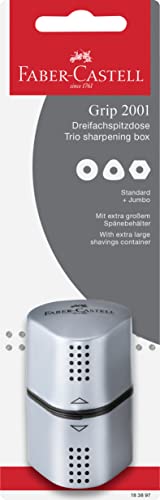

The Faber-Castell Trio Sharpener earns its reputation through pure versatility and a thoughtful design that accommodates various barrel sizes. Just as a knitter needs different needle gauges for lace versus heavy worsted projects, this sharpener offers three distinct holes for standard, thick, and oversized pencils.
The integrated canister is surprisingly spacious, meaning fewer interruptions when marking up an entire intricate colorwork pattern. Its compact footprint fits easily into a notions bag, making it a reliable companion for knitting retreats where space on a project table is at a premium.
This model shines because it handles different wood densities well, preventing the uneven sharpening that often leads to wood splintering. It is the gold standard for those who juggle varied marking tools alongside their yarn crafts.
Bostitch QuietSharp 6: Best Electric Sharpener

When you are deep in the zone of charting an original design, the last thing needed is the manual fatigue of sharpening a dozen pencils. The Bostitch QuietSharp 6 offers an automated solution that provides a consistent, professional-grade point every single time.
This model is remarkably quiet, ensuring that the peaceful atmosphere of a studio remains undisturbed. It also features a heavy-duty motor that resists the stalling often found in cheaper electric alternatives, much like a high-quality yarn winder that never tangles during a long cake-winding session.
While it is an investment in desk real estate, the speed and reliability are unmatched for high-volume work. It is an excellent choice for anyone who maintains extensive, hand-drawn project journals.
Staedtler Noris Tub: Best Budget-Friendly Choice
Simple, sturdy, and reliable, the Staedtler Noris Tub is the reliable workhorse of the sharpening world. It performs with the consistency of a classic aluminum needle, providing a solid result without the need for complex features or added technology.
The screw-top canister is highly secure, preventing accidental spills that could leave gray dust on a freshly knitted white wool swatch. Its design is straightforward, making it perfect for tucking into a project bag or keeping on a side table for quick touch-ups.
This is the quintessential choice for the knitter who wants a no-nonsense tool that simply does the job. It offers excellent value and durability without any unnecessary bells or whistles.
Kum Long Point Sharpener: For The Perfect Art Point
A long, tapered point is essential for detailed shading or precise notes on complex lace charts. The Kum Long Point Sharpener uses a two-step process to shave away the wood casing first, then the graphite core, resulting in a dramatic, artist-grade tip.
This mechanical approach is similar to the patience required for grafting or delicate finishing work. By separating the wood and graphite removal, it prevents the lead from snapping under pressure, ensuring the pencil remains usable for longer.
Serious chart makers find that this level of control significantly improves the legibility of their notes. If the goal is high-precision marking, this is the specialized tool that delivers.
T’GAAL Adjustable Sharpener: Most Versatile Manual
The T’GAAL allows you to adjust the tip length by rotating the dial, providing five different settings to suit any task. Much like how a knitter selects a specific tip sharpness for different yarn weights—blunt for cotton, sharp for lace—this sharpener lets you dictate the point profile.
A shorter, blunter point is perfect for quick, heavy-handed marks, while a long, needle-sharp point is ideal for technical details. The integrated waste container keeps shavings contained perfectly, even when adjusting settings on the go.
It bridges the gap between general utility and specialized artistic need. For those who enjoy experimenting with different marking techniques, this level of control is highly rewarding.
Prismacolor Premier Sharpener: For Colored Pencils
Colored pencils are a knitter’s best friend for mapping out stranded colorwork or distinguishing between different types of cables. The Prismacolor Premier Sharpener features two blades specifically engineered to handle the softer, waxy cores of high-end colored pencils.
Soft-core pencils often clog or snap in standard sharpeners, much like delicate mohair or single-ply wools that snag on rough needle tips. This tool uses a gentle cutting action that maintains the integrity of the fragile pigment, ensuring the point remains intact.
Investing in a specialized sharpener for colored pencils preserves your expensive tools and prevents the frustration of constant breakage. It is a necessary safeguard for anyone who uses color-coded systems for their knitting charts.
How to Choose the Best Sharpener For Your Pencils
Choosing the right sharpener involves assessing both the pencil type and the workspace environment. If you work primarily with standard graphite, a simple manual tub is sufficient. However, if your pencils have soft, waxy cores, a specialized sharpener with high-quality blades is mandatory to avoid wasting expensive pigments.
Consider the container capacity relative to how often you sharpen. A tiny canister will fill up mid-project, increasing the risk of spills. Always check that the sharpener can accommodate the diameter of your preferred pencils; forcing a thick pencil into a small opening is a recipe for broken tips.
Lastly, look for sharpeners that allow you to see when the reservoir is nearly full. Preventing overfilling is the primary way to avoid messy desk accidents.
Manual vs. Electric: Which Fits Your Craft Style?
Manual sharpeners are the preferred choice for portability and quiet operation. They require no power source and are easily tucked into a knitting bag for travel. They are best for those who only sharpen pencils occasionally during a project.
Electric sharpeners offer unmatched consistency and speed, which is a major advantage for those drafting large-scale designs. They are perfect for a dedicated studio space where efficiency is paramount.
The trade-off is noise and a permanent location requirement. Evaluate whether the speed of an electric unit outweighs the quiet, portable freedom of a manual model.
Stop Waxy Buildup: How to Clean Your Sharpener
Waxy buildup from colored pencils can eventually coat the blade, causing it to slip rather than cut. To clear this, use a small, stiff brush to dislodge graphite dust from the corners of the blade mount.
For waxy residue, a quick wipe with a cotton swab dipped in a tiny amount of rubbing alcohol works wonders. Allow it to dry completely before using it on your pencils again.
Keeping the blades clean is just as important as maintaining knitting needles; a dull, dirty blade will tear the wood casing rather than slicing it cleanly. Regular maintenance ensures the longevity of both the sharpener and your pencils.
Why Does My Sharpener Keep Breaking Pencil Tips?
The most common cause of broken tips is a dull blade, which forces the wood and graphite apart rather than cutting them smoothly. When the blade loses its edge, it exerts too much pressure on the core, causing it to snap inside the sharpener.
Another frequent culprit is the improper force used when inserting the pencil. A light, steady pressure is best; jamming the pencil into the blade causes the tip to shatter under the sudden force.
If the problem persists despite a sharp blade, check the pencil itself. Exposure to heat or being dropped can cause the internal graphite core to fracture, which will break in any sharpener regardless of its quality.
Maintaining clean, sharp tools is a small but meaningful way to ensure your design sessions remain as fluid and enjoyable as your knitting practice. With the right sharpener, you can keep your focus entirely on the pattern at hand rather than the state of your pencil.