6 Archival Spray Sealers For Protecting Finished Crafts
Preserve your artwork with our top 6 archival spray sealers for protecting finished crafts. Read our expert guide now to choose the best finish for your project.
Protecting a finished fiber art project is often the final, daunting step in a journey that began with hours of careful tension control. Whether the piece is a decorative wall hanging or a rigid structured accessory, the environment eventually takes its toll on fibers and pigments. Archival sealers provide a barrier against dust, moisture, and ultraviolet rays that threaten to fade or degrade delicate work. Choosing the right product ensures that the time spent on every stitch remains preserved for years to come.
Krylon UV-Resistant Clear: All-Purpose Protection


Krylon UV-Resistant Clear is a staple in many craft studios because it balances accessibility with high-performance protection. It is particularly effective for projects exposed to ambient light, such as fiber art tapestries or decorative baskets placed near windows.
The primary advantage of this sealer is its ability to block UV rays, which are the silent enemy of natural dyes. When using light-sensitive yarns like hand-dyed wools or delicate silks, this spray acts as a chemical shield against fading.
Keep in mind that while it offers robust protection, it is designed for a variety of materials beyond textiles. If the project involves mixed media—perhaps metallic wire integrated into a knitted cowl—this formula adheres well to both the fiber and the metal components.
Mod Podge Acrylic Sealer: Best for General Crafts
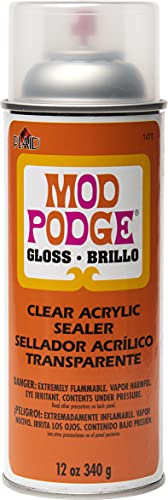
Mod Podge Acrylic Sealer is recognized for its reliability in general crafting circles and serves as a dependable baseline for simple fiber projects. It is an ideal choice for stiffened items, such as crochet ornaments or lace bowls treated with fabric stiffener.
Because it is water-based and chemically neutral, it won’t yellow over time. This is critical when working with white or pale-colored cotton yarns that might otherwise show discoloration under oil-based sprays.
However, recognize that this sealer is not specifically formulated for high-tensile fiber movement. Use it on projects intended for display rather than garments, as it may feel slightly tacky or brittle on soft, flexible fabrics that need to drape.
Golden Archival Varnish: Top Pick for Art Pieces
Golden Archival Varnish is the gold standard for high-end art, offering superior clarity and long-term stability. For a knitter who treats their lace shawls or complex tapestries as fine art, this is the professional-grade solution required for gallery-level preservation.
The formula is non-yellowing and specifically engineered to resist dirt and atmospheric pollution. Its chemical composition is more refined than consumer-grade aerosols, ensuring an even, non-streaky finish that respects the intricate texture of the knit.
The main trade-off is the cost and the specialized application required. This varnish is best reserved for legacy pieces that need to withstand decades of potential wear and environmental stress.
Aleene’s Original Sealer: Great Budget-Friendly Pick
Aleene’s Original Sealer is a cost-effective workhorse that performs well on projects where expense is a factor. It is particularly useful for students or those mass-producing small fiber-based accessories who need a reliable, inexpensive finish.
The spray provides a light, flexible coating that does not drastically change the feel of the yarn. It is a solid choice for protecting embroidery or decorative stitching on finished garments that will not see heavy friction.
Be aware that it lacks the advanced UV-filtering properties of more expensive professional varnishes. It is best used for items that will remain indoors away from harsh, direct sunlight.
Winsor & Newton Varnish: For Delicate Fiber Work
Winsor & Newton Varnish offers a level of refinement that fiber artists appreciate when working with delicate or high-value materials. Its reputation in the fine art community translates well to fiber arts, especially when the goal is to protect against dust and physical handling.
This varnish excels at providing a thin, protective layer that does not “clog” the gaps between stitches. Maintaining the visual integrity of the yarn’s twist and ply is essential, and this product manages to seal the surface without filling in the stitch definition.
It is particularly suitable for mixed-media fiber art involving paints or inks applied directly to the yarn. It ensures that the color remains vibrant without bleeding or shifting under the weight of the sealant.
Krylon Kamar Varnish: Best Removable Varnish Option
Krylon Kamar Varnish is unique because it is designed to be removable with mineral spirits. This makes it an incredibly attractive option for any artist concerned about the long-term reversibility of their conservation choices.
If a project needs a refresh after several years—perhaps due to the accumulation of household dust—the varnish can be stripped away without harming the underlying yarn. This level of control is rarely found in standard craft sealers.
Note that this product is oil-based and requires more ventilation during application than water-based alternatives. It is a professional-level choice for pieces where the preservation of the raw fiber is as important as the protection of the surface.
Choosing a Sealer: Matte vs. Gloss vs. Satin Finish
The finish of a sealer drastically changes how light interacts with your fiber. A matte finish is generally preferred for natural fibers like wool or linen, as it mimics the soft, light-absorbing quality of the raw material.
Gloss finishes add a reflective, plastic-like sheen that can make colors appear deeper but may look artificial on organic fibers. If the project features metallic threads or shimmering silk, a gloss finish can enhance that natural luster.
Satin acts as the middle ground, offering a subtle, healthy glow that isn’t quite as flat as matte but lacks the high reflection of gloss. Consider the texture of the yarn: highly twisted, smooth yarns often benefit from gloss, while fuzzy or matte-spun yarns are almost always better served by a matte finish.
Safety First: How to Use Aerosol Sealers Safely
Aerosol sealers contain solvents that require a controlled environment for safe application. Never apply these indoors unless working in a designated spray booth with proper extraction ventilation.
Always wear a respirator mask rated for organic vapors when spraying. Standard dust masks are insufficient, as they do not filter out the chemical particles and gases released during the spraying process.
Work outdoors on a calm, dry day to avoid wind gusts that could unevenly distribute the sealer. Keep the project elevated on a platform to ensure full, 360-degree coverage without trapping moisture underneath the fiber.
Applying Sealer Like a Pro: A Step-by-Step Guide
- Prepare the Surface: Ensure the project is clean, dry, and fully blocked to the desired shape before applying any sealer.
- Distance Matters: Hold the can 10 to 12 inches away from the project to prevent pooling or soaking the fibers.
- Use Light Layers: Apply multiple thin coats rather than one heavy layer, allowing at least 30 minutes of drying time between passes.
- Test First: Always spray a scrap piece of the same yarn used in the project to check for color changes or unexpected stiffness.
- Cure Time: Let the piece cure in a well-ventilated area for 24 hours before handling to ensure the chemicals have fully set.
Will Sealer Change My Yarn’s Texture or Color?
Applying a sealer will almost certainly alter the “hand” or tactile feel of the yarn to some degree. Most sealers add a slight rigidity to the fibers, which is desirable for display items but potentially uncomfortable for garments worn against the skin.
Color shift is another common reality, particularly with darker, saturated dyes which may appear slightly deepened or dulled after application. The denser the fiber—such as tightly plied cotton—the less the sealer will penetrate, which helps keep the inner fibers soft.
Always consider whether the project actually needs sealing. If it is a functional item like a wool hat or socks, the wear and tear of daily use often negate the benefits of a spray sealer. Reserve these products for decorative items or delicate wall art where structural integrity and dust protection are the primary concerns.
Properly sealing a fiber project transforms a delicate handicraft into a lasting heirloom. By selecting a product that respects the natural properties of the yarn, one ensures that the integrity of the stitch work remains preserved against the environment. Careful application and a clear understanding of finish options turn a simple finishing step into a professional preservation practice.