6 Best Adjustable Bookshelves For Growing Libraries
Upgrade your home library with our top 6 adjustable bookshelves. Browse our expert-curated list to find the perfect durable, flexible storage for your collection.
Every stash begins with a single skein, but soon that collection demands a dedicated home that respects the integrity of the fiber. Proper storage prevents crushed piles, ensures easy access to color palettes, and protects precious wool from environmental stressors. Choosing the right shelving requires balancing the weight of dense cottons and alpaca blends against the need for visibility and airflow. This guide explores the most effective storage solutions to help organize a growing fiber library for long-term preservation.
IKEA Kallax System: The Ultimate Yarn Stash Wall


The Kallax system offers a grid-based structure that excels at keeping skeins upright and visible. By utilizing square cubbies, individual yarn families can be color-coded or categorized by weight, preventing the dreaded “bottom of the basket” mystery skein.
These shelves provide a rigid, boxy framework that supports the weight of yarn well, provided the unit is anchored to the wall. Because the cubbies are modular, they allow for the integration of bins or baskets to contain smaller notions like stitch markers, tape measures, or needle cases alongside the fiber.
Be mindful that the interior dimensions of each cube are fixed, which limits the storage of massive quantities of bulky, oversized sweaters-worth of yarn in a single slot. This is the top choice for those who want their color palette on display as a source of inspiration for future cast-ons.
IKEA Billy Bookcase: Best for Pattern Libraries
The Billy bookcase remains a staple for serious makers because of its adjustable shelving and narrow depth. This makes it ideal for storing binders of patterns, knitting magazines, and reference books without allowing them to get lost in deep, dark corners.
When the shelves are adjusted to tighter increments, they prevent heavy stacks of books from crushing the items at the bottom. This allows for quick retrieval of complex lace charts or stranded colorwork reference guides when a project hits a snag.
While these shelves are excellent for print media, they can struggle under the immense weight of large yarn stashes if the shelves are fully packed. Use these primarily for your fiber library’s literature and reserve the bottom, floor-level shelves for your heaviest cones.
Elfa Shelving: Your Dream Custom Craft Space
Elfa is a high-end, wall-mounted system that offers complete customization for those who treat their craft as a dedicated profession. The ability to adjust height and shelf depth on the fly ensures that storage grows exactly alongside the collection.
The primary advantage here is the inclusion of mesh drawers and hanging rods. These features are perfect for storing delicate tools, circular needles, or even drying hand-dyed skeins that require consistent airflow to remain mold-free.
Because this system is wall-mounted, it clears up valuable floor space, providing more room to set up a swift or ball winder. It represents a significant investment, but for a dedicated studio space, the flexibility to reconfigure as yarn quantities ebb and flow is unmatched.
IRONCK Industrial Shelf: For Heavy Cones & Books
Industrial-style shelving often features metal frames and reinforced wood planks, which are essential for storing heavy inventory. If a stash contains multiple cones of wool-silk blends or large volumes of reference texts, this is the most secure option.
The open frame design promotes excellent air circulation, which is vital for natural fibers like wool and alpaca that need to breathe. It also allows for easier cleaning and monitoring for pests, as there are no hidden corners or closed-in cubbies.
The trade-off is the lack of “nesting” potential; items are prone to sliding if not supported by bookends or bins. Pair these with sturdy storage boxes to keep smaller yarn cakes from migrating across the open shelves.
ClosetMaid Cubeicals: Best Budget Stash Cubbies
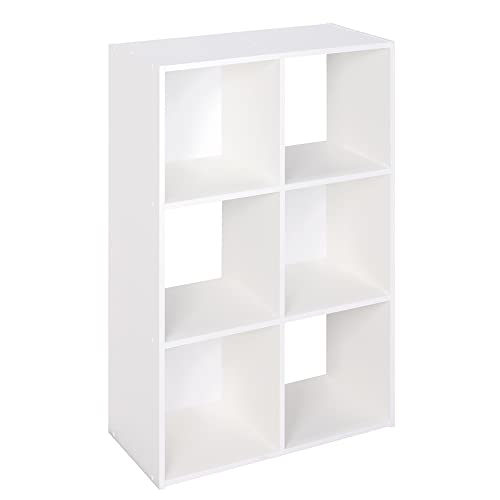
ClosetMaid Cubeicals provide the same grid-based visual organization as more expensive systems at a fraction of the cost. They are lightweight, easy to assemble, and perfectly sized for organizing yarn by fiber content or project type.
Their lightweight construction means they are not suited for heavy loads like massive collections of cotton yarn, which can be surprisingly dense. If you choose this route, distribute weight evenly across the structure and avoid overloading the top surfaces.
These units work best when supplemented with fabric bins, which hide the visual clutter of odds-and-ends. They are the ideal entry point for a budding stash that has outgrown a single tote bag but hasn’t yet reached a professional collection size.
Tribesigns Triple Wide: For A Truly Epic Stash
The Tribesigns triple-wide unit offers a massive footprint, ideal for those who purchase yarn by the sweater-quantity or stock up during major sales. It provides a sweeping, panoramic view of a collection, making it easier to match new yarn with existing stock.
The wide shelves minimize the need for vertical stacking, which reduces the pressure on the lower skeins. When fibers are stored in a single layer, they maintain their loft and are far less likely to felt or compress over long periods of storage.
Because of its size, this piece requires a significant amount of wall real estate. Always confirm dimensions before purchasing, and prioritize installing the included safety hardware to prevent tipping when the shelves are fully loaded.
How to Pick Shelving for Your Stash and Space
The most important metric in choosing a shelf is the physical space available versus the weight of the fiber. Natural fibers, especially those high in lanolin or moisture content, are heavier than they look and require solid, stable supports that won’t bow under stress.
Visibility is a secondary but equally vital factor. If a stash is hidden behind solid doors or tucked into deep, inaccessible corners, the probability of “forgotten yarn” increases significantly. Choose open systems if the goal is to curate a stash that sparks creativity.
Finally, consider the environmental conditions of the room. Avoid placing wooden shelves directly against exterior walls that might be prone to condensation, as this introduces moisture that can ruin natural fibers.
Books vs. Yarn: Understanding Weight Capacity
When mixing books and yarn on a shelf, treat them as two distinct structural challenges. Books provide a consistent, predictable load, whereas yarn tends to be squishy, compressible, and deceptively heavy.
A shelf that holds a row of thick knitting reference books might seem sturdy, but the same shelf may sag if loaded with a single, dense row of heavy wool cones. Always prioritize placing the densest, heaviest yarn on the lowest shelves, closest to the floor, to maintain the center of gravity.
If shelves begin to show signs of bowing, rearrange the collection immediately. A bowed shelf is a structural failure waiting to happen and places undue stress on the joinery of the unit.
Smart Ways to Organize Yarn on Your New Shelves
Categorizing by weight or fiber type is the industry standard for a reason. Keeping all lace-weight, fingering-weight, and worsted-weight yarns together ensures that you can quickly pull the necessary materials for a specific project.
Consider using uniform bins or labels to denote the contents of each section. Clearly mark fiber percentages and whether the yarn is machine washable, as this prevents confusion during high-speed project planning or stash diving.
Use your shelf space to separate finished projects, works-in-progress (WIPs), and unused yarn. Mixing unfinished projects with pristine hanks often leads to dust and debris transferring to your clean fiber, which is a headache to manage later.
Keeping Your Yarn Safe From Moths and Pests
Even the most beautiful shelving system is useless if it invites pests into your collection. Moths are particularly attracted to dark, undisturbed areas where protein-rich fibers like wool, silk, and mohair reside.
Regularly rotate your stash, taking every skein off the shelf at least twice a year. This disruption is the single most effective way to deter moths, as they prefer stagnant, quiet environments to lay eggs.
If storing long-term, seal your natural fibers in airtight plastic bags or vacuum-sealed containers. Place these inside your chosen shelving unit to create a double-layer of protection that keeps your investments pristine for years to come.
A well-organized stash is more than just a storage solution; it is a creative tool that makes every knitting project easier to start and finish. By selecting the right shelving and maintaining it with care, you protect the investment you have made in your craft. Whether you opt for an industrial metal frame or a modular cube system, the best shelf is one that keeps your yarn visible, accessible, and safe from harm. Enjoy the process of organizing your collection—it is the first step toward a more productive and inspired maker’s life.