6 Best Dust Masks For Fine Sawdust Inhalation
Protect your lungs from wood particles with our expert guide to the 6 best dust masks for fine sawdust inhalation. Choose the right respiratory protection now.
Working with raw fibers or carving custom knitting needles creates fine particulate matter that can irritate the lungs over long sessions. Just as one wouldn’t ignore the importance of ergonomic needles to prevent hand strain, protecting your respiratory health is essential for a lifetime of crafting. Choosing the right dust mask ensures that fine sawdust or fiber debris stays out of the workspace. This guide breaks down the best options to keep your breathing clear while you focus on your latest project.
3M 8511 N95: Best Disposable Dust Respirator


The 3M 8511 is a staple for a reason, offering reliable N95-rated protection that fits a wide range of face shapes. The inclusion of an exhalation valve is the standout feature here, as it significantly reduces heat buildup inside the mask.
When sanding down wooden needle blocks or shaping custom bobbins, breathability becomes as crucial as protection. A mask that traps moisture often leads to fogging if you happen to wear glasses or magnifiers while working.
This mask is ideal for occasional projects where convenience is the priority. However, the elastic straps can lose their tension after repeated use, so consider these a single-use solution rather than a long-term investment.
RZ Mask M2 Mesh: The Most Comfortable Reusable Mask

The RZ Mask M2 utilizes a mesh outer shell that promotes airflow while keeping the filter media securely tucked inside. It feels less like an industrial appliance and more like a piece of gear designed for extended wear.
If you spend entire weekends in the workshop preparing hand-dyed fibers or carving spindles, the ergonomic fit of the M2 prevents the “mask fatigue” that often accompanies cheaper disposable options. The nose clip provides a tight seal, which is critical for ensuring air is filtered rather than bypassing the mask through gaps.
Because the filters are replaceable, it is a more sustainable choice for active makers. Always keep spare filters on hand, as a clogged filter will increase breathing resistance, much like trying to knit with yarn that is too thick for your needles.
GVS Elipse P100: Top Pick For Heavy Sawdust Jobs
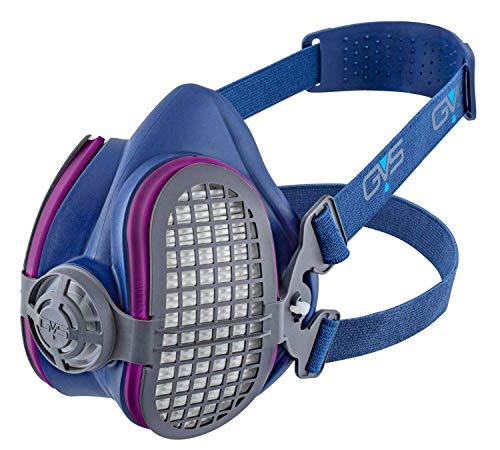
The GVS Elipse P100 offers a compact profile that sits close to the face, making it far less intrusive than bulky traditional respirators. This is vital when you need to maintain a clear line of sight to check the grain of the wood or the balance of a spindle.
The P100 rating signifies that it captures 99.97% of airborne particles, providing a level of filtration that exceeds standard N95 masks. It is the heavy-duty choice for sanding dark woods or milling dense materials that produce ultra-fine, persistent dust.
The low-profile design means it won’t interfere with safety goggles or face shields. While it carries a higher initial cost, the efficiency and longevity of the replaceable filters make it an excellent value for serious woodworkers.
Trend Stealth Air: The Ultimate in Air Protection
The Trend Stealth Air is designed with advanced filtration technology that makes it remarkably easy to breathe through, even during intensive labor. Its construction focuses on comfort and visibility, ensuring that your protective gear doesn’t hinder your creative process.
Many woodworkers prefer this mask because the filters are positioned to avoid blocking your downward view. This is a game-changer when you are performing delicate inlay work or detailed carving that requires absolute precision.
The mask is latex-free and odorless, which is a major benefit for those with sensitivities to synthetic materials. It is arguably the best “set it and forget it” option for professionals who require top-tier safety without the bulk.
Honeywell DF300: Best Flat-Fold For On-The-Go

The Honeywell DF300 features a unique flat-fold design that allows it to slip easily into a tool bag or pocket. It is the perfect backup to keep on hand for quick tasks, such as smoothing a rough edge on a knitting needle or cleaning up fiber remnants.
Despite its slim profile, it provides a secure fit that rivals much larger masks. The soft inner lining is gentle against the skin, avoiding the irritation that often occurs during longer sanding sessions.
This mask is an excellent choice for those who move between different workstations or exhibit at craft fairs. It balances portability with the effective protection needed to keep your lungs clear during intermittent woodworking tasks.
Base Camp M Plus: A Versatile and Stylish Option
The Base Camp M Plus bridges the gap between industrial safety gear and everyday comfort. It uses a multi-layered filtration system that handles fine dust effectively while remaining lightweight enough for all-day use.
The adjustable ear loops and nose bridge allow for a highly customizable fit. Much like adjusting your tension or needle size to get the perfect gauge, you must adjust the straps on this mask to ensure no air leaks around the perimeter.
It features dual-valve technology that vents hot, humid air away from the face. This makes it a great choice for warmer workshop environments where breathability is a top priority.
N95 vs. P100: Decoding Dust Mask Ratings
Understanding filtration ratings is essential for matching your mask to the task. An N95 rating indicates that the mask filters at least 95% of airborne particles, which is sufficient for most general wood sanding.
A P100 rating, however, is oil-proof and filters 99.97% of particles. Think of this as the difference between using a lightweight sport-weight yarn for a shawl and a high-twist wool that provides superior structure; the P100 is designed for higher-stakes environments.
- N95: Sufficient for standard wood dust and household allergens.
- P100: Required for heavy-duty grinding, sanding toxic woods, or long-term workshop exposure.
Always check the rating on the packaging before purchasing. Never compromise on the level of protection when working with exotic woods or materials that may produce toxic dust.
How to Get a Perfect Seal With Your Dust Mask
A mask is only as effective as the seal it creates against your skin. Even the most expensive P100 respirator will fail if air is leaking around the nose or cheeks.
Start by placing the mask over your face and securing the straps. Gently press the nose clip with both hands—avoid using just one finger, as this can create a sharp crease that allows air to pass through.
Perform a quick “seal check” by inhaling deeply. If you feel air rushing in around your eyes or cheeks, re-adjust the straps or the nose wire. A good seal should feel snug but not painful, similar to a well-fitted compression garment.
Reusable vs. Disposable: Which Mask is for You?
Choosing between disposable and reusable masks often comes down to your project volume. If you only occasionally sand a needle or a fiber tool, a box of high-quality disposable N95 masks will last for years.
Conversely, if you run a studio where woodturning or heavy sanding happens weekly, a reusable mask is both more economical and better for the environment. You save money on filters in the long run, and you gain the benefit of a more robust, consistent fit.
- Disposable: Low upfront cost, no maintenance, easy to store.
- Reusable: Higher initial cost, better fit, cost-effective for frequent users, better filtration options.
Analyze your actual time spent in the workshop to decide which route aligns with your workflow. A mask that is comfortable and ready to go will always be used more consistently than one that is difficult to manage.
Your Dust Mask Questions, Answered by an Expert
Are you worried about how to clean your reusable mask? Most manufacturers recommend wiping the exterior with a damp cloth and replacing filters according to the schedule, rather than washing the actual mask body in a machine.
Should you wear a mask over a beard? It is notoriously difficult to get a proper seal with facial hair. If you have a beard, consider a powered air-purifying respirator (PAPR) or opt for a loose-fitting hood system to ensure safety.
Do filters expire? Yes, even if they aren’t fully saturated with dust, filter media can degrade over time. Replace them if they become damaged, difficult to breathe through, or if you notice any unpleasant odors inside the mask.
Investing in quality respiratory protection is just as important as investing in quality tools. By choosing the right mask for your specific projects, you ensure that your craft remains a healthy and enjoyable endeavor for years to come.