6 Best Pottery Scales For Precise Material Measuring
Achieve consistent results with our guide to the 6 best pottery scales for precise material measuring. Read our expert reviews and find your perfect tool today.
Precision in the pottery studio mirrors the exactitude required when calculating yarn requirements for a complex sweater pattern. Just as weighing an unfinished skein prevents the heartbreak of running out of yarn mid-sleeve, measuring glaze materials and clay additives ensures consistency in every firing. Achieving the perfect chemical balance is the difference between a stunning finish and a ruined kiln shelf. This guide evaluates the most reliable scales to help maintain that professional-grade accuracy in your workspace.
Myweigh iBalance i5000: Best Overall Scale


The Myweigh iBalance i5000 stands out for its impressive combination of high capacity and fine readability. It is the workhorse of the studio, designed to handle the heavy lifting of large batch mixing while remaining sensitive enough for smaller glaze adjustments.
For those mixing large buckets of slip or glaze, the 5,000-gram capacity is a vital asset. It avoids the common struggle of needing to measure in multiple batches, which drastically reduces the risk of human error during weighing.
The inclusion of an AC adapter and a stable, large weighing platform makes it a reliable fixture on a permanent workbench. While it takes up more desk space than a pocket scale, the trade-off is superior durability and a clear, easy-to-read display that prevents misreadings during long work sessions.
Ohaus Scout SPX222: The Ultimate Precision Pick
If your work demands the rigor of a laboratory, the Ohaus Scout SPX222 is the gold standard for high-end studio setups. This balance provides extreme sensitivity, making it essential for complex glaze chemistry where even a fraction of a gram can shift the final color or melt profile.
Precision at this level allows for the perfect replication of delicate glaze tests. Much like tracking gauge across different yarn brands, this scale ensures that experimental additions remain predictable and reproducible across multiple test tiles.
Because of its advanced sensors, it is best suited for dry ingredient mixing and small-batch testing. While the price point is significantly higher than standard kitchen scales, it is a lifetime investment for the serious maker who prioritizes repeatable results above all else.
Escali Primo P115C: A Reliable Budget Option
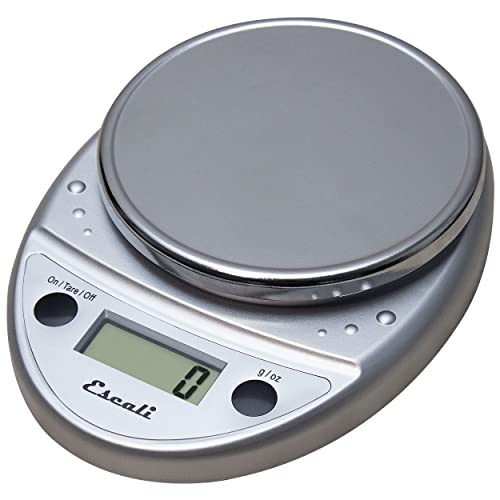
The Escali Primo P115C is the quintessential beginner scale, favored for its simplicity and rugged, spill-proof design. It offers straightforward operation for potters who need basic weight measurements without the complexity of advanced settings.
The sealed control panel is a notable feature for the messy environment of a clay studio. It handles accidental splashes of water or clay slurry far better than more sensitive electronic equipment, protecting the internal components from grit and moisture.
While it lacks the high-end precision of a laboratory balance, it is perfectly suited for weighing raw clay weights or mixing standard glazes in smaller quantities. It is the reliable, no-frills choice for students or hobbyists who need a dependable tool without a steep learning curve.
Ohaus Valor 1000: Best for Wet Glaze Mixing
The Ohaus Valor 1000 is built with water resistance in mind, making it an excellent companion for the wet side of the studio. Its stainless steel platform and food-grade construction make it incredibly easy to clean after messy weighing sessions.
Mixing wet glazes involves constant movement and potential spills, which can destroy lesser scales. This model’s rugged housing ensures that liquid ingress remains minimal, extending the lifespan of the electronics significantly.
The rapid stabilization time means less waiting for the digital numbers to settle. For busy studios where efficiency is paramount, this scale delivers accurate readings almost instantly, keeping the workflow fluid and productive.
My Weigh KD-8000: Most Versatile Studio Scale

The My Weigh KD-8000 is frequently praised for its high capacity and ability to handle the varied demands of a busy studio. It strikes a balance between being substantial enough for large batches and precise enough for adding colorants or opacifiers to a base glaze.
Its removable stainless steel platform makes cleaning simple, even if clay or glaze dust accumulates during use. The added feature of a “hold” button is a subtle but important detail, allowing the screen to lock in a weight even if a large container obstructs the view of the display.
This scale is the “all-rounder” that serves both the hand-builder and the production potter equally well. It handles the weight of heavy clay components and the light weight of precise chemical additives with equal reliability.
AWS-100 Digital Pocket Scale: For Test Batches
When working on small-scale glaze testing or modifying colorants, the AWS-100 Digital Pocket Scale is an invaluable tool for the bench. It provides the high-resolution precision needed to measure tiny amounts of oxides or stains that would not register on a standard 5kg scale.
The small footprint allows it to be tucked away in a drawer when not in use, keeping the workspace clutter-free. Its portability also makes it ideal for potters who teach workshops or travel between different studio locations.
The primary trade-off is its limited capacity; it is strictly a precision tool for light loads, not a substitute for a primary studio scale. Use it in tandem with a larger model to ensure every aspect of a recipe—from bulk binders to tiny color additions—is measured correctly.
What to Look For in a Pottery Studio Scale
When selecting a scale, prioritize build quality, as the studio environment is inherently dusty and moisture-heavy. A scale with a sealed control panel and a stainless steel platform is non-negotiable for longevity in a room filled with clay dust.
Consider the display visibility as well. If you often use oversized buckets or tubs to mix your materials, ensure the scale has a feature to prevent the container from blocking the digital readout, or choose a model with a separate, wired display.
Lastly, check if the scale is AC-powered or requires batteries. While battery-powered units are convenient for their portability, professional studios often benefit from a plug-in option to avoid the frustration of a scale dying in the middle of a delicate mix.
Capacity vs. Readability: Finding Your Balance
Capacity refers to the maximum weight a scale can measure, while readability defines the smallest unit of change the scale can detect. Balancing these two determines whether a scale is appropriate for your specific pottery practice.
For high-volume production, you need a high-capacity scale, but you may sacrifice extreme sensitivity in the process. Conversely, if your focus is on glaze chemistry, you need high readability, which usually comes at the cost of a lower overall capacity.
Most potters benefit from having two scales: a larger, heavy-duty scale for batch mixing and a sensitive, smaller-capacity scale for accurate colorant or chemical additions. This dual-setup approach covers the entire spectrum of studio needs without compromise.
How to Care For and Calibrate Your New Scale
Maintenance in the pottery studio is largely about keeping dust and moisture away from the internal sensors. Keep the scale on a dedicated, level surface and use a protective cover or a thin plastic bag over the controls when weighing dusty materials like kaolin or dry stains.
Calibration is essential for accuracy, as internal components can drift over time due to temperature changes or minor bumps. Purchase a set of standard calibration weights to periodically reset your scale according to the manufacturer’s instructions.
If a scale consistently gives different readings for the same item, it is time to recalibrate or clean the contact points. Regularly checking your scale against a known weight ensures that your glaze recipes remain consistent across different seasons and weather conditions.
Why Precision Weighing Matters for Your Clay
Glaze chemistry is a balancing act of oxides and binders that reacts precisely to heat. Even a small error in weighing ingredients can result in a glaze that crazes, pinholes, or fails to melt entirely, regardless of the quality of the firing.
Consistency is what separates a student project from a professional body of work. When you weigh your materials accurately, you gain the ability to troubleshoot and refine your recipes; if you don’t know exactly what went in, you cannot effectively adjust the outcome.
Think of it as the difference between guessing the yardage for a sweater and using a precise kitchen scale to measure your yarn weight. Proper measurement removes the guesswork, allowing you to focus on form, design, and surface decoration with total confidence in your chemistry.
Investing in a quality scale is as fundamental as choosing the right clay body or kiln furniture. By selecting equipment that suits the scale of your projects and maintaining it with care, you lay the foundation for repeatable, high-quality results in every firing.