6 Best Clear Spray Sealers For Protecting Painted Ornament Finishes
Preserve your holiday treasures with our guide to the 6 best clear spray sealers for protecting painted ornament finishes. Shop our top-rated picks today!
Hand-painted ornaments add a layer of heirloom quality to any holiday collection, much like a hand-knit sweater finished with custom wooden buttons. Protecting those intricate designs requires a sealer that won’t yellow or crack under the weight of seasonal storage. Just as fiber choice dictates the drape and longevity of a garment, the right spray sealer determines whether an ornament remains vibrant or fades over time. Selecting the correct finish is the final, crucial step in preserving the effort invested in every fine detail.
Krylon Crystal Clear: The Best Overall Sealer


Krylon Crystal Clear stands as the industry standard for a reason: it offers a balanced, non-yellowing protection that respects the integrity of the base medium. For ornaments painted with acrylics or delicate gouache, this sealer acts much like a sturdy swatch that holds its shape after blocking. It provides a robust barrier against moisture and dust without altering the underlying colors.
The formula dries quickly, which is essential when working on batch projects, such as preparing dozens of miniature decorations. Much like choosing a reliable workhorse yarn for a gift project, this sealer rarely produces unpleasant surprises. It resists moisture, ensuring that ornaments stored in humid attic conditions remain as pristine as the day they were finished.
Expect a consistent performance regardless of the climate. While some sealers may get tacky in humid air, Krylon maintains a stable finish. This consistency makes it the go-to choice for crafters who prioritize reliability over experimental finishes.
Rust-Oleum 2X Clear: The Best Value Option

Rust-Oleum 2X Clear delivers significant volume, making it the most economical choice for high-output projects. If a workshop is producing a large volume of ornaments to sell at seasonal craft fairs, this provides the best return on investment. It sprays with a high-pressure nozzle that covers surfaces rapidly, similar to using a larger needle size to speed up the knitting of a plain-stockinette scarf.
The “2X” designation implies a thicker coat, which can be an advantage when durability is the primary goal. However, proceed with caution: applying too thick a layer can obscure fine, hand-painted details. It is best used for pieces where a slightly heavier, protective shell is desired.
For those working on a budget, this product performs admirably. The trade-off is a slightly longer drying time compared to premium aerosol sprays. Always allow for a full curing period before stacking ornaments for storage.
Mod Podge Clear Acrylic Sealer: Top Crafter Pick
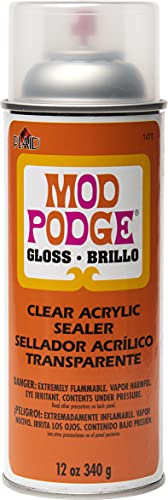
Mod Podge is widely recognized in the crafting community, and their clear acrylic sealer carries that same reputation for reliability. It is specifically designed to work in tandem with the traditional Mod Podge decoupage medium, making it a natural choice for mixed-media ornaments. The finish is remarkably smooth, providing a professional touch that elevates amateur-looking work.
This sealer is particularly effective at leveling out minor imperfections in the painted surface. Think of it as the smoothing effect achieved when blocking a piece of wool; it helps the texture settle and appear uniform. It is highly recommended for pieces that incorporate paper, fabric scraps, or thin layers of collage.
The formula is relatively gentle on sensitive paints. Users rarely report the “cracking” or “crazing” that can sometimes occur when mismatched chemical bases meet. It is a safe, versatile option for those who enjoy experimenting with different craft supplies.
Aleene’s Gloss Finish Spray: For a Glassy Sheen
Aleene’s Gloss Finish provides that high-shine, store-bought look that makes ornaments pop under Christmas tree lights. This finish is ideal for vibrant, highly saturated paint jobs where a glassy reflection enhances the depth of the color. It mimics the sheen of a polished, hard-finish wood needle, offering both visual appeal and a satisfying tactile smoothness.
Applying this requires a steady hand, as the glossy finish is less forgiving of drips or uneven spray patterns than matte alternatives. It acts as a magnifying glass, drawing attention to the quality of the brushwork underneath. For ornaments that feature crisp lines or metallic accents, the contrast provided by a high gloss is often worth the extra effort.
One minor drawback is that gloss sealers tend to show fingerprints more easily than matte or satin finishes. If the ornaments are intended for frequent handling, a light touch during display is advised. It remains a top-tier choice for visual impact.
Testors Dullcote Lacquer: Ultimate Matte Finish
Testors Dullcote is a legend among model builders and fine-detail artists for its ability to produce a true, dead-flat matte finish. When the goal is an earthy, hand-hewn, or rustic aesthetic, any shine can look out of place. This lacquer eliminates glare entirely, allowing the viewer to focus purely on the pigment and texture of the ornament.
This product is highly concentrated and dries with a thin, incredibly hard shell. It is the best choice for delicate, intricate ornaments where you do not want the sealer to “pool” in the crevices of the design. It preserves the look of a natural surface, similar to the finish of an undyed, matte-fiber yarn.
Because it is a lacquer, it is more chemically aggressive than water-based acrylic sprays. Always test this on a small, inconspicuous area or a scrap piece first to ensure it does not react with the specific paint used. When used correctly, it provides an unparalleled, sophisticated finish.
Plaid Clear Sealer: Best for Delicate Details
Plaid Clear Sealer is formulated with precision in mind, making it the preferred choice for miniature ornaments or those with complex, layered paint details. It sprays a fine, consistent mist that prevents the heavy build-up often associated with generic sealers. This ensures that the fine, hand-painted details remain crisp and clear, rather than blurred by a thick layer of coating.
It is particularly useful when working on small-scale projects that require multiple thin coats rather than one heavy application. Much like managing tension when switching between different yarn weights in a colorwork pattern, controlling the application of this sealer allows for better overall detail retention. It is highly recommended for novice crafters who are prone to over-spraying.
The finish is subtle and generally does not lean heavily toward gloss or matte, sitting comfortably in a neutral satin range. It is a dependable, all-purpose solution for intricate work. This is the choice for crafters who value precision over raw volume.
How to Choose: Gloss, Satin, or Matte Finish?
Choosing a finish is akin to choosing a yarn texture for a project; the decision should be guided by the visual goal and the intended environment. Gloss is excellent for bright colors and metallic paints, as it increases reflection and adds a “wet” look. Matte is the superior choice for rustic, vintage-style, or heavily textured ornaments, as it minimizes glare and hides imperfections.
Satin serves as the middle ground, offering a soft sheen that is not overly reflective. It is often the safest bet for beginners because it provides a polished look without the high-maintenance requirements of a glossy finish. Consider the lighting where the ornament will hang; bright, direct light will make glosses appear more intense and mattes appear flatter.
Ultimately, the choice of finish can change the entire character of the piece. A vibrant, hand-painted floral design might benefit from the pop of a gloss, while a dark, moody landscape piece often benefits from the depth provided by a matte. Experiment with a simple scrap ornament to see how each finish interacts with your style.
Tips for a Flawless, Drip-Free Application
Applying a spray sealer is all about patience and thin, multiple coats. Never hold the nozzle too close to the ornament, as this is the quickest way to cause runs and drips. Keep the can at least 8 to 10 inches away and move in a consistent, sweeping motion that starts before the spray hits the object and ends after it passes.
Think of this process like maintaining an even gauge across a sweater; the secret is consistency in your technique. It is always better to apply three very light, translucent layers with proper drying time in between than one heavy coat that threatens to drip. If a drip does occur, do not try to wipe it while wet, as this will damage the finish; wait for it to fully cure, then lightly sand it down if necessary.
Temperature and humidity play a massive role in the final result. Avoid spraying on days with high humidity or extreme cold, as these conditions prevent the sealer from curing correctly, which can lead to a cloudy or sticky finish. Aim for a dry, temperate environment to ensure the best possible bond.
Safety First: Ventilating Your Crafting Space
Spray sealers contain solvents and aerosols that require proper ventilation to remain safe for the user. Never use these products in a closed room, such as a bedroom or small utility closet. Always work outdoors on a calm day or in a well-ventilated garage with the door open.
If indoor application is unavoidable, a portable spray booth or a high-quality respirator mask is non-negotiable. Think of this as the equivalent of using proper lighting or ergonomic needles to prevent physical strain during long knitting sessions. Protecting your lungs is just as important as protecting the ornament itself.
Always store these cans out of direct sunlight and away from heat sources. Aerosol cans are pressurized and can be unstable if exposed to high temperatures. Keeping your workspace clear and safe ensures that crafting remains a relaxing and productive endeavor.
Acrylic vs. Lacquer: What’s the Difference?
Understanding the base of the sealer is vital for successful project outcomes. Acrylic sealers are water-based and generally safer, easier to clean up, and less likely to yellow over time. They are the standard for most hobbyist projects and are compatible with the vast majority of acrylic paints.
Lacquer sealers, by contrast, are solvent-based and typically offer a harder, more durable, and thinner finish. They are often faster to dry but possess a stronger odor and require more caution regarding which paints they are applied over. Using a lacquer over certain delicate paints can cause the colors to bleed or the surface to dissolve, much like using a harsh detergent on a delicate wool garment.
When in doubt, stay with acrylic-based products for ease of use and broad compatibility. Only reach for lacquer-based sealers when a specific, high-durability finish is required and after verifying compatibility with the paint used. Knowing the difference between these two categories prevents ruined projects and wasted effort.
Selecting the right sealer is the final step in ensuring your hand-painted ornaments last for years. By matching the finish to the design and applying it with patience, you guarantee a professional result that stands the test of time. Treat these tools with the same care you give your needles, and your finished ornaments will become cherished staples of every holiday season.