6 Best Wire Jig Sets For Custom Jewelry Patterns
Create professional-grade custom jewelry with our top 6 picks for wire jig sets. Explore our expert guide and choose the perfect tools for your unique designs.
Creating custom wire elements for jewelry requires the same attention to tension and structural integrity as picking the perfect needle for a delicate lace project. Just as a heavy-weight wool might overwhelm a pair of lightweight carbon fiber needles, selecting the wrong jig can lead to frustration and imprecise patterns. Achieving consistent loops and uniform shapes relies on the stability of the tool beneath the wire. This guide explores the best wire jig sets to help achieve professional-grade results in metalwork, much like mastering the perfect tension for complex cable work.
Beadsmith Thing-A-Ma-Jig: Best for Beginners
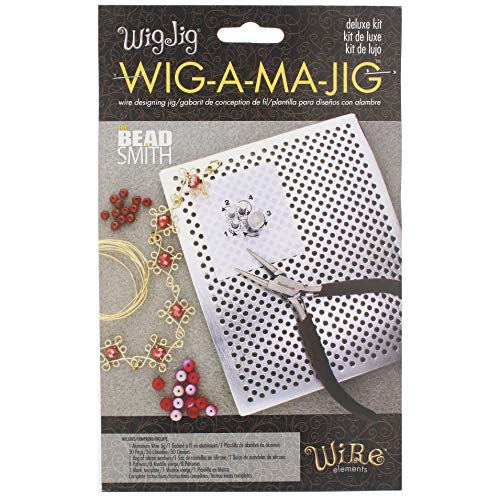

The Thing-A-Ma-Jig is a reliable entry point for those just starting to manipulate wire, mirroring the simplicity of starting a first project on bamboo needles. Its basic peg-board layout allows for straightforward practice without overwhelming the user with complex attachments or steep learning curves.
Beginners often struggle with inconsistent loop sizes, much like a novice knitter might find their tension fluctuating across a row. This jig provides enough guidance to stabilize the wire, ensuring that early attempts at patterns do not result in distorted or uneven shapes.
While it lacks the advanced features required for high-end professional production, it is an ideal training tool. For those learning to navigate wire gauges, this jig offers the forgiveness needed to build muscle memory before moving to more rigid or complex equipment.
WigJig Olympus Lite: Top Choice for Durability

Professional durability is essential when tackling projects that involve repeated use of heavier gauge wires, similar to how an avid sock knitter requires high-quality, long-lasting metal needles. The WigJig Olympus Lite provides a robust platform that resists warping or shifting under pressure.
When crafting intricate, multi-part jewelry, a jig that moves or flexes can ruin hours of careful work. The solid construction of this model ensures that the grid remains perfectly aligned, providing the consistency needed for complex patterns that require precise spacing.
Serious crafters should prioritize this option if the intent is to produce numerous pieces over several years. It is an investment in stability, ensuring the tool remains as reliable as the first day it was purchased.
Artistic Wire Deluxe Jig Kit: Most Versatile Set
Versatility is the hallmark of the Artistic Wire Deluxe Jig Kit, making it the “circular needles” of the wire-working world. Because it includes a comprehensive array of pins and accessories, it can accommodate a vast range of pattern complexities without the need for additional purchases.
This kit excels for those who move between different design styles, from angular, geometric shapes to soft, flowing organic curves. Much like a project requiring different stitch patterns to create texture, this kit allows for the mixing of techniques on a single board.
Consider this option if the creative process is experimental and varied. While the sheer volume of parts can be daunting, the ability to pivot between styles makes it a highly efficient choice for the organized maker.
EuroTool Metal Jig: Best for Heavy Gauge Wire
Heavy gauge wire presents a unique challenge, often requiring a firm grip and a sturdy base to prevent deformation during the bending process. The EuroTool Metal Jig is specifically engineered to handle these thicker materials, offering a level of resistance that plastic versions cannot match.
In the same way that chunky, unspun yarn requires a larger needle size to prevent stiff fabric, heavy wire requires a tool that will not bend under tension. This metal jig provides the necessary rigidity to force thick wire into tight, clean angles without slipping.
Attempting to use a standard plastic jig for heavy metal work is a recipe for broken pins and frustration. Stick to this metal option for structural jewelry components or heavy-duty wire sculptures where stability is non-negotiable.
Now & Zen Spiral Maker: Perfect for Spiral Coils
Spiral coils can add a professional finish to any jewelry piece, acting much like a decorative yarn-over or bobble in a knitted garment. The Now & Zen Spiral Maker simplifies the otherwise tedious task of hand-coiling wire into uniform, aesthetic springs.
Achieving perfect symmetry in a spiral by hand is notoriously difficult, as even a slight tremor in the hand can create a noticeable gap. This tool streamlines the process, ensuring each coil is identical in diameter and spacing.
While it is a specialized tool, it is indispensable for those who frequently incorporate spirals into their designs. Do not underestimate the value of a single-purpose tool that saves time and guarantees professional consistency.
Generic Aluminum Jig: Best Budget-Friendly Pick
A generic aluminum jig is a pragmatic choice for the maker who wants functionality without the high cost of brand-name professional sets. It offers a solid, lightweight platform that performs consistently for standard light-to-medium gauge wire projects.
Much like choosing a reliable aluminum needle, this jig is durable enough to withstand frequent use without the high price tag associated with specialized design features. It serves as a great “workhorse” tool for basic pattern creation and prototyping.
However, be mindful that these often lack the sophisticated peg-locking mechanisms found on premium models. It remains an excellent selection for those on a budget who have a steady hand and a clear vision for their designs.
How to Choose the Right Wire Jig for Your Needs
Choosing the right jig requires an honest assessment of the type of jewelry intended for production. If the primary focus is small, delicate earrings, a large-format jig is unnecessary, just as a huge pair of circular needles would be cumbersome for knitting a baby hat.
Assess the frequency of use and the complexity of the desired patterns. High-volume production demands the durability of metal, while occasional weekend crafting may be perfectly served by a lightweight plastic or aluminum option.
Look for a system that offers the level of grid customization required for the specific designs in mind. A fixed-pin system is easier to learn, but an adjustable-pin system provides the freedom to grow as skills improve.
Metal vs. Plastic Jigs: A Complete Comparison
Metal jigs offer superior rigidity, which is vital when working with tempered or heavy-gauge wires that exert significant force on the pins. Plastic jigs, by contrast, are lighter and typically more affordable, making them a fantastic starting point for beginners or for use with soft, malleable wire types.
Plastic options can experience “peg creep” or minor flexing if the wire is too thick, which can lead to slight inaccuracies in the final pattern. Metal versions hold their shape under high tension, ensuring the design remains as the designer intended throughout the entire forming process.
Ultimately, the choice hinges on the wire materials being used. If the projects involve copper or sterling silver wire in gauges thicker than 20, investing in a metal jig will prevent long-term frustration and repeated tool replacement.
Selecting the Right Wire for Your Jig Projects
The wire selected for a project must match the scale of the design and the limitations of the jig. Soft, dead-soft wire is the most forgiving for beginners, as it bends easily around jig pins without putting too much strain on the hand or the tool.
Conversely, half-hard wire holds its shape much better once removed from the jig, making it ideal for finished jewelry components that need to remain rigid. Just as the twist and ply of a yarn determine how it behaves in a garment, the temper of the wire determines its behavior in a jig.
Avoid using very thick or hardened wires on plastic jigs, as the physical force required to bend them can snap pins or crack the board. Always match the hardness of the metal to the sturdiness of the tool to ensure longevity.
Essential Tips for Using Your New Jewelry Jig
Efficiency in wire wrapping is built through consistent technique and proper tool maintenance. Always secure the jig to a flat, stable surface before beginning, as any wobble will translate directly into distorted wire loops.
When removing a finished piece, lift it straight up off the pins to avoid bending or stretching the wire out of its formed shape. If the design features tight, complex turns, use nylon-tipped pliers to gently nudge the wire into place against the pins, which prevents unsightly nicks or scratches on the surface of the metal.
Regularly check the pins for any signs of loosening or wear, particularly after working with heavier wire gauges. A well-maintained jig is the cornerstone of professional-looking jewelry, providing the structure that allows creativity to flourish.
Investing in the right wire jig is a decisive step toward elevating craft from a casual hobby to a precise art form. By selecting a tool that aligns with personal project goals and material preferences, the path to consistent, high-quality jewelry becomes significantly clearer. Choose the equipment that complements your specific workflow, and the result will be pieces that reflect true craftsmanship.