6 Best Craft Pliers For Assembling Advent Jewelry Gifts
Discover the 6 best craft pliers for assembling advent jewelry gifts. Shop our expert recommendations to start creating your professional DIY holiday pieces today.
Creating handmade jewelry for advent calendars requires the same precision as weaving a delicate lace shawl or grafting a seamless toe on a pair of socks. Just as the wrong needle material can cause your yarn to snag or your gauge to fluctuate, the wrong pliers can mar delicate wire or fail to secure jump rings properly. Quality tools act as an extension of the hands, allowing for the same level of finesse required when managing fine alpaca lace weight or rigid, splintery needles. Investing in the right gear ensures that the finished charms and pendants are as durable as a well-cared-for heirloom sweater.
Xuron 450 TweezerNose: For Tiny, Detailed Work
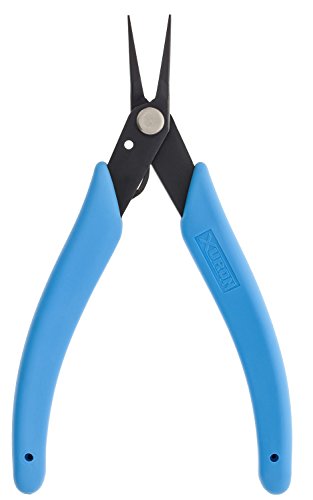

The Xuron 450 TweezerNose is the equivalent of a sharp, high-quality lace needle for jewelry makers. Its ultra-fine, tapered tips are designed to reach into tight spaces where standard-sized pliers would simply be too clumsy to function.
Precision is critical when working with micro-components or tucking in wire tails. Using these is similar to picking up a dropped stitch in a complex colorwork motif; the slim profile allows for maximum visibility and control without distorting the surrounding structure.
While these are indispensable for intricate tasks, the tips are delicate and should not be used for heavy-duty bending. Think of them like fine carbon needles—perfect for delicate maneuverability, but prone to snapping if subjected to the high tension of thick, stubborn wire.
Beadsmith Ergo Chain Nose: All-Around Performer

Every maker needs a reliable workhorse, much like a standard set of aluminum needles for everyday projects. The Beadsmith Ergo series is widely favored for its comfortable grip, which reduces hand fatigue during long assembly sessions.
The ergonomic handle design is particularly beneficial for those who struggle with tension or hand strain, similar to how circular needles can relieve wrist tension compared to long, straight ones. These pliers provide a secure hold without requiring excessive pressure, keeping the wearer’s hands comfortable through hours of production.
Because they are an all-around performer, they handle the bulk of assembly tasks with ease. However, they lack the extreme finesse of specialized tools, meaning they are best suited for standard jump ring manipulation rather than microscopic wire wrapping.
Wubbers Classic Round Nose: For Perfect Loops

Consistent loops are the foundation of professional-looking jewelry, much like consistent stitch size is the hallmark of a skilled knitter. Wubbers Classic Round Nose pliers are engineered to create uniform circular shapes, which is vital for professional assembly.
The tapered jaws allow for varying loop diameters, providing versatility in one tool. This is comparable to having a set of circular needles with interchangeable tips; it offers the flexibility to scale projects up or down depending on the size of the beads or connectors being used.
The primary tradeoff here is the learning curve; mastering the pressure needed to keep a loop perfectly round takes practice. Just as beginners often struggle with tension on their first few rows, it takes time to develop the muscle memory to avoid “kinking” the wire while turning.
Lindstrom Rx Bent Chain Nose: The Premium Choice
Lindstrom is often cited as the gold standard, similar to high-end, smooth-finish wood needles that make the yarn glide effortlessly. The Rx line features a unique ergonomic handle that minimizes repetitive strain, which is a major advantage for those churning out dozens of advent calendar items.
The bent-nose design is a game-changer for visibility, allowing the maker to see the exact point of connection without their own hand blocking the view. This is akin to using specialized lighting while knitting dark-colored yarn, ensuring that every stitch—or in this case, every jump ring—is aligned correctly.
The investment is higher, but the durability is unmatched. These tools are built to last a lifetime, making them a wise purchase for the crafter who plans to produce jewelry regularly rather than as a one-time project.
Beadalon Nylon Jaw Pliers: To Protect Your Work
Nylon jaw pliers are essential for preventing marring on soft metals, much like choosing the right needle material when working with delicate silk or plant-based fibers. Metal-on-metal contact can leave unsightly scratches, and these pliers effectively create a buffer.
These are particularly useful for straightening wire or flattening components without damaging the finish. They function as a protective layer, similar to using point protectors on needles to keep a project from slipping off or the tips from being damaged.
Because the nylon inserts can wear down over time, it is important to check them for grooves periodically. They are a supplementary tool rather than a primary one, meaning they are best kept on the workstation alongside the heavy-duty metal pliers.
Xuron 2175 Maxi-Shear: For Clean, Flush Cuts
A clean cut is non-negotiable for professional jewelry, much like an even bind-off is required for a clean fabric edge. The Xuron 2175 Maxi-Shear provides a precise, flush cut that eliminates the need for filing sharp wire ends.
Using dull cutters is like using blunt scissors on yarn; it leaves frayed, jagged ends that can snag on clothing. The Maxi-Shear is designed to bypass the wire ends cleanly, ensuring that jump rings sit flush and secure without gaps.
Be mindful that these are intended for soft wire only. Trying to cut memory wire or steel with these precision blades will ruin them instantly, just as using scissors to cut wire will destroy the blades and make them useless for yarn.
What to Look For When Buying Jewelry Pliers
Selecting the right pliers is about evaluating grip, tension, and precision. Look for tools that feature soft, ergonomic handles and return springs, which mimic the natural rhythm of your hands during a repetitive task like knitting.
- Ergonomics: Look for handles that fit your hand size to prevent cramping.
- Spring-Action: Tools that spring open automatically save significant time and effort.
- Material: High-quality carbon steel offers durability, while stainless steel resists rust.
- Tip Profile: Ensure the tips match the specific task, whether it is holding, cutting, or looping.
Never prioritize price over quality when it comes to tools that get regular use. A cheap pair of pliers that pinches the hand or leaves marks on the metal will quickly become a source of frustration, just like cheap needles that catch on your yarn fibers.
Chain, Round, and Flat: Which Pliers Do You Need?
Understanding the utility of each shape prevents the “wrong tool for the job” frustration that can stall a project. Chain nose pliers are for gripping and opening jump rings, while round nose pliers are for creating loops and curves.
Flat nose pliers provide the most secure grip for holding wire flat or making angular bends. In a typical kit, one should possess at least one pair of each, as they fulfill distinct roles in the assembly process, much like how a knitter needs specific needle sizes for different yarn weights.
If budget is a concern, prioritize a pair of chain nose and a pair of flush cutters. Most basic jewelry assembly can be accomplished with those two, adding round or flat nose pliers as the complexity of the designs increases.
How to Properly Open and Close a Jump Ring
The most common mistake beginners make is pulling a jump ring apart sideways, which weakens the metal and creates a permanent gap. Instead, use two pairs of pliers to grasp each side of the ring and twist them in opposite directions away from each other.
To close the ring, twist it back to the original position, using the pliers to apply slight pressure until the ends meet perfectly. This technique ensures the ring remains strong and the opening is virtually invisible, keeping the jewelry secure throughout the advent season.
Think of this like picking up stitches; if you pull too hard or tug in the wrong direction, you distort the fabric’s integrity. Always aim for a “twist” motion rather than a “pull” motion to preserve the integrity of the wire.
Caring for Your Pliers to Make Them Last Longer
Caring for jewelry pliers is simple if treated with the same respect as a set of heirloom needles. Wipe them down after each use to remove finger oils, which can lead to oxidation, and store them in a dry place to prevent rust.
Avoid using pliers for tasks they were not designed for, such as pulling nails or twisting heavy-gauge steel. Using the right tool for the right job is the best way to ensure the blades remain sharp and the jaws stay aligned for years to come.
A light coating of machine oil on the hinges occasionally will keep the spring action smooth and responsive. With minimal maintenance, high-quality pliers will become as reliable as your favorite pair of needles, serving your craft for a long time.
By selecting the right set of tools, the process of assembling advent jewelry becomes a rhythmic, meditative experience. Much like finishing the final stitch of a long-term project, the satisfaction of perfectly assembled jewelry comes down to the quality of the tools and the care put into the work.