7 Plastic Dividers For Subject Organization To Try
Streamline your workspace with these 7 plastic dividers for subject organization. Discover the best durable options to keep your files neat. Shop our top picks!
Organizing knitting patterns requires more than just a shelf; it demands a system that handles heavy cardstock, printed charts, and handwritten gauge swatches. A well-structured binder saves time during complex projects, keeping essential reference materials within arm’s reach while the needles are clicking. Using high-quality plastic dividers ensures that paper edges do not fray or tear over years of repeated use. Choosing the right set turns a chaotic stack of papers into a professional-grade pattern library.
Avery Big Tab Dividers: Best for Pattern Binders


Avery Big Tab dividers feature an oversized surface area that is significantly larger than standard tabs. This extra space allows for bold, legible labeling, which is vital when flipping through a binder filled with lace charts and complex colorwork motifs.
Because the tabs are wider and deeper, they remain visible even when the binder is packed with bulky laminated sheets or heavy cardstock pattern instructions. The plastic construction prevents the tabs from curling, a common frustration when using flimsy paper alternatives.
These are the gold standard for anyone managing a vast collection of patterns organized by garment type, such as sweaters, shawls, or socks. Expect the tabs to hold up well under the weight of thick pattern booklets, ensuring the structural integrity of your organization system remains intact.
Amazon Basics 8-Tab Dividers: Top Budget Pick
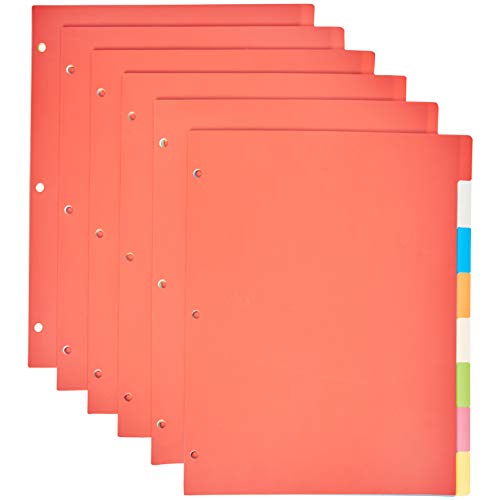
The Amazon Basics 8-Tab dividers provide a utilitarian, no-frills solution for knitters who prefer to allocate their budget toward high-quality wool or specialized knitting needles. These are manufactured from lightweight, flexible plastic that handles routine page-turning without cracking.
While these dividers lack the premium thickness of more expensive brands, they serve their purpose perfectly for standard pattern storage. The tabs are color-coded, allowing for quick visual sorting by project type or yarn weight without needing to read individual labels.
Avoid these if you handle your pattern binders daily in a workshop or studio setting, as the plastic is thinner and may show wear faster. For the home crafter keeping a tidy library, these offer the best value-per-tab ratio.
C-Line Poly Pockets: Best for Project Swatches
C-Line Poly Pockets function as both a divider and a secure storage vessel, making them ideal for housing physical evidence of a project. They include a small pocket on the front, which is perfect for storing yarn labels, extra stitch markers, or a small square of the actual yarn used in a project.
Keeping a swatch snippet with the corresponding pattern is a master-level organizational habit. It allows for quick reference of how a specific fiber bloomed after blocking or how a yarn held its stitch definition over time.
These are slightly more cumbersome than standard flat dividers, as they occupy more space in the binder ring. Prioritize these for the patterns you currently have on the needles, rather than for long-term archival storage.
Smead TUFF Pocket Dividers: Most Durable Option
Smead TUFF Pocket Dividers are engineered to withstand rigorous daily use, making them a standout choice for teachers or professional designers. The material is notably heavier than standard polypropylene, resisting tears even when the pockets are stuffed with bulky printed charts.
If your binder lives in a knitting bag and travels to retreats or local guild meetings, these dividers are the only choice that will survive the commute. The reinforced holes ensure that the pages do not rip out of the ring mechanism, even when the binder is dropped or squeezed into a crowded tote.
These dividers provide a rigid structure that keeps your patterns flat and protected. Invest in these for the “forever” files that contain your favorite go-to patterns.
Five Star Style Dividers: Best Stylish Option
Five Star Style Dividers introduce a professional, modern aesthetic to a binder system that often looks purely clinical. The reinforced plastic tabs are built for durability, but they also feature subtle, aesthetically pleasing designs that make the act of organizing feel more like a creative project.
The tab edges are fused with a high-strength material, preventing the “crinkle” effect that occurs with thinner plastic after being flipped hundreds of times. These are an excellent choice for knitters who find motivation in a beautiful, well-presented workspace.
They function as both a structural organizer and a visual upgrade. Choose these when the binder will sit on an open shelf rather than being tucked away in a drawer.
Cardinal OneStep Index: Easiest to Customize
The Cardinal OneStep Index features a unique, pre-printed table of contents page that automatically coordinates with the tabs. This system eliminates the tedious task of manually typing or handwriting separate labels for every single section in your binder.
Simply print or write the category names on the index page, and the layout is complete. For those who frequently update their pattern collection or re-sort their binders, the simplicity of this system is a major time-saver.
It is particularly useful for organizing by yarn weight—Fingering, Sport, DK, Worsted, and Bulky—because the index page keeps the entire system mapped out at a glance. It creates a clean, uniform look that requires almost zero effort to maintain.
Wilson Jones View-Tab: Best for a Clean Look
Wilson Jones View-Tabs offer a minimalist design where the tab itself is transparent and customizable via an insertable label. This provides a sleek, monochromatic appearance that highlights the organization rather than the hardware.
The transparent plastic is crystal clear, making labels easy to read even in low-light conditions near your knitting chair. The inserts are replaceable, which is a major advantage if you decide to change your sorting criteria from “fiber type” to “garment style.”
These are ideal for knitters who appreciate a tidy, uncluttered aesthetic. They offer the cleanest visual profile of any divider option currently available.
How to Choose Dividers for Your Project Binder
Selecting the right divider depends entirely on the volume of your pattern collection and how often you reference it. If you keep physical printed copies of hundreds of patterns, prioritize the durability of the holes and the tabs above all else.
Consider the weight of the paper you are using; heavy, laminated charts require sturdier, thicker dividers to prevent the binder from sagging. For those who prioritize efficiency, the system that allows for the fastest relabeling will be the most sustainable.
- For archival storage: Choose heavy-duty poly dividers that resist moisture and dust.
- For active project binders: Choose dividers with pockets to hold notions, labels, and swatch remnants.
- For aesthetic consistency: Select a uniform system with customizable, replaceable inserts.
Smart Ways to Categorize Your Knitting Patterns
The most effective organization systems categorize patterns by the attributes that impact the knitting process directly. Avoid organizing by “designer” or “publication date” alone; instead, organize by yarn weight or gauge requirements.
Sort sections by Needle Size/Gauge to make finding a substitute pattern easier when you have a specific yarn in hand. Alternatively, categorize by Construction Type, grouping top-down sweaters separately from seamed, bottom-up garments to help manage project workflow.
Always keep a “Projects in Progress” tab at the very front of your binder. This allows for immediate access to your current row counts, increase schedules, and colorwork charts without hunting through the rest of the collection.
Pocket vs. Tab-Only Dividers: Which Is Better?
Tab-only dividers are superior for long-term library storage because they take up significantly less room in the binder rings. They allow for a larger volume of patterns to be stored in a single 1.5-inch or 2-inch binder, keeping the footprint of your craft space small.
Pocket dividers, however, are indispensable for active knitting. They provide a safe haven for the small, loose items—tapestry needles, stitch markers, and yarn scraps—that otherwise vanish between the couch cushions.
The best approach is a hybrid system: use tab-only dividers for the bulk of your organized collection and incorporate two or three pocket dividers at the front for current projects. This ensures your active tools remain protected while your broader library stays organized and compact.
Organizing patterns effectively is an essential step in transitioning from a casual hobbyist to a serious knitter. By investing in quality dividers and establishing a logical sorting system, you ensure that your reference materials remain as resilient as the garments you create. Choose the system that fits your current needs, and remember that even the most complex collection starts with a single, well-organized binder.