
6 Best Industrial Strength Adhesives For Metal Embellishments
Discover the 6 best industrial strength adhesives for metal embellishments. Find the perfect glue for your next project and shop our top-rated recommendations now.
Adding metal embellishments to knitwear—such as custom brass tags, heavy charms, or intricate filigree—transforms a simple project into a bespoke heirloom. Securing these metal elements requires adhesives far beyond standard fabric glue, as the weight and rigidity of metal require a specialized bond. The following list identifies the most reliable industrial-strength adhesives for fiber arts applications. Choosing the correct one ensures that your hardware stays attached through years of wear, washing, and blocking.
E6000 Industrial Adhesive: Best Overall Choice


E6000 remains the industry standard for a reason. Its unique formulation remains flexible after curing, which is essential when attaching metal to knit fabric. Because knitwear moves, stretches, and contours to the body, a rigid adhesive will eventually crack and pop off the fibers.
This glue performs exceptionally well when securing heavier items like metal buttons or decorative plates. It provides a long “open time,” meaning there is enough room to nudge a piece into the perfect position before the bond sets.
However, remember that it requires a full 24 to 72 hours to achieve maximum strength. For the best result, let the garment lie perfectly flat during this entire curing period.
Loctite Ultra Gel Control: Best for Precision
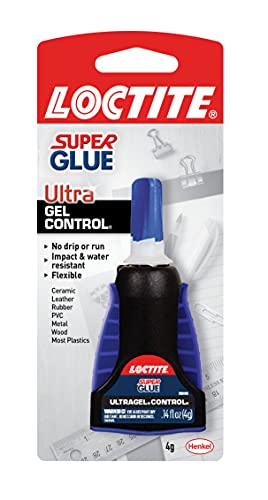
When attaching delicate metal components like tiny jump rings or slender charms to thin yarn, accuracy is non-negotiable. Loctite Ultra Gel Control offers a non-drip formula that prevents the adhesive from bleeding into the surrounding stitches.
The precision applicator allows for placing a tiny droplet exactly where needed, rather than soaking the fiber. This prevents the “stiff spots” that occur when glue wicks too far into the yarn’s twist.
While excellent for control, keep in mind that this is a cyanoacrylate—a super glue variant. It creates a rigid bond, so reserve this for small, lightweight metal pieces that do not require the garment to flex significantly at that specific point.
Gorilla Clear Grip: Best Waterproof Option

Metal embellishments are often exposed to the elements, especially on accessories like hats or shawls. Gorilla Clear Grip excels because it maintains a high-strength bond even when exposed to moisture, making it a superior choice for outdoor wear.
It is particularly effective on synthetic fibers and blends that might reject traditional glues. The adhesive dries clear and maintains a degree of elasticity, ensuring it handles the tension of a stretchy cast-on edge or a ribbing transition.
Always apply a thin layer to both the metal and the fiber. Allow it to sit for a minute until it becomes tacky before pressing the two surfaces together to ensure the best mechanical grip.
J-B Weld Epoxy: Ultimate Heavy-Duty Option

For structural attachments where a metal piece acts as a weight-bearing component, standard glues will fail. J-B Weld two-part epoxy is the go-to for situations involving significant mass or high-stress points.
This is a permanent, high-heat and water-resistant solution that essentially fuses parts together. Because it is an epoxy, it requires mixing two components, which adds an extra step to the process.
Use this only for non-flexible placements, such as mounting hardware on a bag strap or a structural frame. Once this cures, it is essentially part of the object and cannot be removed without damaging the surrounding yarn.
Beacon Gem-Tac: Top Pick for Rhinestones

Knits embellished with metal-backed rhinestones or studs require a specialized touch. Beacon Gem-Tac is specifically designed for these types of heat-sensitive or delicate metal-to-fabric bonds.
Unlike epoxies, Gem-Tac dries completely clear and is designed to handle the movement of delicate fabrics without losing its hold. It is safer to handle than industrial glues and cleans up easily if you accidentally smear a bit on a mohair blend or delicate silk.
It is the most gentle option for fine knits, though it lacks the sheer pull-strength of J-B Weld. Use it for decorative rather than structural purposes.
Devcon 5-Minute Epoxy: Fastest Curing Time
Time is often the enemy of a busy maker, especially when a project needs to be finished for a gift or an event. Devcon 5-Minute Epoxy allows for a high-strength bond that sets in mere minutes.
This is ideal for projects involving metal clasps or heavy pins where you cannot hold the piece in place for hours. It provides a rock-solid, permanent bond that is ideal for reinforcing hardware on hard-wearing items like market bags or heavy cardigans.
Because it cures so quickly, work in very small batches. Do not mix more than you can apply within sixty seconds, or you will find the adhesive hardening in the mixing tray before it ever touches your work.
Your Guide to Choosing the Right Adhesive
Selecting the right product hinges on the “flex factor” of your knit. If the area where you are placing the metal is part of a high-stretch zone—like a cuff or a neckline—you must choose a flexible adhesive like E6000.
Consider the surface area of the metal piece as well. Larger, flat surfaces provide better contact points for heavy-duty epoxies, while small, intricate charms are better suited for precise gel adhesives.
- High Stretch Areas: Choose flexible adhesives (E6000).
- Structural Hardware: Choose epoxies (J-B Weld, Devcon).
- Delicate/Decorative: Choose precision glues (Gem-Tac, Loctite Gel).
Prepping Surfaces for the Strongest Bond
The bond between metal and yarn is only as good as the cleanliness of the metal. Often, metal charms are coated in machine oils from the manufacturing process, which act as a barrier to the glue.
Wipe the back of any metal piece with rubbing alcohol before applying adhesive. This removes oils and residue, ensuring the glue can bond directly to the metal surface rather than the grease sitting on top of it.
Additionally, ensure your yarn is free of fuzz or loose fibers at the attachment point. If necessary, trim away any stray halo or pilling, as the glue will stick to those fibers rather than the main structure of the stitch.
Safety First: Working with Strong Adhesives
Strong adhesives emit fumes that can be irritating, especially in poorly ventilated spaces. Always work near an open window or with a fan running, especially when using solvent-heavy products like E6000 or epoxies.
Use nitrile gloves to prevent glue from getting on your skin, which can cause irritation or accidental bonding. It is also wise to protect your work surface with silicone mats, as these adhesives are permanent and will ruin wood or fabric tables if spilled.
Keep acetone (nail polish remover) nearby for cleanups. It is the most effective solvent for breaking down most of these adhesives if a mistake occurs, but test it on a swatch of yarn first to ensure it does not melt synthetic fibers.
Epoxy vs. Super Glue: What’s the Difference?
Understanding the chemistry helps avoid project failure. Super glue (cyanoacrylate) is designed to create a hard, brittle, instantaneous bond on non-porous surfaces. It is excellent for precision but prone to shattering under the vibration or physical movement common in knitwear.
Epoxy is a two-part resin system that cures into a durable, shock-resistant plastic. It fills gaps between the yarn and the metal, creating a mechanical lock that is far stronger and more resilient than the thin, surface-level bond of super glue.
For items that will endure heavy use, favor epoxies. For delicate accents where you need a quick, clean, and invisible hold, reach for the gel-based super glue.
Using the right adhesive transforms how you approach mixed-media fiber arts. By matching the strength and flexibility of the product to the needs of your project, you ensure that every metal embellishment remains secure for the life of the garment. Take the time to prep your surfaces, choose the appropriate formula for your stitch gauge, and your finished pieces will maintain their integrity and professional finish indefinitely.