
6 Best Fine Liner Pens For Detailed Zentangle Art
Elevate your Zentangle patterns with our expert guide to the 6 best fine liner pens for detailed art. Shop our top professional recommendations and draw today.
Precision in drawing Zentangle art mirrors the exactitude required for executing a complex lace chart or maintaining perfect tension across a gauge swatch. Just as the wrong needle material can snag delicate silk, the wrong pen can bleed through paper or fail to define crisp, intentional lines. Achieving meditative focus through repetitive, structured patterns demands tools that function as an extension of the hand. Selecting the right fine liner is the foundational step in ensuring every stroke contributes to a balanced, professional-looking finished piece.
Sakura Pigma Micron: The Zentangle Gold Standard
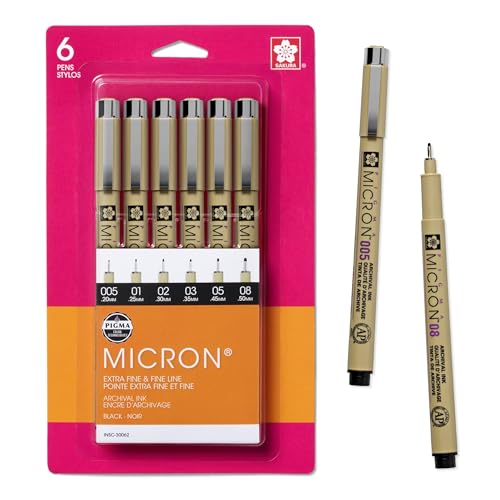

The Sakura Pigma Micron occupies the same space in the art world as a reliable set of stainless steel circular needles does in a knitter’s toolkit. It is the industry benchmark for a reason, providing consistent ink flow that prevents the stuttering lines often seen with lesser quality stationery.
When working on intricate, repetitive patterns, the archival quality of the pigment ink ensures that the work remains vibrant for years. Much like choosing a high-quality wool that won’t pill after a few wears, these pens provide a level of durability that protects the time invested in the creation.
The nibs are sturdy but do require a light touch to prevent fraying, similar to how one must manage tension when working with fragile mohair or alpaca. For beginners starting their first tangle, the 01 or 05 sizes offer the most versatility for both structure and shading.
Staedtler Pigment Liner: Best for Crisp, Clean Lines

Staedtler Pigment Liners are favored for their ability to maintain a sharp, defined edge, regardless of how quickly the pen moves across the page. This performance is akin to using high-density, coated aluminum needles that allow for rapid, snag-free knitting without compromising on stitch definition.
The ink is remarkably fast-drying, making it an excellent choice for those who tend to rest their hand on the paper while working. This prevents the dreaded smudging that can ruin a pattern, just as using a blocking board ensures a garment maintains its intended shape and layout.
While these pens are slightly firmer than the Micron, they excel at geometric patterns that require rigid, straight lines. They are the ideal choice when the design calls for crisp edges that must stand out against white space.
Faber-Castell Pitt Pen: For Rich, Black India Ink
Faber-Castell Pitt Pens utilize India ink, which provides a depth of blackness that is difficult to replicate with standard water-based dyes. This richness is comparable to the saturation found in hand-dyed yarns that have been double-dipped for maximum color intensity.
Because the ink is both waterproof and lightfast, it is the superior choice for artists who plan to add watercolor washes or other wet media to their tangles later. Think of this as the equivalent of using a superwash wool that can withstand rigorous post-processing without losing its structural integrity.
The brush-tipped variations also offer a degree of flexibility that allows for varying line weights. Controlling this requires a steady hand, much like managing the tension when switching from knit to purl stitches in a single row.
Copic Multiliner SP: The Pro’s Refillable Choice
The Copic Multiliner SP is a significant investment, much like purchasing a complete set of interchangeable bamboo needles with a lifetime guarantee. Its aluminum body provides a balanced, substantial weight in the hand, which can help stabilize shaky lines during long sessions.
The defining feature of this line is that the ink cartridges are replaceable and the nibs are interchangeable. This modular approach is an incredibly sustainable practice for the dedicated artist, echoing the way a knitter might repair or re-knit a cherished garment rather than discarding it.
Because the nibs are metal-clad, they are exceptionally durable and resistant to the pressure that can cause softer felt-tips to flatten. If the work involves hours of focused, detailed pattern creation, the comfort and longevity of the Copic system become a clear advantage.
Uni Pin Fineliner: The Best Value All-Rounder Pen
The Uni Pin Fineliner is the “workhorse” tool, performing reliably without the premium price tag. For those who are still learning their preference for line width or ink opacity, these pens offer a low-stakes entry point that does not sacrifice quality.
They are known for a very smooth delivery that feels effortless, similar to the glide of nickel-plated needles through a smooth, high-twist yarn. The ink is fade-resistant and doesn’t bleed through most standard sketchbooks, ensuring that the back of the page remains clean for the next project.
They are less rigid than the Staedtler but offer more flow than the Micron. This makes them a balanced option for those who transition frequently between dense, filled-in areas and light, airy detailing.
Marvy Uchida Le Pen: Top Pick for Ultra-Fine Detail
The Marvy Uchida Le Pen is characterized by a sleek, slender profile that mimics the feel of a fine-gauge knitting needle. It is exceptionally lightweight, which reduces fatigue during sessions that require intense, minute detailing.
Its ink delivery is very fine, making it the perfect choice for delicate cross-hatching or tiny, decorative flourishes. When the work demands the precision of a lace-weight project, the Le Pen provides the necessary control to execute tiny, purposeful marks.
Because the tip is so fine, it is best suited for smooth, high-quality paper where it won’t catch or fray. One must treat it with the same care reserved for fine-gauge, lace-pattern knitting where every single stitch carries weight.
How to Choose the Right Pen Nib Size for Your Art
Selecting the correct nib size is all about understanding the scale of the pattern. A 0.05mm or 0.1mm nib is equivalent to working with fine fingering weight yarn, allowing for tiny, intricate connections and complex geometric structures.
Conversely, nibs sized 0.5mm or larger act like bulky yarn, intended for bold outlines and filling in large, dark sections of a design. If the goal is a dense, high-contrast tangle, a mix of sizes is necessary to create depth and visual hierarchy.
Consider the “negative space” in the pattern; if the design is meant to be airy and light, stick to thinner nibs. If the design is meant to be a dark, heavy contrast piece, a thicker nib will save significant time and ink.
Pigment vs. Dye Ink: What’s Best for Zentangle?
Pigment ink sits on top of the paper fibers rather than absorbing deeply into them, which is why it remains so crisp and resistant to fading. This is the preferred choice for permanent artwork, as it holds its structural definition over time, much like a well-structured cable knit that holds its shape through many washings.
Dye-based inks, conversely, soak into the paper and can sometimes spread or “feather” if the paper quality is subpar. While dye inks are often more vibrant in color, they are rarely archival and may bleed when exposed to light or moisture.
For the purposes of Zentangle, which relies on high-contrast black and white imagery, pigment ink is almost always the correct professional choice. It ensures the lines remain sharp and deep black, regardless of the humidity or environmental factors.
The Best Paper to Use With Your Fine Liner Pens
Fine liner pens perform best on smooth, acid-free, heavyweight paper. A paper with too much “tooth” or texture acts like a coarse, rustic wool, grabbing the nib and causing the ink to bleed or the tip to fray prematurely.
Look for a surface that is specifically designed for technical drawing or illustration, as these are formulated to handle multiple layers of ink without pilling. When the paper is too porous, it creates “feathering,” where the ink creeps along the paper fibers, blurring the lines of the drawing.
A smooth Bristol board or high-quality vellum finish is ideal. Think of it as choosing the smoothest possible circular needles for a cotton-bamboo blend; the goal is to remove friction so the tools can move exactly as intended.
Tips for Making Your Fine Liner Pens Last Longer
The lifespan of a fine liner is directly tied to how it is handled and stored. Always cap the pen immediately after use, as even a few minutes of air exposure can cause the delicate, moisture-heavy ink to begin drying inside the nib.
Avoid pressing hard against the paper; let the ink flow naturally rather than forcing the nib into the fiber. If the hand pressure resembles the grip used when one is frustrated or stressed with a dropped stitch, it is time to consciously relax the hold.
Finally, store the pens horizontally whenever possible. This prevents the ink from pooling at the tip, which can lead to flooding, or drying out entirely, which can lead to a clog. Proper storage is the equivalent of properly winding and storing luxury yarn to prevent tangling or fiber damage.
The right fine liner is a powerful ally in the pursuit of creative expression, acting as the bridge between mental clarity and visual manifestation. With these tools in hand, the process of tangling becomes as rhythmic and satisfying as casting on a new, ambitious project. Experiment with different nib sizes to discover which feels most natural to the hand and watch as the art evolves with every consistent, well-placed line.