6 Best Felting Mats For Portable Crafting Worth Having
Need the perfect workspace on the go? Discover our top 6 best felting mats for portable crafting to keep your projects organized. Shop our expert guide today!
Needle felting is a tactile, rhythmic craft that requires a stable surface to protect your work and your needles. When crafting on the go, the ideal mat must balance portability with the density required to withstand repeated stabbing. Choosing the wrong surface can lead to dull needles, frustrated fiber management, or damaged furniture. Finding the right balance between these factors ensures that portable felting remains an enjoyable, creative escape rather than a logistical chore.
Clover Felting Mat (Brush): Best for Detail


The Clover Felting Mat utilizes a dense brush-like surface that allows needles to pass through the fibers with minimal resistance. This design prevents the “bounce-back” often felt with foam mats, making it ideal for delicate 3D sculptures or fine needle-felting details.
Because the bristles hold the fibers securely in place, it is perfect for working on intricate embellishments or small appliques. The needles penetrate the bristles easily, which significantly reduces the risk of snapping fine gauge needles during intense work.
While this mat is excellent for detail, the brush design does not trap fibers as deeply as wool. Expect to spend a moment cleaning the bristles after a long session to ensure the surface remains pristine for the next project.
Woolbuddy Wool Pressing Mat: Top All-Rounder

Wool mats offer a unique, firm resistance that provides excellent control when sculpting dense forms. The natural grip of the wool fibers helps keep the project stationary, which is a major advantage for those working on intricate, multi-part figures.
This material is exceptionally durable, often outlasting synthetic foam alternatives by a wide margin. It does not disintegrate into crumbly bits, keeping the workspace tidy and free of synthetic debris.
The tradeoff here is price and weight; wool mats are generally heavier and more expensive than foam options. However, for a serious crafter, the longevity and performance justify the investment for a permanent travel kit.
Dimensions Foam Felting Mat: Budget-Friendly Pick

Foam mats are the industry standard for beginners due to their affordability and lightweight nature. These mats provide a soft, forgiving surface that is perfect for learning the depth and speed of the needle felting motion.
The primary benefit of foam is its portability; it is virtually weightless, making it an easy addition to any project bag. It is also gentle on needle tips, extending the life of multi-needle tools during the initial shaping phases of a project.
Be aware that foam is a consumable surface. Over time, the material will develop craters and eventually break down, requiring replacement once the holes become too deep to provide a stable foundation.
SINGER Sew-It-Goes Kit: Best Complete Travel Set
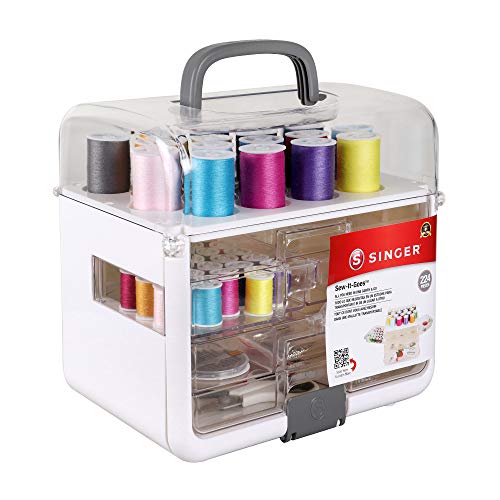
The SINGER Sew-It-Goes Kit provides a comprehensive solution for those who want their tools organized in one compact container. It eliminates the need to source individual mats and needles, offering a streamlined experience for travelers.
This kit is designed for efficiency, focusing on quick repairs or small, spontaneous projects. It is less about high-level sculpture and more about providing a functional space in a very small footprint.
Consider the kit’s size limitations if planning larger projects. While perfect for small motifs or quick mending, it may feel restrictive for those working on larger, multi-dimensional fiber arts.
The Felted Ewe Wool Mat: The Eco-Conscious Choice
The Felted Ewe Wool Mat appeals to makers who prioritize natural, sustainable materials over synthetic alternatives. The dense, needle-felted wool provides a superior surface that grips wool roving naturally, preventing the sliding common on smoother surfaces.
These mats are often thicker, offering a reliable, firm base that can be used on your lap or on a shaky travel tray. The natural lanolin and wool density also provide a slightly quieter felting experience than the “thwack” of a needle hitting a hard foam block.
Sustainability comes at a cost, as these mats require careful moisture management to prevent the material from felting together permanently with stray fibers. A quick brush or shake after each session is essential to maintain the surface integrity.
Fons & Porter Magic Pressing Mat: For Flat Work
While primarily designed for quilting and pressing, this mat serves as a surprisingly effective surface for flat felting projects. The thickness and density of the wool blend allow needles to penetrate deeply without harming the underlying table surface.
It is particularly useful for artists who combine embroidery with felting, as it provides a stable, heat-resistant surface that doubles as a pressing board. This duality is a significant space-saver for those who work in multiple fiber disciplines simultaneously.
The downside is the size and lack of a “grippy” texture compared to dedicated felting mats. It is best reserved for flat appliqué or patches rather than complex, rounded 3D felting.
Wool vs. Foam vs. Brush: Which Mat Is For You?
Choosing between these materials depends heavily on the project at hand. Foam is the best entry-level choice for those who are still learning the force required for felting, while wool is for those looking for longevity and professional-grade resistance.
Brush mats are the clear winner for those who focus on high-detail work or fine needle-felting. The brush’s ability to hold fibers in place while preventing needle damage is unmatched for precision tasks.
Consider the portability requirements: if weight is a concern, a small piece of high-density foam is superior. If the goal is a permanent, high-quality kit, opt for wool.
Key Features of a Great Portable Felting Mat
A quality portable mat should be firm enough to support your work without allowing the needle to hit the tabletop. If the needle hits a hard surface, the tip will dull or break, leading to poor fiber penetration.
Look for a surface that grips the roving; if the project slides around, the risk of accidental finger pricks increases significantly. Size is also critical; it must fit inside a project bag without bending, yet be large enough to contain the work.
Finally, prioritize materials that do not shed. A mat that leaves debris on your clothing or in your knitting project bag creates more work in the long run.
How to Clean and Care for Your Felting Surface
Maintenance varies by material, but the golden rule is to keep the surface free of stray fiber buildup. For brush mats, a fine-toothed comb works wonders to remove embedded wool.
Foam mats are best maintained by rotating the area of work frequently to prevent deep pits from forming. Once a foam mat is deeply cratered, it is often safer to replace it than to try and repair it.
Wool mats benefit from a light brushing and an occasional shake to remove dust. If the surface becomes matted with too many stray fibers, it may actually improve the mat’s stability, but keep an eye on moisture to prevent mildew.
Safely Felting on the Go: Tips for Travel
When traveling, always store needles in a secure case, never directly in the mat. Even the most compact kit can be hazardous if a needle works its way out of the foam during transit.
Use a dedicated container for the mat to prevent it from picking up lint, dog hair, or stray yarn scraps from the rest of your project bag. A small, resealable plastic bag or a dedicated felt pouch is an inexpensive, effective shield.
Finally, be mindful of your surroundings when felting in transit. Keep the workspace contained to your immediate area, and ensure that stray fibers or needles do not migrate to your neighbor’s space.
Mastering the choice of a felting surface allows for consistent, professional results regardless of where a project takes you. By matching the mat to the specific needs of your technique, you ensure that every jab of the needle brings you closer to your creative goal. Invest in quality materials, prioritize the safety of your tools, and enjoy the meditative process of sculpting fiber anywhere the mood strikes.