7 Vintage Style Scissors For Craft Projects To Own
Elevate your creative projects with these 7 vintage style scissors. Discover our top picks to add a touch of timeless elegance to your craft kit and shop now.
A pair of high-quality scissors is arguably the most essential tool in any fiber artist’s kit, far surpassing the importance of fancy stitch markers or ergonomic needle cases. When the moment arrives to snip a strand of hand-dyed merino or trim a long tail on a finished lace project, the tool used can either leave a clean edge or result in a frayed, uneven mess. Vintage-style shears do more than offer aesthetic charm; they often provide the precision needed for delicate fiber work. Choosing the right pair means balancing historical charm with the practical, sharp performance required for intricate knitting tasks.
Gingher Stork Scissors: A True Classic Icon


The stork design is synonymous with needlework history, originating from the mid-19th century when midwives carried stork-shaped umbilical cord clamps. In the context of knitting, these scissors serve as the gold standard for trimming yarn ends during colorwork transitions or finishing off a bind-off row. The long, slender beak allows for pinpoint accuracy when you need to clip a single yarn ply without nicking the surrounding stitches.
While many decorative scissors focus solely on appearance, the Gingher model is built with a reputation for actual cutting longevity. The blades are generally stiff and held together by a sturdy screw, which prevents the “chewing” effect common in cheaper alternatives. If you are working with slippery fibers like silk or bamboo blends, this precision ensures the yarn does not slide away from the blade during the cut.
Bear in mind that the handles are relatively small, which can be an adjustment for those with larger hands. These are intended for quick snips rather than long sessions of fabric cutting. For a daily-use pair that lives in a project bag, they represent a perfect marriage of tradition and utility.
SOHMO Peacock Tail Scissors: Heirloom Quality

SOHMO brings a level of metalwork sophistication that sets these scissors apart as an investment piece. The peacock tail design is not just a surface flourish; the ergonomics of the handle are designed to distribute pressure more evenly across the fingers. This is particularly beneficial if you suffer from hand fatigue after long hours of intensive cable knitting or complex brioche work.
The steel quality here is exceptional, retaining a razor-sharp edge through months of consistent use on wool and acrylic alike. When trimming bulky roving or dense, high-twist yarns, these scissors slice cleanly through the fibers without requiring multiple passes. A clean cut is vital for weaving in ends securely, as frayed yarn ends are prone to working their way out of finished garments.
While they carry a higher price tag than mass-market options, the durability makes them a long-term value. They are best reserved for your primary workstation rather than a crowded, chaotic travel bag. Treat them as an heirloom tool, and they will likely last a lifetime of knitting projects.
DMC Gold-Plated Crane Scissors: Best for Detail
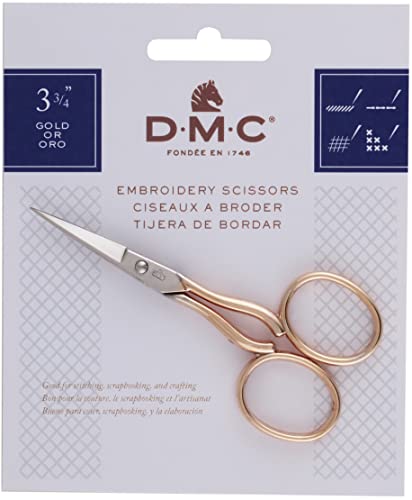
Crane-style scissors provide an even finer point than traditional stork shears, making them the superior choice for high-detail finishing. When working with fine-gauge lace on 2.0mm needles, you often need to navigate into tight spaces to trim a tail flush against the fabric. The needle-thin tips allow you to reach exactly where a larger pair would be too cumbersome.
The gold-plated finish is more than cosmetic; it often helps provide a smoother surface that resists light corrosion. However, gold plating can wear down over time if the scissors are exposed to moisture or humid environments. Keep them in a protective pouch to ensure the finish remains pristine and the movement stays fluid.
These are not heavy-duty tools; they are specialized precision instruments. Avoid using them to cut anything other than yarn or light embroidery thread. If you accidentally cut paper or dense, grit-filled fabric, you will dull the specialized edge almost immediately.
Bohin Eiffel Tower Scissors: For the Francophile
Bohin has cultivated a reputation for manufacturing needlework supplies that balance historical inspiration with modern metallurgical standards. The Eiffel Tower silhouette offers a unique grip shape that some knitters find more natural than the standard round finger loops. If you struggle with finger dexterity after a long day of knitting, the slightly elongated handle may offer a more comfortable fulcrum.
These scissors are frequently cited for their excellent balance between the tip and the pivot point. A well-balanced scissor feels like an extension of the hand, which is crucial when you are trying to cut a yarn tail in a cramped spot without disturbing the tension of your live stitches. They provide enough leverage to feel secure, but enough delicacy to feel precise.
The aesthetic charm is undeniable, making them a popular gift among dedicated knitters. They occupy the middle ground of price and performance, offering a professional-grade cut without the premium cost of artisan-forged metal. They are an excellent “workhorse” choice that still retains a sense of personality.
Cohana Seki Mini Scissors: Japanese Precision
Seki is a region in Japan famous for centuries of sword-making history, and the quality of these mini scissors is a direct reflection of that heritage. These are among the smallest scissors available, making them the ultimate travel companion for knitting on the go. They fit easily into a project bag or even a small notion tin, ensuring you are never without a sharp blade.
Despite their tiny stature, they are incredibly robust. They handle synthetic fibers, cotton, and wool with equal ease. The Japanese steel is often harder and more brittle than standard European steel, meaning it holds an edge exceptionally well. However, because they are small, they are also easier to lose, so keeping them attached to a lanyard or inside a dedicated pocket is recommended.
If you value minimalist design and extreme portability, these are the clear winners. They lack the ornate, whimsical handles of other vintage-style scissors, focusing instead on the purity of the cutting edge. They are the ideal choice for the knitter who prioritizes a sleek, “less is more” aesthetic.
Fiskars Floral Forged Scissors: A Modern Take
Fiskars is a household name for a reason: their engineering is consistent, and their warranty programs are robust. The floral forged series updates the vintage look with a sturdier, modern handle design that prioritizes grip strength. If you find the thin handles of stork scissors uncomfortable, these will feel significantly more substantial in your palm.
The forged steel construction is noticeably more rigid than stamped metal alternatives. This rigidity is important if you find yourself occasionally cutting heavier materials like ribbons or yarn labels. They offer the vintage vibe while functioning with the reliability of a modern industrial tool.
While they may lack the delicate, “antique” feel of other options, they make up for it with sheer usability. These are excellent for the knitter who wants one pair of scissors to handle both knitting notions and light household crafting. They are practically indestructible under normal fiber-arts usage.
Whimsical Unicorn Scissors: For Magical Making
For those who view knitting as a form of creative expression rather than just a utility, whimsical shapes like unicorns bring a much-needed sense of play. These scissors often feature intricate engravings or colorful finishes that make them a joy to pull out of a project bag. While they appear purely decorative, many modern manufacturers of these novelty shapes have significantly upgraded their steel quality.
The key to buying novelty scissors is to check the tension at the pivot screw. If the blades feel loose or gap significantly when closed, the design is prioritize over the function. Look for models that specifically mention “forged” or “high-carbon steel” to ensure you aren’t sacrificing quality for the cute design.
These make for thoughtful gifts for younger knitters or those just starting their fiber journey. They prove that a tool does not have to look clinical to be effective. As long as the blades meet cleanly at the tip, they will perform their job of trimming yarn with the best of them.
How to Pick the Right Scissors for Your Craft
When choosing your scissors, start by evaluating the weight and handle size in relation to your own hand. If you frequently experience hand strain while knitting, avoid scissors with very small or thin loops that dig into your skin. Test the “snip” to ensure the blades meet firmly from the pivot all the way to the very tip; if they don’t, you will struggle to cut fine yarns cleanly.
Consider your primary environment as well. Are these meant to stay at your dedicated craft desk, or will they be tossed into a knitting bag that travels to coffee shops and airplanes? Larger, more ornate scissors can snag on delicate knit fabrics inside a bag, whereas smaller, blunt-tipped or cap-protected scissors are safer for travel.
Finally, match the tool to the fiber. If you work primarily with coarse, rustic wool, a slightly heavier pair of scissors provides better cutting power. For delicate lace weight or fine mohair, choose a pair with fine, needle-like tips that won’t distort the fabric as you make your cut.
Caring for Your Scissors: Sharpening and Oiling
Even the most expensive vintage-style scissors will dull over time if they are neglected. Avoid using your craft scissors on paper, which contains abrasive fillers that dull steel blades rapidly. Keep a separate pair of inexpensive scissors for paper and cardboard to save your fiber scissors for yarn and fabric.
A small drop of mineral oil applied to the pivot screw every few months will keep the movement smooth and prevent rust, especially if you live in a damp climate. If your scissors feel stiff, work the blades back and forth a few times after applying the oil to distribute it evenly. Wipe away any excess oil with a clean cloth to ensure you don’t transfer it to your yarn.
Sharpening should be done by a professional whenever possible. Attempting to sharpen delicate embroidery or stork scissors with home tools can easily destroy the precise bevel of the blades. When they no longer slice cleanly through a single strand of cotton thread, it is time to have them professionally serviced.
Carbon Steel vs. Stainless: What’s the Difference?
Carbon steel is generally preferred by those who want the sharpest possible edge. It is harder than stainless steel, meaning it can be ground to a finer point and will hold its sharpness for much longer. The major trade-off is that it is highly susceptible to rust; a single drop of sweat or moisture left on the blade can cause oxidation if not cleaned immediately.
Stainless steel, on the other hand, is the low-maintenance choice. While it may not hold a razor edge as long as high-carbon steel, it is resistant to rust and corrosion, making it perfect for the forgetful knitter or those in humid environments. It is a more forgiving metal for everyday tools that get tossed around.
For most knitters, high-quality stainless steel provides the best balance of performance and practicality. Only choose carbon steel if you are committed to the ritual of cleaning and oiling your tools after every session. Ultimately, a sharp, well-maintained stainless blade will always outperform a dull carbon steel blade.
Investing in a high-quality pair of scissors is a small but significant step toward a more professional and enjoyable knitting experience. By choosing a tool that fits your hand, your environment, and your maintenance habits, you ensure that every project is finished with the precision it deserves. Keep your blades clean, reserve them for fiber, and your scissors will serve as a faithful partner for years of creative work.