6 Heavy Duty Threads For Bag Construction To Rely On
Build durable bags that last with our expert guide. Discover 6 heavy duty threads for bag construction and choose the best option for your next sewing project.
Selecting the right thread for bag construction is just as critical as choosing the correct yarn weight for a sweater. A bag carries the weight of daily life, requiring tension and structural integrity that standard sewing thread simply cannot provide. Using the wrong thread leads to premature seam failure, causing hardware to pull through fabric and handles to detach under pressure. This guide narrows down the options to ensure every handmade bag survives the rigors of heavy use.
Gutermann Upholstery Thread: The All-Around Staple


Gutermann Upholstery thread is a reliable choice for those transitioning from garment sewing to bag making. It offers a balance of strength and manageability, making it compatible with most standard household sewing machines.
This thread is thick enough to provide visible, decorative topstitching without appearing overly bulky. Because it is widely available, it serves as a go-to for projects where color matching is the primary concern.
However, it lacks the extreme industrial-grade abrasion resistance of bonded filaments. Use this for structured fabric bags or handbags that do not see heavy daily abuse.
Coats & Clark Extra Strong: A Dependable Workhorse
Coats & Clark Extra Strong is a classic, widely recognized option for strengthening seams. It provides significantly more tensile strength than general-purpose polyester, acting as a sensible insurance policy for bag stress points.
The primary advantage is its ease of use on nearly any sewing machine without requiring tension adjustments. It handles the back-tacking process well, which is essential for reinforcing bag handles and corners.
Keep in mind that this is a wrapped core thread. Under constant, high-tension friction, the outer fibers can occasionally fray. It performs best in medium-weight projects like totes and pouches.
Bonded Nylon Thread: For Heavy-Duty Canvas & Denim

Bonded nylon is engineered for industrial applications where durability is non-negotiable. The bonding process prevents the thread from untwisting during high-speed sewing or when passing through thick layers of canvas.
This thread is exceptionally strong and provides high abrasion resistance. When working with heavy denim or thick canvas, the thread holds its shape and prevents seams from “popping” under load.
Nylon is sensitive to moisture and long-term UV exposure, which can cause the material to weaken over time. Reserve this for indoor-use bags or items that are kept away from direct, harsh sunlight.
Bonded Polyester Thread: Best for Outdoor Projects
Bonded polyester mirrors the strength and handling characteristics of nylon but adds significant environmental resistance. It does not absorb moisture, which prevents it from rotting or weakening when exposed to rain or humidity.
Because of its chemical makeup, this thread holds up well against mildew and chemical solvents. It is the preferred choice for backpacks, messenger bags, and travel gear that might encounter unpredictable weather.
The bonding agent keeps the thread smooth, allowing it to glide through tight stitch regulators with minimal friction. It is a workhorse for bags that are intended to last for years rather than seasons.
Ritza 25 Tiger Thread: The Ultimate Hand-Sewing Pick
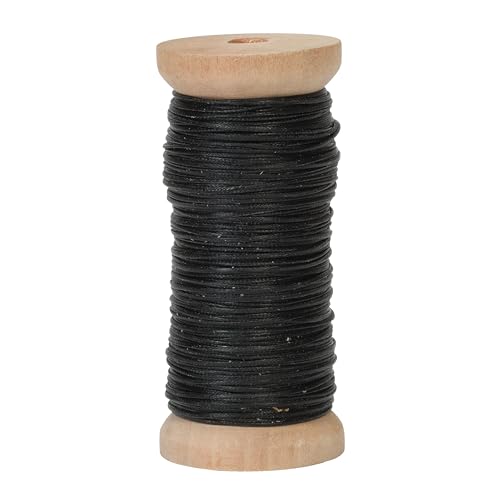
Ritza 25 Tiger Thread is the industry standard for hand-stitched leatherwork. This flat, braided thread is waxed during production, allowing it to grip the leather and seal the puncture holes perfectly.

Unlike round twisted threads, the flat profile ensures that the stitching sits elegantly against the surface of the bag. It is incredibly strong and resistant to tangling, which makes long sessions of saddle stitching far more efficient.
Because it is braided, it will not unravel even if an individual stitch is cut or worn through. It is not designed for machine use, so keep this exclusive to projects involving needles and an awl.
Serafil Outdoor Thread: Top Pick for UV Resistance
Serafil is a high-performance filament thread designed to withstand the harsh conditions of marine and outdoor upholstery. If a bag is destined for a life on the beach or constant sun exposure, this is the superior option.
Its most notable feature is its high UV stability, which prevents the thread from becoming brittle and disintegrating in the sun. The filaments are consistent in diameter, ensuring perfectly uniform stitch formation.
While it is more expensive and harder to source than standard threads, the investment pays off in project longevity. It is the gold standard for high-end gear where failure is not an option.
Matching Thread to Your Bag’s Fabric and Hardware
Choosing a thread that is stronger than the fabric it joins is a common mistake. If the thread is too heavy, it acts like a serrated blade, cutting through delicate materials whenever the bag is stressed.
- Lightweight Canvas: Use a medium-weight bonded polyester.
- Heavy Leather: Utilize waxed Tiger Thread for hand stitching or bonded nylon for machine work.
- Webbing and Hardware: Always select a thread with high shear strength, such as bonded nylon, to prevent handle detachment.
Always perform a “pull test” on a scrap piece of your chosen fabric. If the fabric rips before the thread snaps, the thread is likely too strong; if the thread snaps easily, it is too weak.
Understanding Thread Weight: Tex, Denier, and You
Thread weight can be confusing, but the Tex system is the most reliable metric. Tex represents the weight in grams of 1,000 meters of thread; the higher the Tex number, the thicker the thread.
- Tex 40-60: Ideal for general construction and lighter fabrics.
- Tex 70-90: The sweet spot for most bag making and decorative topstitching.
- Tex 135+: Reserved for heavy-duty leather or industrial webbing.
When moving up in Tex size, ensure the sewing machine can accommodate the larger diameter without skipping stitches. Larger threads often require a larger needle eye to prevent the thread from shredding.
Choosing the Right Needle for Heavy-Duty Threads
The needle is the partner to your thread, and they must be perfectly matched to achieve a clean stitch. A thread that is too thick for the needle eye will cause fraying, looping, and tension chaos.
Use a “Leather Point” or “Chisel Point” needle when working with hide or stiff vinyl to slice through the material cleanly. For woven canvas or synthetic fabrics, use a “Sharps” or “Jeans” needle to avoid skipped stitches.
If the thread is catching on the needle eye, step up one needle size. Always prioritize a needle with a large enough eye to allow the thread to pass through without constant rubbing.
Nylon vs. Polyester: Which Is Right for Your Bag?
Nylon is characterized by high elasticity and strength, making it excellent for absorbing shock. This makes it perfect for bags that might be overfilled, as the thread has a slight “give” that prevents the seams from snapping.
Polyester is less elastic but significantly more stable when exposed to light and moisture. It is the practical choice for longevity in everyday carry items that stay in the car or get tossed on the ground.
- Choose Nylon for: High-tension areas, indoor gear, and projects requiring superior abrasion resistance.
- Choose Polyester for: Outdoor bags, marine applications, and any project that spends time in the sun.
Prioritize the environment the bag will inhabit over the raw strength of the fiber. A bag that stays in a climate-controlled office has different needs than one that travels in the cargo hold of a plane.
Selecting the right thread is the hidden secret to professional-looking, long-lasting bag construction. Take the time to match the fiber properties to the intended use of the project, and the results will be as durable as they are beautiful.