6 Best Document Clips For Extra-Thick Books To Use
Struggling to keep your heavy references open? Discover the 6 best document clips for extra-thick books and improve your reading workflow today. Read more here.
Knitting from a thick, heavy pattern book can quickly turn a relaxing session into a battle against pages that refuse to stay open. When the spine of a pattern book fights back, the rhythm of a complex cable or lace chart is easily broken. Finding the right clip is not just about keeping a page flat; it is about preserving the focus required for complicated stitch counts. The following selection offers reliable solutions for managing hefty tomes during long knitting sessions.
Superior Essentials Holder: The Heavy-Duty Choice


When dealing with a massive reference book or a thick stitch dictionary, flimsy clips simply fail to provide enough tension. The Superior Essentials holder is engineered for maximum grip strength, ensuring that even the thickest paper stock remains stationary.
Its design focuses on a wide clamping surface that distributes pressure evenly across the page. This prevents the pinpoint indentation that thinner clips often leave behind, which is vital when working with high-quality, coated-paper pattern books.
For the knitter who keeps a hefty binder of printed charts and notes, this is the gold standard for stability. It lacks the bells and whistles of smaller clips, but its sheer reliability makes it an essential desk companion.
FlipKlip Book Holder: Best for Hands-Free Reading
The FlipKlip is a unique solution for those who prefer to keep their hands entirely on their needles while following a complex pattern. It uses a clever, page-gripping mechanism that works vertically, effectively turning a flat book into a stable upright display.
This is particularly useful when working on projects that require constant reference to a chart, such as intarsia or stranded colorwork. Because it holds the book open at an angle, it reduces neck strain and keeps the chart in a direct line of sight.
However, the FlipKlip requires a bit of tabletop space to operate effectively. If the workspace is already crowded with yarn cakes, DPNs, and notions cases, ensure there is a clear landing zone before committing to this style.
Sun-Star Recipe Holder: The Most Versatile Clip
Originally designed for culinary enthusiasts, the Sun-Star recipe holder is a hidden gem for the fiber arts community. Its adjustable tension arms allow it to accommodate books of varying thicknesses without requiring constant reconfiguration.
What sets this clip apart is its low profile. It sits unobtrusively at the top of the book, allowing the eyes to scan across a chart without the physical obstruction of bulky hardware. It is ideal for knitters who frequently switch between different sizes of pattern books.
The trade-off is that it provides slightly less holding power than heavy-duty spring clamps. If the book uses extremely stiff, glossy paper that naturally wants to snap shut, a secondary weight might be necessary to assist the grip.
Clover Jumbo Wonder Clips: A Crafter’s Go-To Tool

While widely known in the sewing world for pinning quilt bindings, the Clover Jumbo Wonder Clip is exceptionally effective for managing knitting pattern pages. Its wide, flat base is perfect for sliding under a page to hold it securely without damaging the spine or paper.
The flat design is a major advantage for knitters who need to layer their workspace. Because these clips lack protruding arms or handles, they won’t snag on loose yarn ends or get caught in the fibers of a delicate mohair project.
They are best used in pairs for maximum effectiveness. By placing one at the top right and one at the bottom right corner of the page, the book remains flat and readable, even when the pattern is near the center of a thick spine.
Book Bone Page Weight: The Best No-Clip Solution
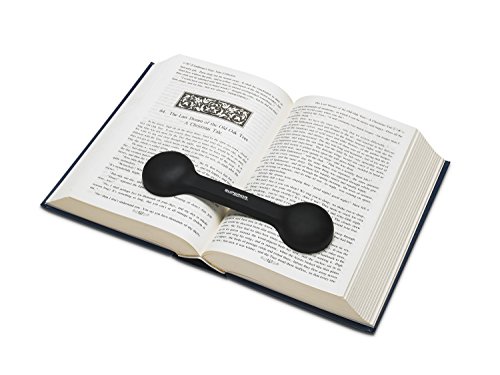
Sometimes the best tool is one that relies on gravity rather than mechanical tension. The Book Bone is a weighted, silicone-covered strip that rests across the open pages of a book, holding them down with gentle, even pressure.
This is the premier choice for vintage pattern books or fragile, aging paper that might tear under the pressure of a spring-loaded clip. It provides a tactile, soft touch that protects the integrity of the printed material over years of frequent use.
Because it is not physically attached, it is incredibly easy to move as you progress through a project. If you are prone to accidentally knocking over tools, the Book Bone stays put due to its weight, unlike spring clips which can occasionally fly off when bumped.
A+ Homework Book Clip: Top Pick for Binders
For the knitter who keeps patterns organized in standard three-ring binders, the A+ Homework clip is a reliable, sturdy choice. It is specifically designed to handle the weight of multiple heavy plastic sleeves, which often struggle to stay open on their own.
The clip’s geometry is optimized for the slight resistance provided by ring binders. It exerts just enough force to keep the sleeve from turning, while the rubberized tips ensure that the plastic does not slide around during use.
It is a utilitarian tool, prioritizing function over aesthetic appeal. If your knitting station is organized primarily for productivity, the A+ Homework clip is a workhorse that will not let you down during a long lace-knitting marathon.
How to Choose the Right Clip for Your Pattern Book
Selection starts with the material of the book itself. For coated, heavy-stock paper that snaps back, prioritize high-tension spring clips like the Superior Essentials. For older, thinner paper, lean toward the gentler, weighted approach of the Book Bone.
Consider the surface area of your workspace as well. If you are knitting in a small armchair or a cramped studio, avoid bulky stands and opt for low-profile clips like the Clover Wonder Clips.
Lastly, think about the frequency of turning pages. If you are working through a long written pattern that requires flipping every few rows, choose a clip that can be removed and repositioned with one hand.
Clip vs. Weight vs. Stand: Which Is Best for You?
Clips provide the most secure hold for thick books but require deliberate placement. Weights are the most protective for delicate pages but offer less resistance against aggressive paper. Stands provide the best ergonomics by elevating the pattern, but they demand the most room.
A hybrid approach is often the most successful strategy for experienced knitters. Using a stand for your primary chart while keeping a small clip nearby for quick, temporary adjustments covers most project scenarios.
Match the tool to the specific phase of the project. During the set-up phase—casting on and checking gauge—a stand is often superior. During the final assembly or grafting, smaller clips are more nimble.
Protecting Your Book’s Pages From Scuffs and Damage
Every time a clip is applied, there is a risk of creating permanent indentations or tearing the edges of the paper. Always look for clips with rubberized or silicone-coated tips to provide a cushioned grip.
Avoid leaving clips on the same page for extended periods of time, especially in humid conditions. Moisture can cause the metal or plastic of the clip to react with the paper over weeks of storage, leading to discoloration or unsightly marks.
If you find that a clip is leaving a mark, slip a small piece of acid-free scrap paper between the clip and the pattern page. This sacrificial layer takes the pressure and protects the valuable instruction manual underneath.
Can I Just Use a Binder Clip? The DIY Question
The impulse to reach for a standard office binder clip is common, but it is rarely the best choice for a beloved pattern book. These clips are designed for raw, high-pressure utility and often lack the finish required to avoid damaging delicate book edges.
The sharp metal handles of office binder clips are notorious for snagging yarn. If a strand of hand-dyed wool gets caught in the spring, it can cause accidental felting or ruin the twist of the yarn in an instant.
If a binder clip is the only option available, be sure to wrap the contact points with a bit of washi tape to soften the grip. However, for long-term use, investing in dedicated, knitter-friendly tools is a much safer bet for your library.
Choosing the right way to secure your patterns is a small detail that pays significant dividends in your overall knitting flow. By selecting a tool that respects both your books and your project needs, you ensure that nothing stands between you and the next row of stitches.